
UN network intensifies monitoring of interstellar comet 3I/ATLAS in global campaign

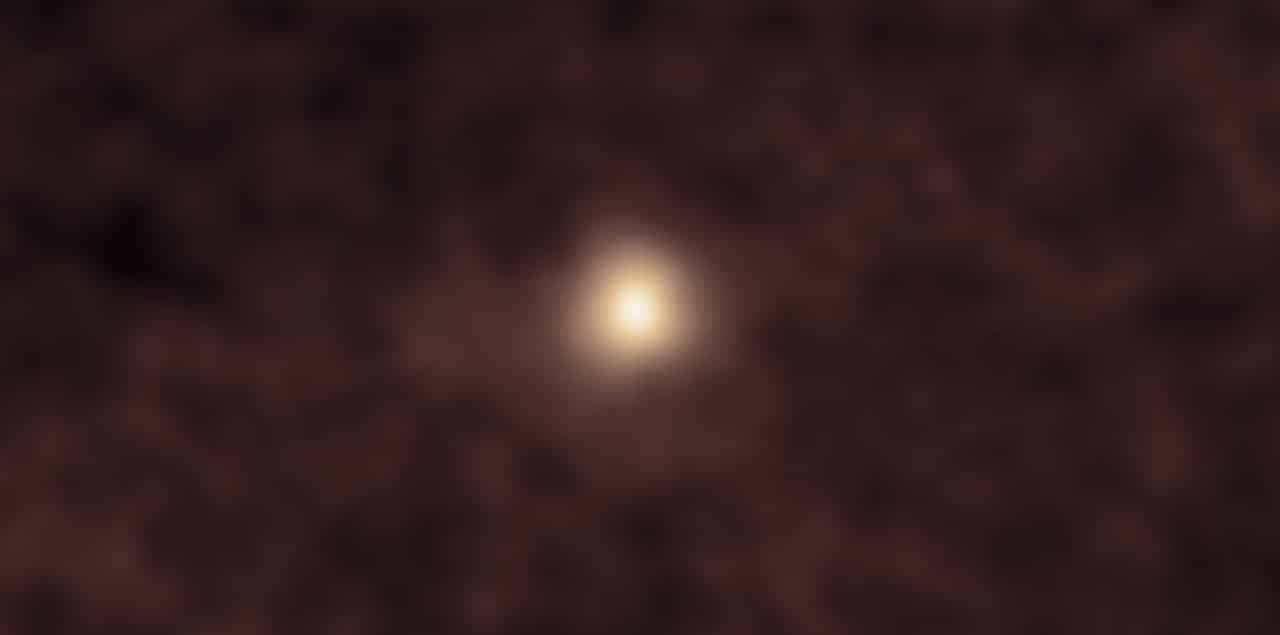
The Rede Internacional of Alerta of Asteroides (IAWN), linked to the Organização of the The object, discovered in July 2025 by the ATLAS system at Chile, will reach its closest proximity to Terra on December 19, at around 270 million kilometers, without any risk of collision.
Astronomers from different continents use telescopes to track the trajectory and characteristics of the comet, which originates outside of Sistema Solar. The initiative marks the first monitoring of an interstellar object by IAWN since 2017, highlighting the scientific importance of this observation.
The campaign, planned since October 2024, involves more than 80 professional observatories and citizen scientists. The data collected contributes to improving astrometry techniques on comets with diffuse comas.
Campaign coordination by NASA
NASA assumes responsibility for coordinating IAWN actions, bringing together international efforts to monitor 3I/ATLAS. James Bauer, main researcher and professor at Universidade of Maryland, highlights that the campaign has already reached half of the planned period.
Researchers test new methods to calculate hyperbolic trajectories with greater accuracy. Essa approach enables better understanding of interstellar objects and prepares for future space missions.
Features observed on the comet
3I/ATLAS exhibits activity typical of comets, with release of water and carbon dioxide similar to objects in Sistema Solar. Imagens composites reveal spiral structures suggesting cryovolcanism, captured between November 2025.
Observations indicate a coma rich in CO₂, with proportions eight times greater than water, something rare in local comets. The estimated core varies between 440 meters and 5.6 kilometers in diameter.
Telescopes like Gemini Norte, at Havaí, record deep details of the coma and evolving tails. Essas features reinforce the visitor’s scientific value for studies of distant chemical compositions.
Challenges in accurate tracking
Measuring the exact position of comets presents difficulties due to variation in brightness and the constant expansion of the coma as it approaches Sol. Essas changes increase apparent size and complicate precise localization.
Despite this, 3I/ATLAS appears to be cooperative, with classic behavior despite its interstellar origin. The campaign uses modern tools to overcome these obstacles and refine orbital calculations.
- Hyperbolic trajectory confirms origin external to Sistema Solar.
- Perihelion reached in October 2025, approximately 210 million kilometers from Sol.
- Passage through Marte recorded at 28 million kilometers in October.
- Approximation of Júpiter expected for March 2026, with possible slight deviation.
Involvement of the scientific community
The campaign’s initial meeting brought together a record 171 participants, including a variety of observatories and citizen scientists. Teleconferências sessions had around 100 people involved discussing tools and data reports.
This collective engagement enhances global monitoring capabilities for objects near Terra. The results are expected to be published in a peer-reviewed journal next year.
Observations at multiple wavelengths
Ultraviolet and X-ray images capture unique interactions of 3I/ATLAS with the solar wind. Missões spacecraft on Marte and solar orbiters contribute data from varying points on Sistema Solar.
These observations reveal hydrogen and carbon emissions, confirming natural cometary activity. Unprecedented coordination between space agencies maximizes the collection of valuable information.
Continuous monitoring strengthens planetary defense protocols, preparing for future detections of similar objects. The absence of risk allows full focus on scientific advances derived from this rare passage.



