
Interstellar comet 3I/ATLAS receives intense UN monitoring for new discoveries

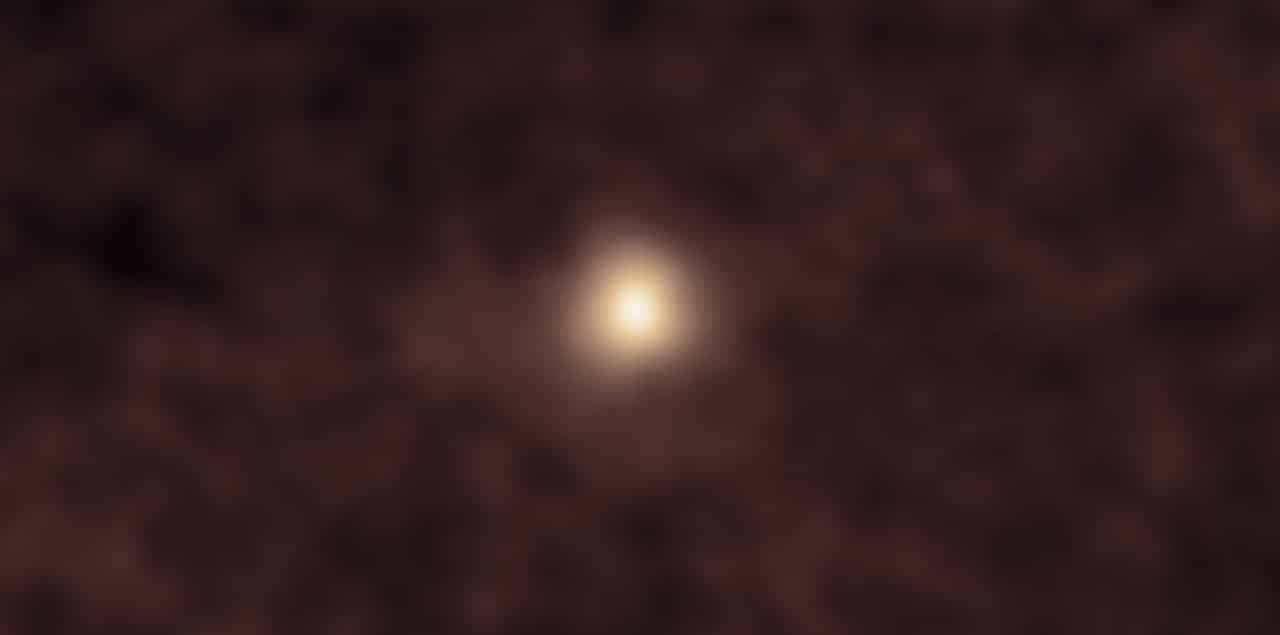
The Rede Internacional of Alerta of Asteroides (IAWN), an arm of the Organização of the Descoberto in July 2025 using the ATLAS system on Chile, the space object approaches the point of greatest visibility on Sistema Solar, without presenting any risk of collision with Terra.
Astronomers from different continents use a vast network of telescopes to track the trajectory and analyze the unique characteristics of this cosmic visitor. Esta initiative represents the first detailed monitoring of an interstellar object by IAWN since 2017, underlining the scientific relevance of the endeavor.
The campaign, meticulously planned since October 2024, mobilizes more than 80 professional observatories and a growing community of citizen scientists. The meticulously collected data is crucial for improving astrometry techniques, especially in comets that exhibit a diffuse coma, which is complex to analyze.
Global effort to track the comet
The international mobilization to observe 3I/ATLAS demonstrates the collaborative capacity of the global scientific community. Diversas research teams are joining forces to maximize the collection of information about this celestial body of extrasolar origin.
This collaboration is essential to decipher the mysteries surrounding the formation and evolution of comets outside our system. The exchange of data and methodologies between the observatories guarantees comprehensive coverage and an in-depth analysis of the phenomenon.
NASA’s leadership in the observation campaign
NASA holds responsibility for coordinating IAWN actions, centralizing international efforts for continuous monitoring of 3I/ATLAS. James Bauer, main researcher and professor at Universidade of Maryland, highlighted that the campaign has already reached half of the period stipulated for data collection.
Researchers are testing new methods for calculating hyperbolic trajectories with unprecedented precision. Essa innovative approach is vital to enhancing understanding of interstellar objects and preparing humanity for future space missions that may involve these celestial bodies.
Technological advances in telescopes and data processing systems allow for a level of detail that was not possible in previous observations. The ability to accurately predict the comet’s path directly contributes to planetary security.
Characteristics and composition of 3I/ATLAS
Comet 3I/ATLAS reveals activity typical of comets, with the release of water and carbon dioxide in proportions that resemble objects originating from Sistema Solar. Imagens more recent composites, captured between November 2025, show complex spiral structures, which may indicate cryovolcanism processes on their surface.
Detailed observations indicate a coma rich in carbon dioxide (CO₂), with concentrations that can be eight times greater than those of water, a rare feature in local comets. The comet’s nucleus is estimated to have a diameter ranging between 440 meters and 5.6 kilometers, suggesting a body of considerable size.
High-power telescopes like Gemini Norte, located at Havaí, have been crucial for recording deep details of the coma and ever-evolving tails. Essas characteristics reinforce the scientific value of the interstellar visitor for studies on the chemical compositions of distant regions of the universe. The data collected allows for unprecedented analysis of raw material from other star systems.
Accuracy in tracking diffuse comets
Measuring the exact position of comets presents inherent challenges due to the constant variation in their brightness and the expansion of the coma as they approach Sol. Essas changes can increase the apparent size of the object, making it difficult to accurately locate it in the sky.
Despite these difficulties, 3I/ATLAS has exhibited behavior considered classic, even with its interstellar origin. The monitoring campaign employs modern tools and advanced algorithms to overcome these obstacles, refining orbital calculations and ensuring maximum precision in observations.
Path and approaches of the interstellar object
The hyperbolic trajectory of 3I/ATLAS confirms its origin from outside Sistema Solar, a crucial indicator for studies of planetary formation in other stars. The comet reached its perihelion in October 2025, the closest point to Sol, approximately 210 million kilometers away. In October, a flyby of Marte was recorded 28 million kilometers from the red planet, offering unique observation opportunities for orbiting probes. The approach of Júpiter is scheduled for March 2026, with a possibility of a slight deviation in its route due to the gravitational influence of the gas giant, providing yet another event of interest for astronomers.
Astronomical community engagement
The monitoring campaign’s kickoff meeting attracted a record number of 171 participants, spanning a diversity of observatories and citizen scientists. Teleconferências subsequent sessions continued to count on the active participation of around 100 people involved, who discussed tools and reported data collected from different points.
This collective engagement is essential to improve global monitoring capabilities for objects close to Terra, strengthening the planetary defense network. The detailed results of these observations and analyzes are expected to be published in a peer-reviewed journal next year, contributing significantly to astronomical knowledge.
New perspectives for multispectral observation
Ultraviolet and X-ray images reveal unique interactions of 3I/ATLAS with the solar wind, offering new insights into its composition and activity. Missões spacecraft on Marte and solar orbiters are contributing data from varied points on Sistema Solar, enriching the available information set.
These multispectral observations confirm emissions of hydrogen and carbon, key elements that indicate natural cometary activity. The unprecedented coordination between several space agencies maximizes the collection of valuable information, allowing a more complete analysis of the object. Continuous monitoring strengthens planetary defense protocols, preparing humanity for future detections of similar objects, while the absence of collision risk allows full focus on scientific advances derived from this rare passage.



