
Comet 3I/Atlas reveals cryovolcanic activity and increases brightness on the solar journey of 2025

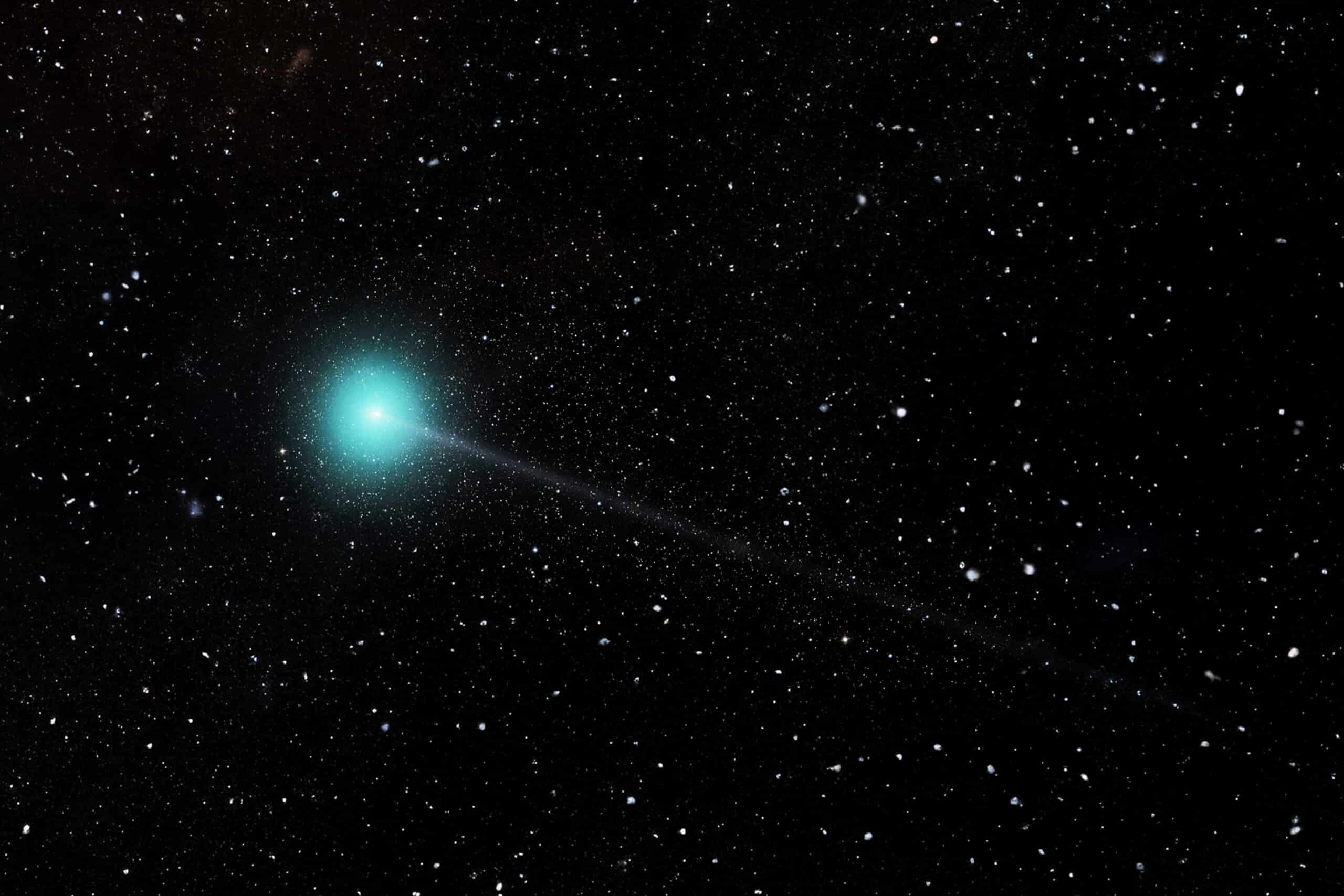
Interstellar comet 3I/Atlas, recognized as the third object confirmed to have originated outside of Sistema Solar, is exhibiting notable signs of cryovolcanism on its surface. Observações recent studies indicate that jets of gases and frozen materials are released from specific regions, forming spiral structures that have been captured in detailed images by several telescopes.
This phenomenon intensifies as the object approaches Sol, gradually heating up. Cryovolcanic activity began to be detected more prominently when the comet was approximately 2.5 astronomical units from the star, accompanied by a significant increase in its brightness.
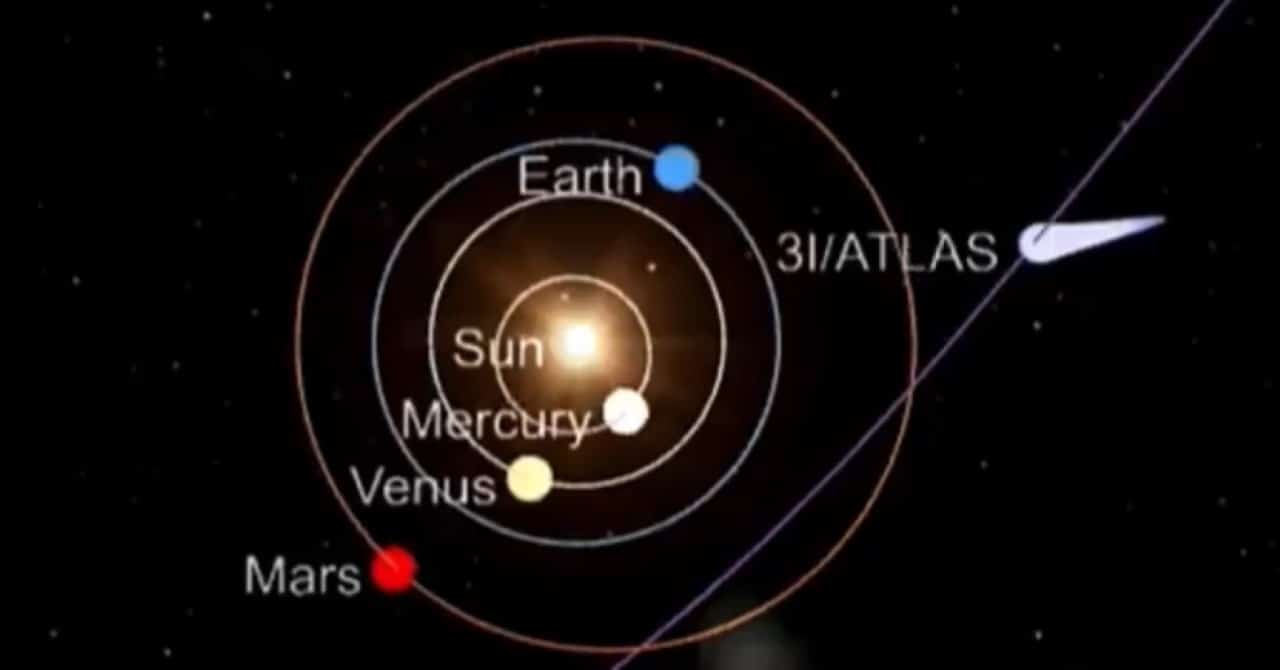
The closest approach of 3I/Atlas to Terra is scheduled for December 19, 2025, maintaining a safe distance of around 270 million kilometers, which rules out any risk of impact. Telescópios Earth and space scientists continue to actively monitor the behavior and evolution of this fascinating cosmic visitor.
Featured cryovolcanic activity
Images collected between November and December 2025 reveal spiral jets emanating from the comet’s nucleus, a clear indication of eruptions from ice volcanoes. Nesses events, pressurized gases rupture the surface crust, launching frozen material into space.
The cryovolcanism observed in 3I/Atlas differs from the sublimation common in comets, as it involves the intermittent and more energetic release of volatile materials. Compostos as methanol and carbon dioxide are expelled, and the absence of a protective dust cloak on the comet’s surface appears to facilitate this sustained and intense activity.
Primitive composition and distant origin
Spectroscopic analyzes compare the composition of 3I/Atlas to primitive carbonaceous chondrites, space rocks rich in metals such as iron and nickel. Essa similarity suggests that the comet formed in the extremely cold environments of another star system, possibly even before the formation of our own Sistema Solar, carrying with it traces of a remote cosmic era.
The presence of native metals and oxidizing compounds reinforces the hypothesis that it is a pristine body, which has not been significantly thermally processed over billions of years. Reações Internal chemistries, driven by the solar approach, contribute to the observed instability and jets, offering a window into the chemistry of other planetary systems.
This object shares certain characteristics with trans-Neptunian bodies in our system, such as some icy dwarf planets, in terms of density and constituents. Tal morphological and compositional similarity may indicate that planetesimal formation processes in distant regions of the galaxy follow universal patterns, despite specific variations in each star system.
Trajectory and intensive monitoring in 2025
Comet 3I/Atlas reached its perihelion in October 2025, the moment of closest approach to Sol, at a distance of approximately 1.36 astronomical units. Desde then, its coma, the atmosphere of gas and dust around the nucleus, and its tails have developed considerably, displaying a characteristic greenish color due to the presence of released molecules.
Cutting-edge space missions such as Telescópio Espacial Hubble and the Juice probe Agência Espacial Europeia (ESA), together with a vast network of ground-based telescopes, record continuous data about the comet. Essa international observation campaign is crucial to refine models of its trajectory and to deepen knowledge about its composition.
The high speed of 3I/Atlas, which in some points exceeded 200 thousand kilometers per hour, confirms its violent ejection from its home system. Após its passage close to Terra in December, the comet will continue its journey and definitively leave Sistema Solar, continuing on its hyperbolic trajectory through interstellar space.
Crucial differences in relation to local comets
Comets originating from our Sistema Solar generally have a dust mantle that acts as a sublimation regulator, controlling the release of gases. In the case of 3I/Atlas, the apparent absence of this mantle allows for more intense and prolonged cryovolcanic eruptions, an atypical behavior for the comets we know.
The rate of methanol release by 3I/Atlas, estimated at about 40 kilograms per second, significantly exceeds averages observed for local cometary objects. Além Furthermore, the periodic brightness pulses detected suggest irregular rotations of the core or ejections of volatile material occurring at specific points on its surface.
Detailed observations on recent images
Specialized telescopes, such as Joan Oró in Observatório of Montsec, have been able to capture detailed structures of the jets emanating from the comet. Composições obtained from multiple exposures reveal snaking tails that are deflected by the influence of the solar wind, showing the complex dynamics of the comet’s interaction with the space environment.
The comet’s coma, which initially had a reddish color, evolved into green tones as cryovolcanic activity increased, an indication of the presence of different gases being released. Imagens from the Juice probe, in turn, reveal the formation of multiple tails, both plasma and dust, illustrating the complexity of its interaction with Sol. Registros from Hubble in November highlight a slightly off-center core and jets heading toward the star, providing unique insights into interstellar chemistry.
Unique features detected
Comet 3I/Atlas’s brightness increased at a faster rate than predicted by initial models, reaching magnitudes that make it visible even to amateur observing equipment. Espectros obtained indicate the absence of certain gases common in Sistema Solar comets, prioritizing the release of volatiles such as carbon dioxide.
The comet’s solid structure and carbon-rich composition suggest a greater resistance to disintegration compared to typical comets in our system. Comparações with Antarctic meteorites reinforce the idea of the pristinity of the material that makes up 3I/Atlas, indicating that it has maintained its original composition since its formation.
– Jatos spirals are visible using special filters.
– The increase in brightness is equivalent to several magnitudes in a short period.
– Há a remarkable spectral similarity to CR chondrites.
– Cryovolcanic activity began at greater distances than usual for comets.
Implications for modern astronomy
The in-depth study of comet 3I/Atlas significantly expands scientific knowledge about the formation of small celestial bodies in other stellar systems. Cada interstellar object that is detected and investigated reveals unexpected properties, contributing to the refinement of cosmogonic models that describe the origin and evolution of the universe.
The detection of cryovolcanism in a visitor from outside our solar system indicates that such processes may be more common throughout the galaxy than previously imagined. The data collected from the 3I/Atlas observation is fundamental for the calibration and improvement of instruments that will be used in future space missions, preparing astronomy for new discoveries.
Observations made by amateur astronomers valuablely complement professional efforts, recording daily variations in the comet’s brightness and activity. The 3I/Atlas flyby offers a rare window to directly examine material formed billions of years ago in a stellar environment different from our own.



