
Historic approach of interstellar comet 3I/ATLAS to Earth reveals cosmic secrets

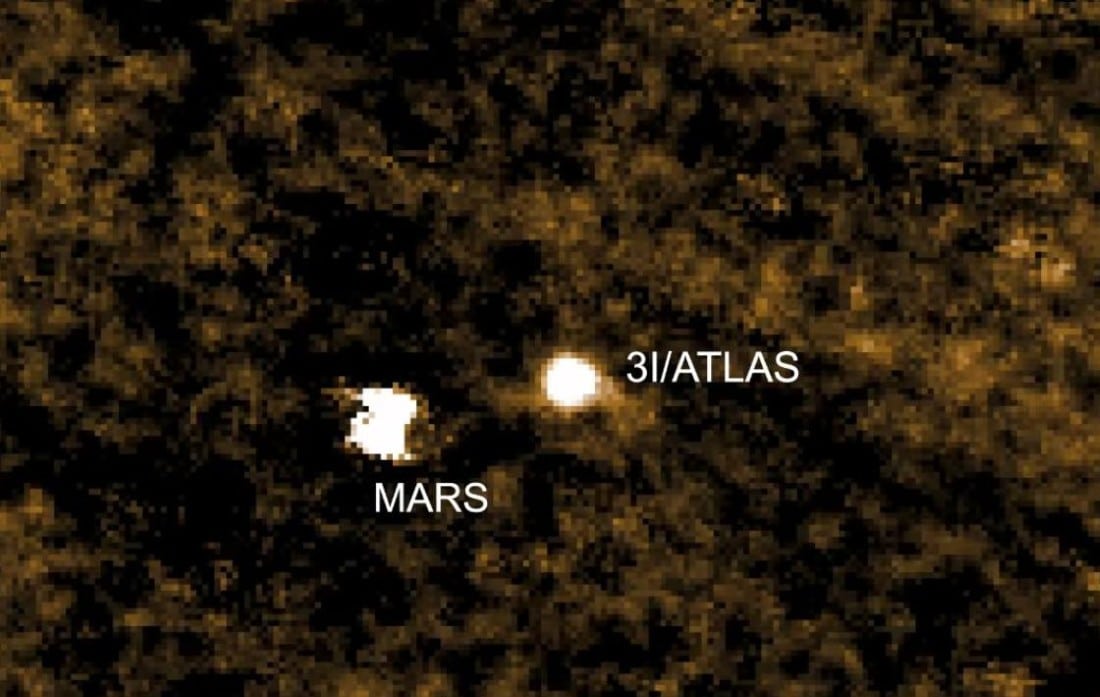
A cosmic visitor from outside our solar system, the interstellar comet 3I/ATLAS, made its closest approach to Terra on December 19, 2025, maintaining a safe distance of approximately 270 million kilometers. The event, monitored globally, did not pose any risk of collision.
Discovered on July 1, 2025 by the ATLAS telescope system at Chile, this is the third confirmed celestial body with an origin outside Sistema Solar to be observed. Sua hyperbolic trajectory validated its provenance.
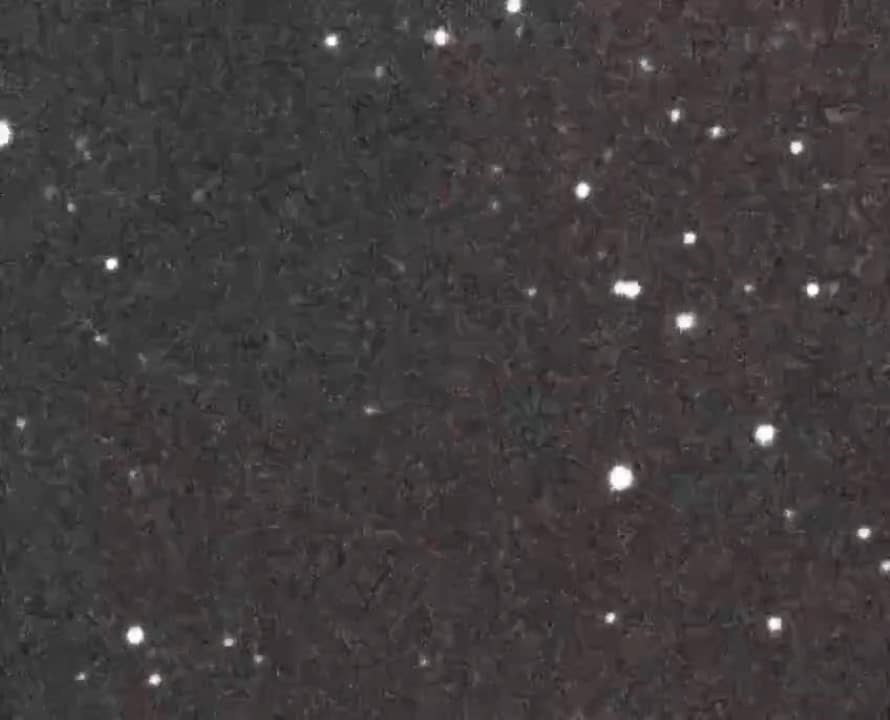
The 3I/ATLAS passage offers a unique opportunity for the scientific community, allowing crucial comparisons with objects native to Sistema Solar and providing valuable data on the formation of other stellar systems. Astrônomos follows his journey towards the most distant regions of space.
Uncovering the trajectory and its origin
Astronomers initially identified 3I/ATLAS as a fast-moving object located within the orbit of Júpiter. Análises’s subsequent trajectory revealed an orbital eccentricity greater than 1, a clear indicator that its orbit is not gravitationally bound to Sol, confirming its interstellar origin.
Observations confirmed the presence of a coma and a tail, classifying it as an active comet, different from other interstellar objects like ‘Oumuamua. 3I/ATLAS exhibited notable brightness and color variations during its closest pass to Sol, providing rich data for analysis.
Unique composition and characteristics
In-depth spectroscopic analyzes of 3I/ATLAS indicated a predominance of carbon dioxide in the coma, a trait that distinguishes it from many native Sistema Solar comets, which are generally richer in water ice. The significant presence of carbon monoxide and other volatiles reinforces the hypothesis that the comet formed at exceptionally low temperatures, in a primordial environment different from ours.
The detection of nickel and other metallic elements in high proportions in the comet’s spectrum points to an environment of unique origin, with a particular stellar chemistry. Esses chemical markers are crucial for differentiating 3I/ATLAS from objects formed within the protoplanetary clouds of our own Sistema Solar, providing clues about the diversity of planet formation conditions in the galaxy.
Ultraviolet and X-ray observations revealed an envelope of hydrogen around the nucleus and complex interactions with the solar wind, phenomena that offer valuable information about the processes of sublimation of deep ices and the release of gases as the comet approaches a star.
Phenomena observed in the passage
The comet developed a greenish coma after its perihelion, a phenomenon resulting from chemical processes activated by solar heat. The radiation from Sol interacts with the cyanogen and diatomic carbon molecules released by the nucleus, producing the characteristic glow.
Images captured by cutting-edge telescopes such as the Gemini Norte and Hubble revealed tails of dust and ions that stretched hundreds of thousands of kilometers. Essas dynamic structures are formed by solar radiation pressure and solar wind, which push the comet’s ejected material away from Sol.
For the first time in an interstellar object, X-ray emissions were detected by space observatories. Essas emissions are an indication of interaction between the solar wind, composed of high-energy charged particles, and the gases that are released by the comet’s nucleus, offering a new window to study the physics of these cosmic encounters.
The comet’s high speed in relation to Sol, greater than 60 km/s, is one of the factors that confirm its extrasolar nature. Sua composition, which includes water ice, carbon dioxide and carbon monoxide, suggests:
– Formação in a distinct stellar environment, probably with temperatures lower than those in our solar system.
– A core with an estimated diameter of between 1 and 5 kilometers.
– An age calculated in billions of years, indicating its formation in another very old star system.
The comet’s path and its encounter with Júpiter
3I/ATLAS charted a remarkable course through the inner Sistema Solar in 2025, passing through Marte in October, Vênus in November, and finally Terra in December. Sua hyperbolic velocity ensures that it will continue its outward journey, permanently leaving Sistema Solar within the next decade. Simulações orbitals indicate that non-gravitational forces, such as the jets of gas emanating from the comet’s nucleus, exert a subtle influence on its path, and continued monitoring is essential to refining predictions about its future path.
In March 2026, the comet will have a close encounter with Júpiter, passing approximately 53 million kilometers from the gas giant, within its radius of Hill. Essa approach may introduce small changes to the comet’s final trajectory due to powerful Jovian gravity, and the Juno probe, which currently orbits Júpiter, will be in a prime position to record this event between March 9 and 22, 2026.
Contributions from telescopes and space missions
Ground-based telescopes located at observatories at Havaí, Além In addition, cutting-edge space instruments such as Hubble, James Webb Space Telescope and Parker Solar Probe recorded unprecedented details of 3I/ATLAS’s coma and tail. The ability to observe without interference from the Earth’s atmosphere was crucial to obtaining high-resolution images and accurate spectral data. Missões in Marte, including MAVEN and Mars Reconnaissance Orbiter, obtained unique views of the comet during its Martian approach. The Europa Clipper and the Psyche probe also contributed images and data during their respective trajectories, expanding observation coverage and complementing studies on their orbital dynamics and composition.
Scientific relevance to astronomy
3I/ATLAS acts as a cosmic time capsule, transporting material and information from a distant star system. Sua chemical and isotopic composition provides valuable clues about planetary formation conditions in environments outside our own Sistema Solar.
Legacy of interstellar passage
The 3I/ATLAS visit highlights the rarity and importance of interstellar objects detected to date. Continued Aprimoramentos search and detection systems such as ATLAS and other research programs significantly increase the chances of similar future discoveries.
The detailed data collected during the comet’s passage will profoundly influence studies of exoplanets and protoplanetary disks, providing empirical insights into the formation and evolution of stellar systems beyond our own. Modelos theorists about the ejection of comets from stellar systems will gain greater precision and validation from these observations.




