
Nissan reveals Gravite as new seven-seater minivan for the Indian market in 2026


The Japanese automaker confirmed the name and released teasers that highlight exclusive design elements, differentiating the model from the Renault Triber version, on which it is based.
Production will take place at the Chennai factory, and the vehicle is part of an expansion strategy that includes two more launches until 2027.
The Gravite arrives at Indian dealerships from March 2026, positioning itself as an affordable option for families.
Differentiated external design
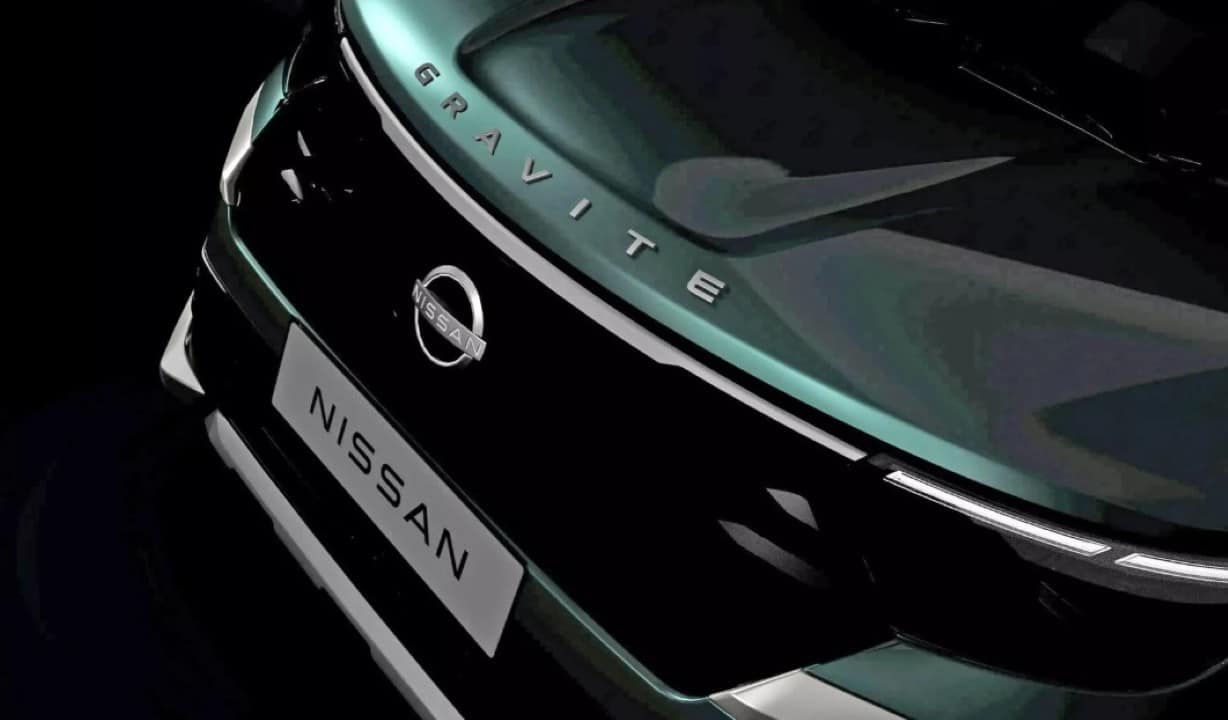
The front of the Gravite features a larger hexagonal grille finished in glossy black and a central Nissan emblem.
The headlights feature revised LED graphics and C-shaped signatures on the bumper, giving greater visual presence.
On the side, the profile maintains compact proportions with a length of less than four meters, including redesigned alloy wheels and functional roof rails.
- Black claddings on wheel arches
- Chrome door handles
- Wide windows for better visibility
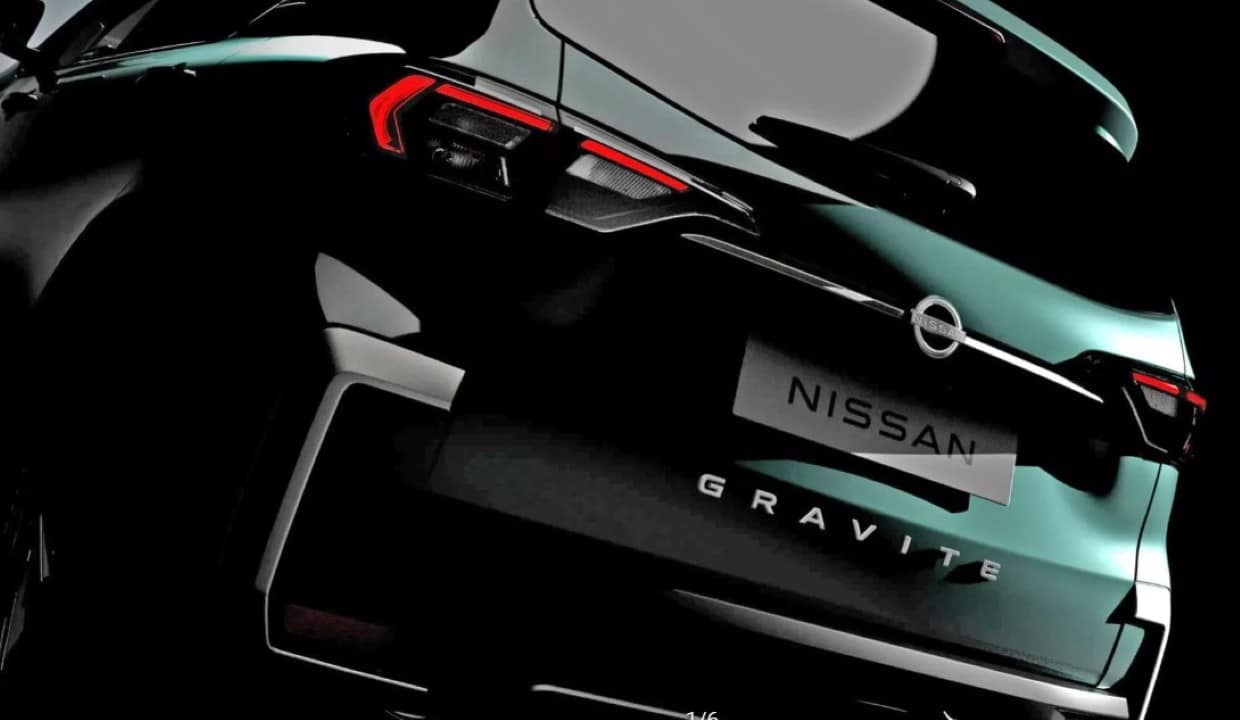
The rear receives LED lights with a J signature, a chrome bar connecting the lights and a bumper with C details.
The name Gravite appears stamped on the trunk lid, reinforcing the brand’s identity.
These adjustments aim to distinguish the model from the shared platform, while maintaining practicality for urban use.
Modular and practical interior
The Gravite promises ultra-modular seating in a three-row configuration for up to seven occupants.
The Nissan features exceptional space and class-leading storage solutions, allowing removal of the third row for greater cargo volume.
The cabin prioritizes versatility for Indian families, with a focus on daily comfort and long journeys.
Although full interior details have not yet been revealed, expect a similar layout to the base Renault, but with color themes and materials unique to the Nissan.
- Individually foldable seats
- Multiple storage compartments
- Air conditioning with rear outlets
This configuration keeps the vehicle compact externally but spacious internally.
Shared technical specifications
The Gravite uses the CMF-A+ platform, with dimensions of around 3,985 mm in length.
Under the hood, it features a 1.0-liter three-cylinder gasoline engine, generating 72 hp and 96 Nm of torque.
Transmission options include a five-speed manual or similar automated transmission.
The drive is front-wheel drive, prioritizing fuel efficiency for the entry-level segment.
These characteristics align the model with economic positioning, benefiting from tax incentives for sub-4 meter vehicles in the Índia.
Nissan expansion strategy
The Gravite begins an offensive of products from the Nissan to the Índia, being the first of three new models.
Then comes the Tekton, a compact SUV based on the Duster, scheduled for mid-2026.
A larger seven-seat SUV, derived from a higher platform, is scheduled for early 2027.
The brand plans to expand the dealership network to support sales growth.
This initiative aims to diversify the current portfolio, limited to Magnite, and strengthen the presence in the third largest global automotive market.
Positioning in the Indian market
Targeted at families on a budget, the Gravite competes in the subcompact minivan segment.
Its proposal values modularity and accessibility, meeting demands for versatile vehicles in urban centers.
Local production in Chennai guarantees competitive prices, estimated close to those of the Renault version.
The model reinforces the Renault-Nissan partnership, sharing resources to reduce costs.
With a focus on practicality, the Gravite seeks to attract consumers who prioritize space without giving up savings.
Release and availability details
The full presentation will take place in January 2026, with final details on equipment and prices.
Sales began in March of the same year, gradually expanding across the Indian network.
Nissan accelerates the expansion of points of sale to keep up with new launches.
This schedule is part of the brand’s revitalization plan in the Asian country.
The Gravite represents a commitment to sustainable growth in the family segment.



