Summer solstice arrives on December 21st with the longest day of the year in the Southern Hemisphere
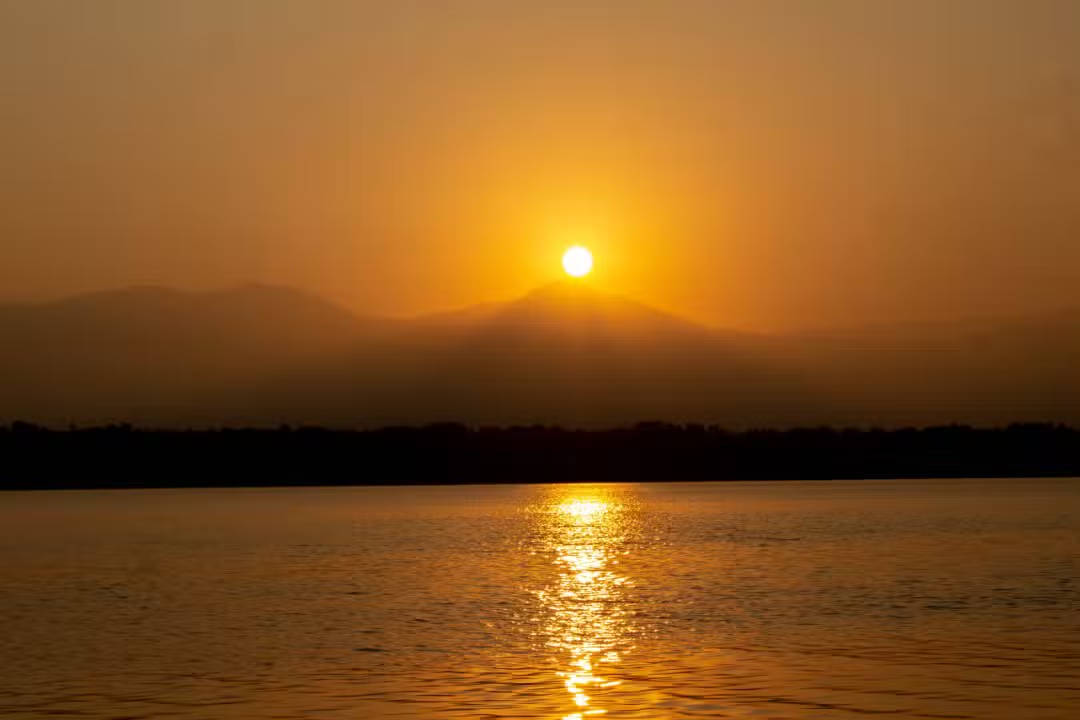
The summer solstice occurs on December 21, 2025, at 12:03 pm Brasília time. Esse astronomical phenomenon defines the longest day of the year in Hemisfério Sul, with a greater incidence of sunlight and shorter nights. Ele results from the maximum inclination of the earth’s axis in relation to Sol.
The Terra completes its translational movement around the Sol while maintaining an inclination of approximately 23.5 degrees. Nesse specific point, the sun’s rays fall perpendicularly on the Trópico of Capricórnio. Países like Brasil, Argentina and Austrália receive more hours of daily light.
- The day can last up to 14 hours in southern regions of Brasil.
- Cities like São Paulo record around 13 hours and 40 minutes of sunlight.
- Areas close to the equator maintain smaller variations in day length.
The opposite phenomenon happens at Hemisfério Norte, where December 21st marks the winter solstice and shortest day.
Astronomical phenomenon explained
The solstice derives from Latin and means “sun still”, as the position of Sol in the sky appears stationary for a few days. Astrônomos calculate the exact date based on the rotation and translation movements of Terra. The tilt of the Earth’s axis causes uneven distribution of light between the hemispheres throughout the year.
Instituto Nacional experts from Meteorologia confirm that the 2025 event takes place at precisely 12:03 pm on Brasília. Essa hourly variation occurs due to the complete orbital cycle of Terra.
Differences between hemispheres
At Hemisfério Sul, the December solstice begins astronomical summer, with progressively longer days leading up to the event. Regiões south polars experience periods of continuous light for weeks. Já in Hemisfério Norte, the same day represents the beginning of winter, with minimal sun exposure.

Along the Equador line, days and nights last approximately 12 hours each throughout the year. The tropics of Câncer and Capricórnio define the limits where the sun’s rays fall perpendicularly at the solstices.
Origin and annual variations
The term solstice reflects the apparent pause in the north-south movement of Sol across the sky. Datas vary slightly each year, usually between December 20th and 23rd at Hemisfério Sul. Fatores how leap years influence accurate calculations.
Ancient observations recorded the phenomenon in monuments such as Stonehenge, aligned with solar positions on the solstices. Hoje, astronomical institutes monitor these events precisely.
Features of the longest day
On December 21, Sol rises further south and sets later, extending the period of light. Cidades Brazilian women in the south, like Porto Alegre, record a greater difference in daily duration. Temperaturas tend to rise in the following days due to the accumulation of solar energy.



The event marks the transition to more frequent rain in much of Brasil. Observadores notice Sol reaching maximum altitude in the sky at noon.
Earth movements involved
The rotation of Terra on its axis generates days and nights, while the translation defines the seasons. The combination of these movements with axial tilt produces solstices and equinoxes. Equinócios occur when the hemispheres receive equal light, with 12-hour days and nights.
The summer solstice on Sul corresponds to the winter solstice on Norte, reversing the seasons annually.
Observation at different latitudes
Near the poles, the solstice causes extreme phenomena such as the midnight sun in summer. No Círculo Polar Antártico, Sol remains visible for 24 hours in December. No Brasil, the variation increases the further south the location is.
Tropical regions see smaller changes in day length throughout the year.
Traditions associated with the event
Ancient cultures celebrated solstices with rituals linked to fertility and harvests. Povos indigenous Brazilians observed solar positions for agricultural calendars. Hoje, the phenomenon serves as a reference for the official start of summer in Hemisfério Sul countries.
Modern festivals in some regions mark the arrival of the warm season.
The summer solstice represents a recurring astronomical milestone that influences global climates. Ele highlights the orbital dynamics of Terra and its consequences on the distribution of light and heat. Observações continue to refine understandings of these annual cycles.
The accuracy of forecasts allows planning of seasonal activities in different sectors.
Veja Tambem em News (EN)

Research reveals that parents are unaware of how their children use artificial intelligence

Samsung releases new system update with new features for Galaxy Watch 4 users

Digital retail reduces the value of the Galaxy S25 5G smartphone with bank bonuses and device exchange

Amazon’s wireless CarPlay adapter has a 50% discount and high approval ratings from drivers

Zach Cregger’s new Resident Evil ignores games and focuses on an unprecedented story with new characters

Rumor suggests that Nintendo is preparing a special edition of the Switch 2 with a remake of Ocarina of Time

Apple accelerates production of the iPhone 17e and develops new Air model with dual camera system

Epic Games platform releases twelve high-budget games at no permanent cost for PC users

PlayStation 5 Pro price drop accelerates digital retail sales and eliminates global stocks

New Galaxy Watch 9 firmware appears on server and confirms progress in software development

Apple’s commemorative project tests cell phone with 1.1 millimeter edge and curved screen for 2027