
Ursid meteor shower peaks on December 22 with up to 10 shooting stars per hour in dark skies

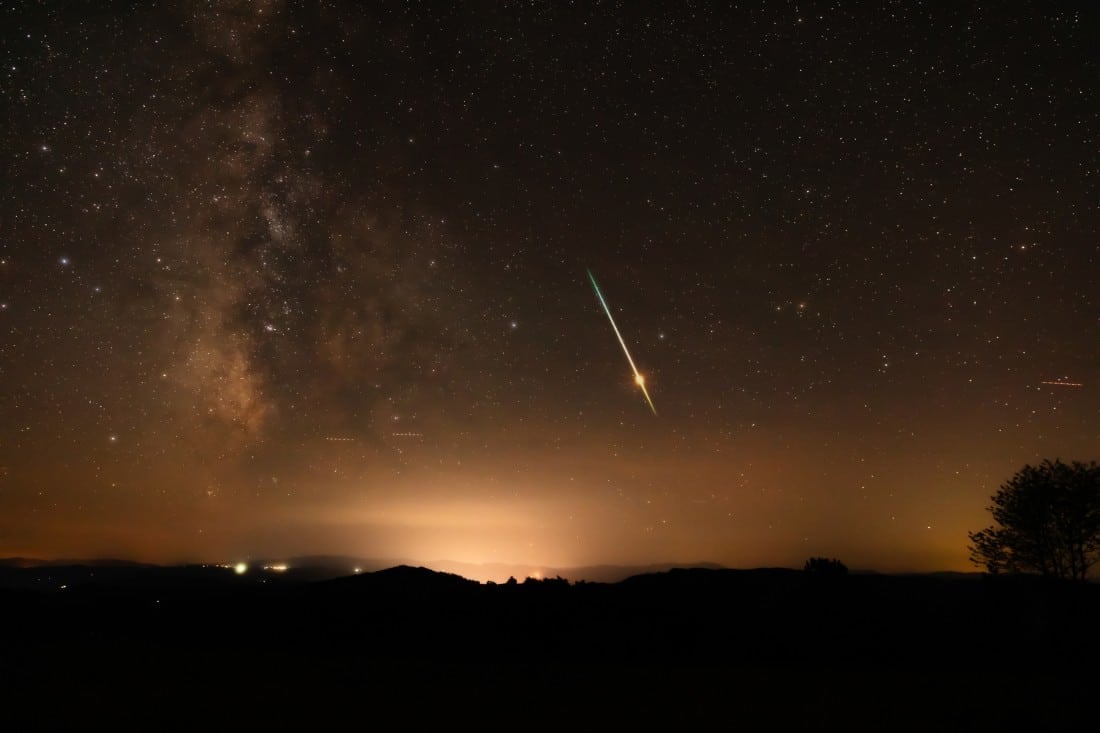
The Ursídeos meteor shower peaks on the night of December 21-22, 2025, offering up to 10 meteors per hour in ideal conditions. Esse phenomenon occurs close to the winter solstice, marked by the longest night in Hemisfério Norte, and benefits from the proximity to the new moon, which guarantees darker skies.
Observers can expect meteors radiating from the constellation of Ursa Menor, with the best period in the pre-dawn hours. The almost total absence of lunar brightness increases the chances of spotting quick and often faint streaks across the sky.

This annual rain remains active between December 13th and 26th, but the maximum concentrates the greatest activity on a single night. Especialistas highlight that occasional outbursts increase rates to more than 25 meteors per hour in exceptional years.
- Choose locations away from light pollution to maximize visibility.
- Lie down comfortably and allow your eyes to adapt to the darkness for at least 20 minutes.
- Direct your gaze to the northern half of the sky, without focusing only on the radiant.
- Avoid cell phone screens to preserve visual adaptation.
Origin of the phenomenon
The Ursídeos meteor shower results from dust and debris left behind by comet 8P/Tuttle in the inner solar system. Comet Esse completes an orbit around Sol every 13.5 years, releasing particles that Terra intercepts annually.
The apparent radiant is located near the star Kochab, in the constellation of Ursa Menor, known as Pequena Ursa. The meteors appear to originate from this region, but they streak in all directions across the sky.
Historical records indicate significant outbursts, such as in 1945 and 1986, when rates reached around 100 meteors per hour. Essas variations occur when Terra passes through denser filaments of cometary material.
Observation conditions in 2025
This year, the new moon occurs on December 20, leaving the sky with virtually no lunar illumination during its peak. On the 21st, Lua appears as a thin crescent of just 2% to 3% illumination at dusk, disappearing quickly.
The winter solstice takes place on December 21st, lengthening the night at Hemisfério Norte and extending the time available for observation. Essas conditions combined make 2025 one of the best recent years to view the Ursídeos.
Visibility is mainly limited to Hemisfério Norte, as the radiant remains high in the northern sky. No Hemisfério Sul, including much of Brasil, few or no meteors become visible except at more northern latitudes.
Practical tips for observers
Find rural areas or parks far from cities to reduce light pollution. The use of binoculars or telescopes is not recommended, as meteors move quickly and require a wide view of the sky.
- Dress warmly, as December nights experience low temperatures in many regions.
- Use a reclining chair to comfortably watch for hours.
- Focus on the pre-dawn hours, when the radiant reaches its highest position.
- Record sightings to contribute data to astronomical societies.
History and characteristics
Ursídeos is classified as a moderate shower, with normal rates of 5 to 10 meteors per hour in dark skies. Diferenciam avoid more intense events, like Geminídeas, but they attract enthusiasts due to their tranquility and potential for surprises.
Comet 8P/Tuttle, discovered in the 18th century, has an elliptical orbit that varies from a proximity similar to that of Terra to beyond Saturno. The released particles burn in the Earth’s atmosphere, producing the characteristic luminous traces.
Past observations reveal that bursts occur when passing through more concentrated debris trails. In 2025, forecasts indicate standard activity, but with the possibility of a brief increase at specific times.
Global and regional visibility
In Hemisfério Norte, countries such as Estados Unidos, Canadá and Europa offer the best conditions, with the circumpolar radiant at high latitudes. Observadores face cold nights, but the extended duration is worth the effort.
In equatorial regions, visibility is reduced, and in Hemisfério Sul it becomes practically zero due to the low position of the radiant. Alternativas include more favorable rainfall at other times of the year.
Astronomers recommend consulting interactive maps for precise local maximum times. Aplicativos astronomy charts help identify the north direction and positioning of Ursa Menor.
Preparation for photography
Night sky photographers use cameras with wide-angle lenses and stable tripods to capture long strokes. Exposições prolonged periods of 20 to 30 seconds increase the chances of recording meteors.
Set high ISO and wide aperture to capture low light in dark skies. Paciência proves to be essential, as events occur unpredictably.
Compose images by including earthly elements, like trees or horizons, to add visual context. The absence of Lua facilitates sharp captures of background stars.
The Ursídeos meteor shower represents the last major celestial event of 2025, ending the year with a unique opportunity for contemplation. Condições favors encourage observers to take advantage of the prolonged night of the solstice.
Activity records vary annually depending on the density of intercepted debris. Sociedades like American Meteor Society collect data to predict future behavior.
This phenomenon reinforces the connection between periodic comets and recurring events in the Earth’s sky. Direct observation provides an accessible experience for everyone, without the need for advanced equipment.



