
What is the phase of the moon today December 19, 2025: New Moon arrives and lunar calendar

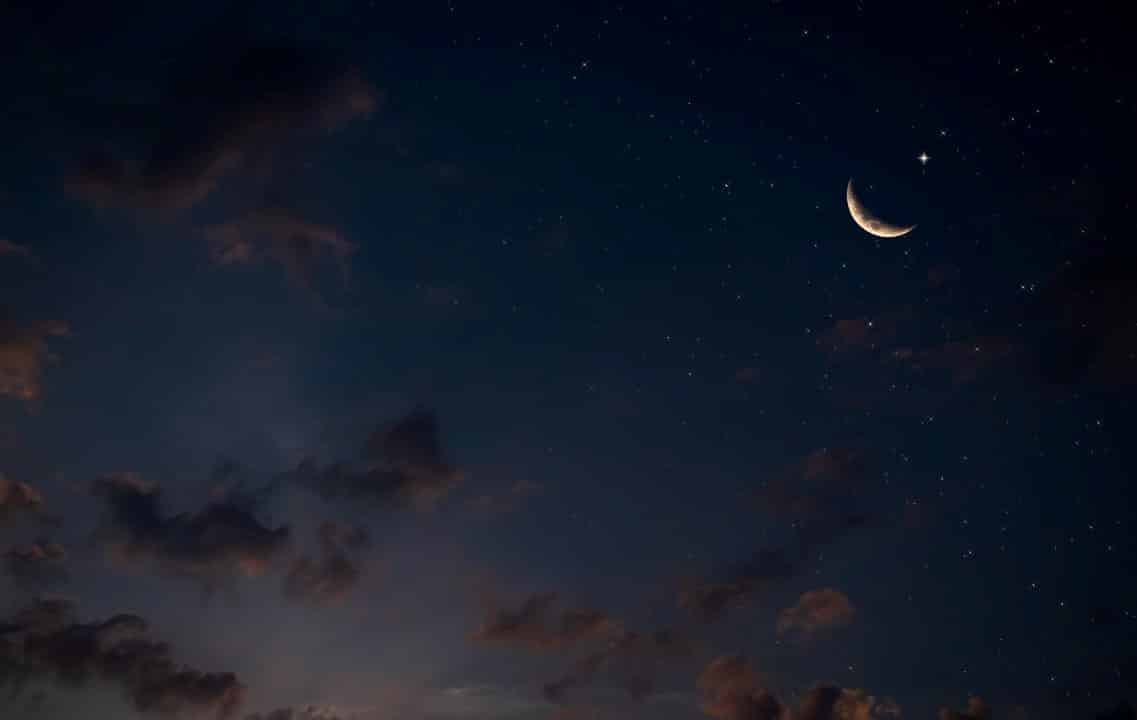
This Friday, December 19, 2025, Lua enters phase Nova at 10:43 pm, local time corresponding to the astronomical reference zone adopted in global observations.
This phase represents the beginning of a new lunar cycle, with visibility close to zero percent, as the satellite is positioned between Terra and Sol.
The distance from Lua to Terra reaches approximately 403 thousand kilometers in this period, marking the restart of the synodic month of approximately 29.5 days.
The transition to Lua Nova occurs after phase Minguante, and the next change will be to Crescente, scheduled for the 27th.
Current phase of Lua
The Lua Nova of December 19 defines the minimum lighting point of the cycle.
At this moment, the face illuminated by Sol faces away from Terra, making the satellite practically invisible in the night sky.
Observers may notice ideal conditions for viewing stars and other distant celestial bodies due to the absence of lunar glare.
- Visibility: close to 0% to 1%.
- Age of Lua: approximately 29 days at the beginning of the transition.
- Average distance: 403,634 km.
Lunar cycle and its stages
The lunar cycle is divided into four main phases: Nova, Crescente, Cheia and Minguante.
Each stage lasts approximately seven days, completing the average synodic period of 29.53 days.
The combined gravity of Lua and Sol influences ocean tides, generating variations known as spring tides during the Nova and Cheia phases.
These changes affect coastal ecosystems and activities such as fishing and navigation.
The precise alignment between Terra, Lua and Sol defines the exact phase transitions.

December 2025 phases
December 2025 presents a complete cycle, starting with Lua Cheia on the 4th.
Minguante arrives on the 11th, followed by Nova on December 19th.
Crescente ends the month on the 27th.
- Moon Cheia: December 4th.
- Moon Minguante: December 11th.
- Moon Nova: December 19, at 10:43 pm.
- Moon Crescente: December 27th, at 4:09 pm.
These dates are based on precise astronomical calculations, considering the elliptical orbital motion of Lua.
Annual lunar calendar 2025
The year 2025 has 12 complete lunar cycles, including events such as supermoons and eclipses.
Supermoons occur when Lua Cheia or Nova coincides with perigee, the closest point to Terra.
In 2025, supermoons stand out in March, April, May, November and December.
Lunar and solar eclipses mark specific dates: lunar eclipses in March and September, and solar eclipses in March and September.
- Total of Luas Novas: 12.
- Total of Luas Cheias: 12.
- Supermoons confirmed: five throughout the year.
Observation of lunar phases
Observation of Lua requires clear sky conditions, preferably away from urban light pollution.
During phase Nova, the dark sky favors the identification of constellations and occasional meteor showers.
Tools like telescopes or astronomical apps help you track exact positions.
Lua Nova also coincides with periods of greater combined gravitational influence, affecting high tides in oceanic regions.
Additional astronomical details
The orbit of Lua presents subtle variation, with the duration of the synodic cycle oscillating between 29 and 30 days.
In December 2025, the cycle ends the year with the transition to the next in January.
The percentage visibility starts at zero at Nova and progressively increases to 100% at Cheia.
This data assists in planning agricultural activities, where specific phases guide planting and harvesting in traditional practices.
Lua Nova represents renewal in various global cultural contexts, marking the beginning of months in lunar calendars.



