
NASA study points to the threat of 560,000 satellites to the clarity of Hubble images in 2025

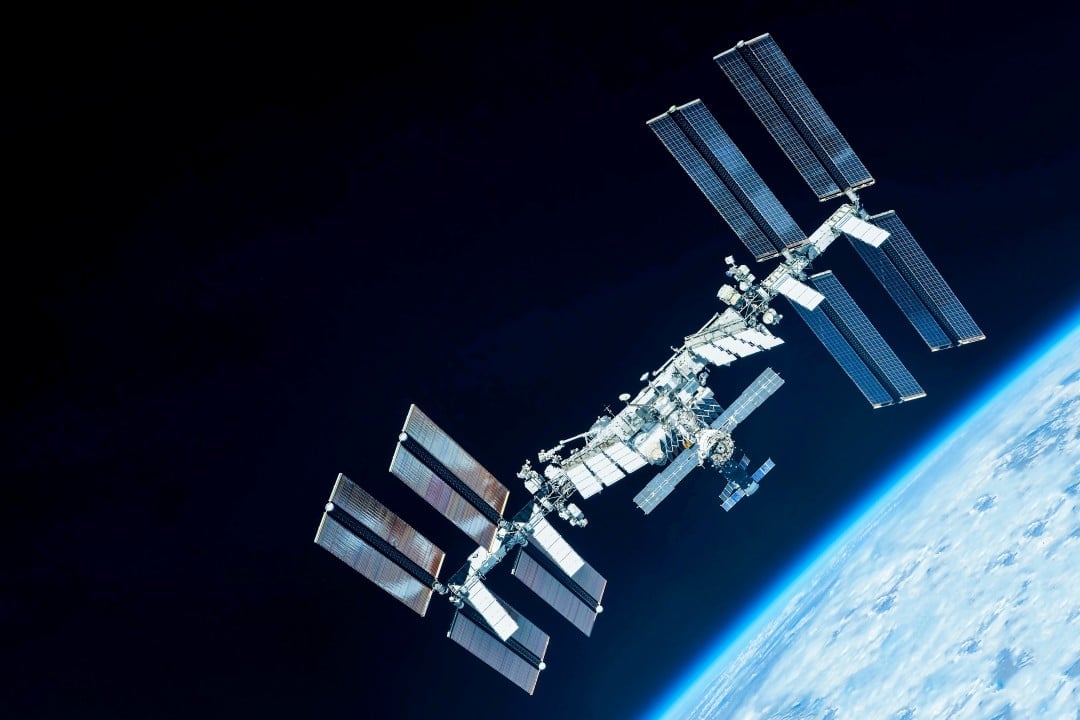
Recent research, conducted by experts at Nasa and published in the journal Nature, highlights an imminent and severe risk to space astronomy. Megaconstellations of satellites in low Earth orbit (LEO), whose number grows exponentially, can drastically compromise the quality of observations.
The study simulated the impact of a projection of up to 560 thousand satellites, planned by large companies such as SpaceX, Amazon and China. The results are alarming, indicating that three space telescopes currently in operation or under development may have up to 96% of their images polluted by light trails.

Even the iconic Telescópio Espacial Hubble, a mainstay of astronomical research, is expected to record tracks in about 40% of its long-term exposures. Cutting-edge terrestrial Observatórios, such as the Vera C. Rubin, which will enter full operation in 2025, also face significant losses in their sky mapping capabilities.
Growing threat to space observation
The scientific work of the American space agency considered four space instruments, including those that are already in operation and those that are in the final stages of development. Três of these equipment, positioned in low orbit, showed a contamination rate close to 96% in the most unfavorable simulations.
Telescópio Espacial Hubble, located at an altitude of approximately 540 kilometers, had a lower but still considerable contamination rate, reaching 40%. The Essa difference is attributed to the fact that the Hubble orbits at a slightly higher altitude than most satellite constellations being planned and deployed.
Expansion of megaconstellations in low orbit
The number of objects tracked in low Earth orbit has experienced a significant increase, jumping from a few thousand to more than 20,000 since 2019. Essa proliferation is a direct reflection of the drastic reduction in satellite launch costs.
Innovation in the space sector, driven mainly by SpaceX’s Falcon 9 rocket, has made access to space more accessible and viable for the market. Como Consequently, several companies and countries have announced ambitious plans to launch hundreds of thousands of additional satellites in the coming decades.
The Nasa projection, which underpins the research, is based on a scenario where all satellite constellation projects already approved or under analysis are successfully completed. Esse massive volume of objects in orbit is the main source of concern for the astronomical community.
[[_0]
Severe impacts for ground-based observatories
Observatório Vera C. Contudo, even with a more conservative scenario of only 50 thousand satellites in orbit, up to 80% of the images captured by Rubin may present visible trails, compromising the integrity of the data. Diferentemente of space telescopes, which may have some scope for orbital adjustments, a ground-based observatory like the Rubin does not have the ability to change its position to avoid this interference. The scale of the problem indicates an urgent need for solutions that transcend the individual capabilities of each facility.
Proposals from the scientific community to mitigate the problem
The researchers involved in the study list several solutions that have already been widely discussed by the global scientific community. Entre the alternatives, the application of low reflectivity coatings, such as Vantablack, appears as a measure to reduce the brightness of satellites.
Although these coatings help to reduce the intensity of light trails, they are not able to eliminate them completely, representing a partial solution to the challenge. Outras strategies include orbital adjustments and coordinated maneuvers between satellite operators, which requires a high level of international cooperation and regulation.
Effective implementation of these measures depends on global agreements and the willingness of companies and space agencies to adopt more rigorous standards. Enquanto This, Telescópio Espacial James Webb, positioned 1.5 million kilometers from Terra, remains outside the direct reach of satellite constellations in LEO, offering a haven for uncontaminated observations.
The future of astronomical research at risk
Increasing light contamination, driven by the proliferation of satellites, affects a wide range of scientific research, from the exploration of exoplanets to the detailed mapping of asteroids near Terra. Projetos decades-old scientific studies, which demand precise and uninterrupted observations, could have their quality irreversibly compromised if there is no effective and immediate regulation.
The international astronomical community closely monitors ongoing negotiations and discussions with space agencies and private companies to seek solutions. The Nasa study reinforces the urgency of joint and coordinated actions between all actors involved to preserve access to the night sky and ensure the continuity of astronomical research in orbit.



