
Toyota’s 2027 Corolla Cross features an unprecedented 223 hp flex hybrid and improved GR-Sport


The Toyota is preparing a substantial restyling for the Corolla Cross, scheduled for launch at the end of 2026 as the 2027 line, seeking to maintain its strong position in the competitive medium SUV segment in the Brasil. The planned changes include subtle visual improvements, inspired by the European version of the model, and the introduction of an unprecedented flex plug-in hybrid engine.
This strategy by the Japanese automaker responds to growing pressure from new competitors, especially from brands that have invested heavily in electrified technologies in the national market. The objective is to reinforce leadership with a model that promises to combine high power with optimized fuel consumption, meeting demands for greater efficiency and lower environmental impact.
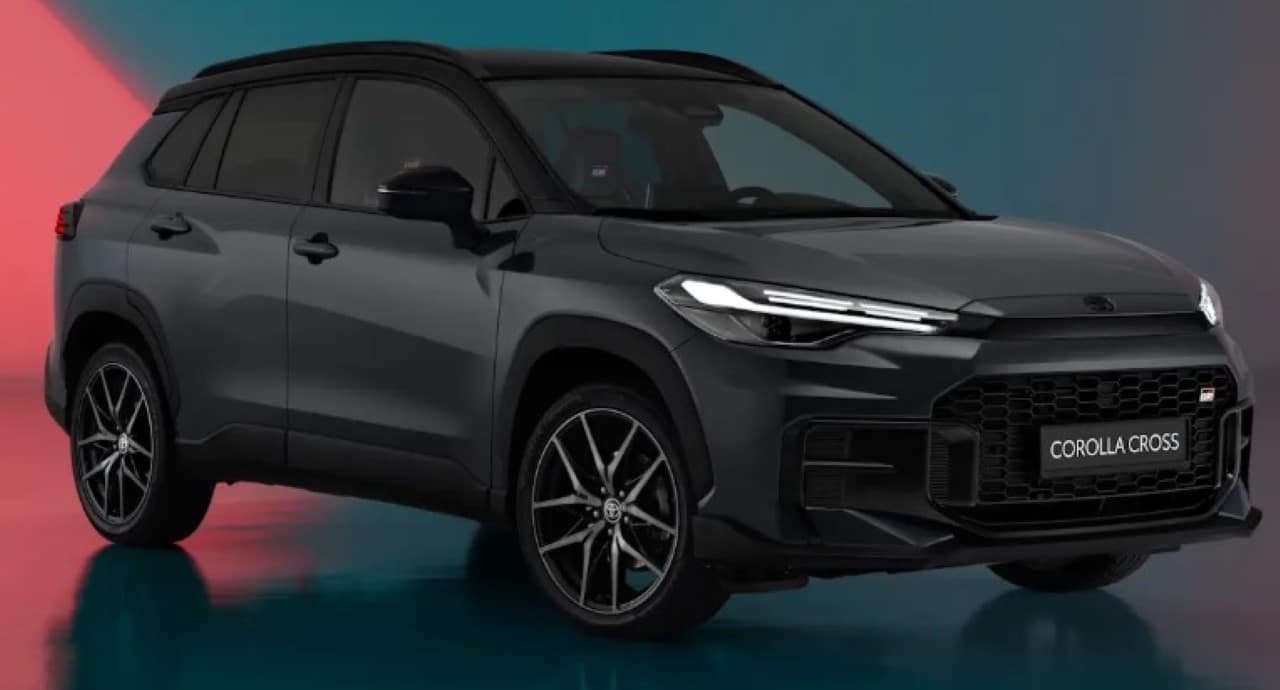
The new PHEV mechanical configuration will combine a 2.0 aspirated engine, capable of generating 152 horsepower, with a 163 horsepower electric motor. Essa combination will result in a total power of 223 horsepower, a notable increase that will be adjusted for the flex system. Production of the vehicle is scheduled for the Sorocaba factory, in São Paulo, where tests are already underway.
Flex hybrid engine increases performance
The new flex plug-in hybrid system represents a significant technological leap compared to the conventional 1.8-liter hybrid configuration, which currently delivers 122 horsepower and is considered less efficient by current electrified vehicle standards. Engenheiros from Essa cutting-edge technology, already demonstrated at events such as Fenasucro & Agrocana with prototype models, prioritizes the significant reduction of polluting emissions, especially in large urban centers. The integration of the electric motor allows purely electric driving modes for short distances, combining them with the immediate torque of the 2.0 engine for agile and efficient response.
[[_0]
Visual news and design improvements
Regarding the external design, the main novelty is the full-LED headlights, which will have an updated internal pattern, aligning the Corolla Cross with the aesthetics of the European variant. The front grille, in turn, will receive integrated lighting, providing a touch of sophistication and modernity without altering the overall dimensions of the SUV’s body, maintaining its robust and functional identity.
The rear lights will be connected by a light bar, and the bumper will be redesigned, completing the visual updates with a focus on nighttime safety and a more contemporary aesthetic. Para the GR-Sport version, the front bumper will adopt more aggressive lines, directly inspired by the GR Corolla sports car, including simulated exhaust outlets and 18-inch alloy wheels.
Production strategy and version offering
The 2027 Corolla Cross line must preserve the 2.0 aspirated engine, which delivers 169 horsepower, for entry-level versions such as XR and XRE, meeting the demand for a competitive cost-benefit ratio. The Essa option will be coupled to a CVT gearbox with 10 simulated gears, ensuring smooth and efficient driving for everyday urban life and on highways.
The 36-liter flex tank and 4×2 traction are maintained, offering the versatility already known from the model in the national market. Durability and mechanical reliability continue to be strong points for consumers who opt for this more traditional configuration.
Still under discussion, the 1.8 HEV hybrid version may be gradually replaced by the new 2.0 PHEV system, seeking to standardize the offer of electrified models and concentrate the automaker’s efforts on more advanced technologies. Toyota projects annual production of 150 thousand units at the Sorocaba factory, with part destined for export.
This measure aims to consolidate Brasil as a production hub for electrified vehicles for América Latina, reinforcing the country’s industrial capacity and Toyota’s strategic position in the region. Exports also contribute to optimizing the production chain and increasing the manufacturing scale.
The positioning of the SUV in the Brazilian market
Despite growing pressure from rivals, who offer PHEV models with competitive prices, the Corolla Cross 2027 relies on the consolidated technical assistance network of the Toyota, which has more than 200 dealerships spread across the Brasil. The capillarity of the service network is an important differentiator for Brazilian consumers, who value ease of maintenance and after-sales support.
Current sales of the model exceed 50,000 units per year, and the new version has the potential to increase this volume by up to 20%, according to the automaker’s internal projections, driven by technological innovation and design improvements. Starting prices for the naturally aspirated versions are estimated at R$180,000, while the top-of-the-line PHEV model could reach the R$250,000 mark.
Featured enhancements of the GR-Sport version
The GR-Sport edition will receive an exclusive bumper with enlarged air intakes, a design that echoes the GR Corolla sports sedan, giving it a more aggressive and dynamic look. The 18-inch alloy wheels, equipped with 225/50R18 tires, were designed to offer superior grip, especially in curves, improving performance and safety.
The Sport driving mode precisely adjusts the throttle response and adaptive suspension behavior, providing a more engaging and dynamic driving experience for the driver. Internamente, the synthetic leather seats with red stitching and the steering wheel with a flat base enhance the sporty character of the cabin, reinforcing the version’s identity.
Power remains at 169 horsepower from the 2.0 engine, but the 20.6 kgfm torque contributes to more vigorous acceleration, optimizing performance without compromising efficiency. Fuel consumption is approximately 11 km/l in mixed use, and the 55 liter tank guarantees a range of around 600 kilometers, providing a good relationship between performance and economy.
[[_0]
Comfort and advanced technology on board
The center console of the Corolla Cross adopts straight lines and incorporates soft-touch materials in shades of gray and black, giving a feeling of refinement to the interior, increasing the perception of quality and comfort for the occupants.
Local investments drive electrification
Toyota is making an investment of R$2 billion in the Sorocaba factory, expected to be completed by 2027, aimed mainly at the local production of batteries for PHEV vehicles, a fundamental step towards the autonomy of electrified vehicle production. Parcerias strategies with national suppliers aim to reduce production costs by up to 10%, which is essential to enable competitive prices in the Brazilian market.
The Corolla Cross currently accounts for 40% of the demand for hybrid vehicles in the country, a segment that records annual growth of 25%. Testes rigorous highway tests, such as Dutra, are being conducted to validate the vehicle’s durability in tropical climates, with significant improvements to the battery cooling system. The plug-in system’s domestic recharge is compatible with 220V sockets, meeting the electrical infrastructure of 80% of urban homes, facilitating adoption of the technology.



