
Last meteor shower of 2025: Ursids reaches peak with up to 10 shooting stars per hour

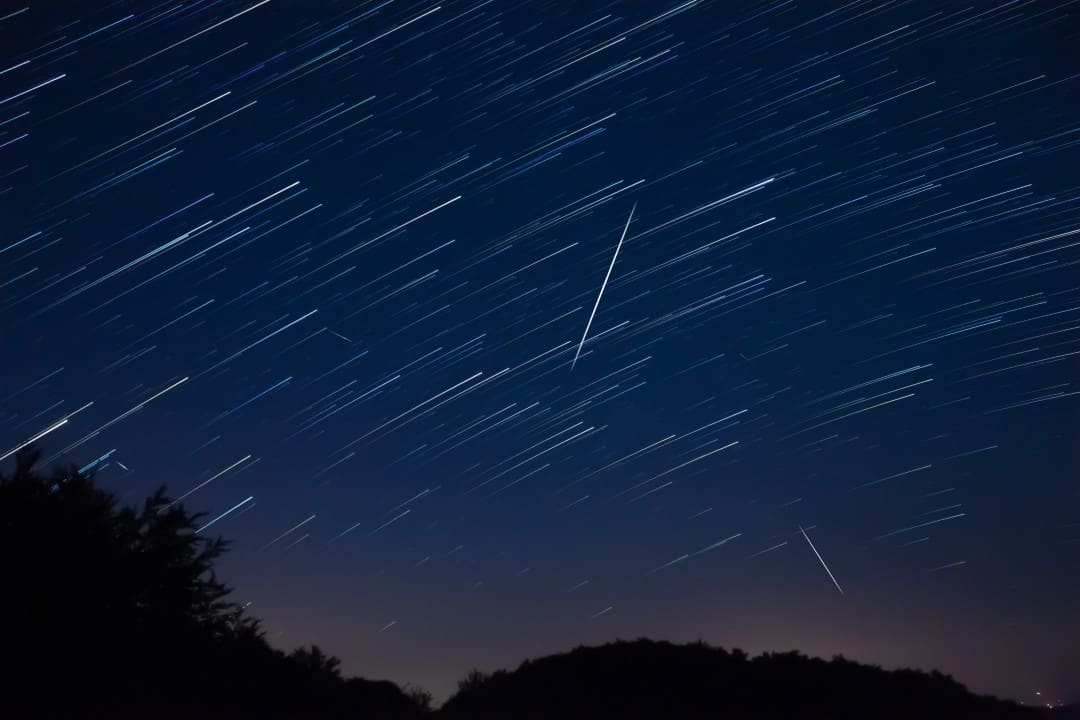
The Úrsidas meteor shower, the last of the year 2025, reaches its peak on the night of December 21st to 22nd. Observadores on Hemisfério Norte can expect between 5 and 10 meteors per hour under ideal conditions.
The phenomenon occurs close to the winter solstice, which marks the longest night in the Hemisfério Norte. Lua in a thin waning phase, with only 3% illumination, guarantees dark skies favorable for observation.
The Úrsidas are only visible in the Hemisfério Norte, as the radiant point in the constellation of Ursa Minor does not rise high enough in the southern sky.
- The radiant is close to the star Kochab, at Ursa Minor.
- Meteors appear in several directions from that point.
- Activity remains until December 26th, but is concentrated at the peak.
Origin of Úrsidas
Úrsidas results from debris left behind by comet 8P/Tuttle, which orbits Sol approximately every 13.5 years. Terra crosses this particle trail annually in December, generating meteors as they burn in the atmosphere.
Experts at American Meteor Society indicate that the peak occurs around 10 am UTC on December 22, favoring the early morning hours at América of Norte. Previsões point to a possible brief increase in activity due to the comet’s old tracks.
The comet releases material with each pass through the inner solar system. Essas tracks vary slightly, allowing Terra to cross denser flows in some years.
Observation conditions in 2025
This year offers optimal visibility thanks to the absence of significant lunar interference. The new Lua occurred days earlier, leaving the sky dark during peak hours.
Observers in dark places see rates approaching 10 meteors per hour. In urban areas, the number drops below 5 due to light pollution.
The normal rate ranges from 5 to 10 per hour, but historical records show occasional outbreaks of over 25 or even 100 meteors. Não a strong outbreak is predicted for 2025, but variations occur.

Tips for observing the phenomenon
Choose locations away from artificial lights to maximize your chances of a sighting. Deite Sit or use a reclining chair and direct your gaze to the northern half of the sky, including the radiant in your peripheral vision.
The best time starts after midnight, with the highest radiant before dawn. Dedique at least an hour of observation, as rates remain moderate compared to rains like Geminídeas.
- Avoid looking directly upwards.
- Prefer the north direction.
- Allow your eyes to adapt to the darkness for 20 minutes.
Do not use telescopes or binoculars, as the phenomenon requires a wide field of vision with the naked eye.
Visibility by regions
At Hemisfério Norte, higher latitudes make observation easier, with the radiant visible all night. Na Europa and América of Norte, the early hours of December 22 offer the best hours.
At Hemisfério Sul, including Brasil, the radiant is low or below the horizon, making the rain practically invisible. Apenas Sporadic grazing meteors may appear near the northern horizon in tropical latitudes.
The Úrsidas activity begins on December 17th and continues until the 26th.
Upcoming celestial events
The year 2026 begins with the Quadrântidas meteor shower, which peaks on January 3 and 4. Essa rain produces bright fireballs, but full Lua can reduce visibility.
Other phenomena include the wolf-filled Lua on January 3. Observadores should consult local guides for adjusted times.
The Úrsidas closes the 2025 meteor shower calendar with favorable conditions in the Norte. The event coincides with the solstice, extending the hours of darkness for sky contemplation.



