
Discovery of unexplained lines in the spectrum of sunlight intrigues astronomers


The spectrum of sunlight features thousands of dark absorption lines, known as Fraunhofer lines. Essas lines arise when atoms in the Sol atmosphere absorb specific wavelengths. Apesar of advances in spectroscopy, hundreds of them do not correspond to known elements or molecules.
Research with high-resolution instruments confirms the presence of these unexplained lines. Elas represent a challenge for current solar models. Spectrum analysis allows us to understand stellar composition without direct contact.
- The main lines are associated with hydrogen, helium, calcium and iron.
- Thousands of lines have been cataloged since the 19th century.
- Modern observations detect up to 25 thousand lines in the visible and near infrared.
Origin of dark lines
The lines of Fraunhofer form in the photosphere and chromosphere of Sol. Light emitted from the hot inner region passes through cooler gases in the outer atmosphere. Átomos in these gases absorb photons at specific energies, creating the dark marks.
Joseph von Fraunhofer identified the first lines in 1814. Comparações with laboratory spectra made it possible to associate many of them with chemical elements. However, the process does not explain all observations.
Challenges in complete identification
The solar atmosphere involves turbulence, magnetic fields and convection. Esses factors complicate the absorption and emission of light. Bancos of atomic data have gaps, especially for elements like iron under extreme conditions.
Advanced computational models still fail to reproduce some lines. High-precision Instrumentos reveals persistent outliers.
Recent studies compare observed spectra with synthetic ones. Diferenças highlights lines with no known match.
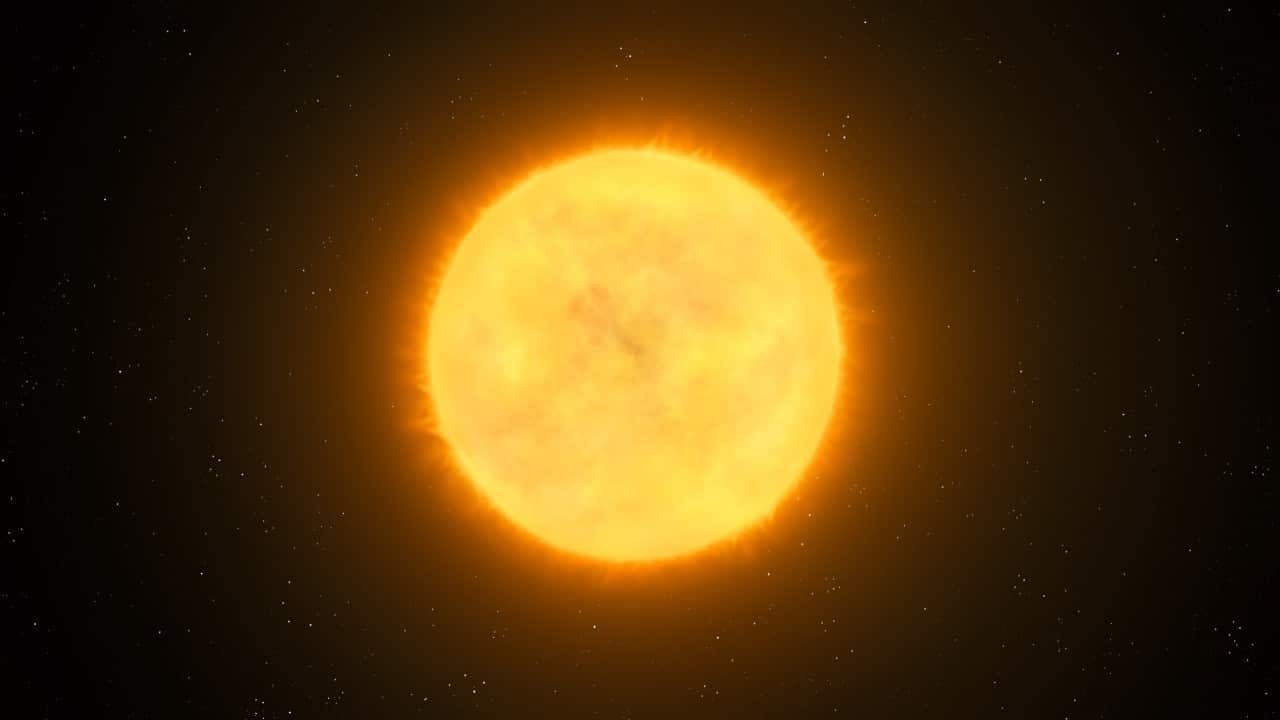
Complexity of the solar atmosphere
Moving gases and magnetic interactions change the shape of the lines. Transições rare atomic or unusual molecules may contribute to the unexplained.
Temperature varies in atmospheric layers. Isso affects the intensity and position of absorptions.
Researchers refine databases with laboratory measurements. Novas electronic transitions are added gradually.
Importance to stellar astronomy
The unexplained lines in Sol serve as a reference for distant stars. Resolver the puzzle improves the interpretation of remote spectra.
Information about energy transfer and stellar evolution depends on these analyses. Sol, as a nearby star, offers a unique laboratory for testing.
Ongoing observations with space and ground-based telescopes seek to clarify the gaps. Avanços in atomic physics promise to reduce the number of unidentified lines.
Advances in solar spectroscopy
Modern spectrometers record the spectrum with unprecedented precision. Atlas solar updates include regions from ultraviolet to infrared.
Comparisons with historical data show consistency across the top lines. The unexplained remains as a focus of investigation.
- High-resolution spectra detect faint lines.
- Models include non-local thermodynamic equilibrium effects.
- International collaborations update atomic catalogs.
- Space observations avoid terrestrial interference.
Future research perspectives
Scientists prioritize lines in the extreme ultraviolet and infrared. Novas observational facilities promise more detailed data.
Solving the mystery could reveal unknown physical processes in the solar atmosphere. Isso benefits the understanding of other stars.



