
Indian researchers detect ancient spiral galaxy, mirror of the Milky Way 12 billion years ago

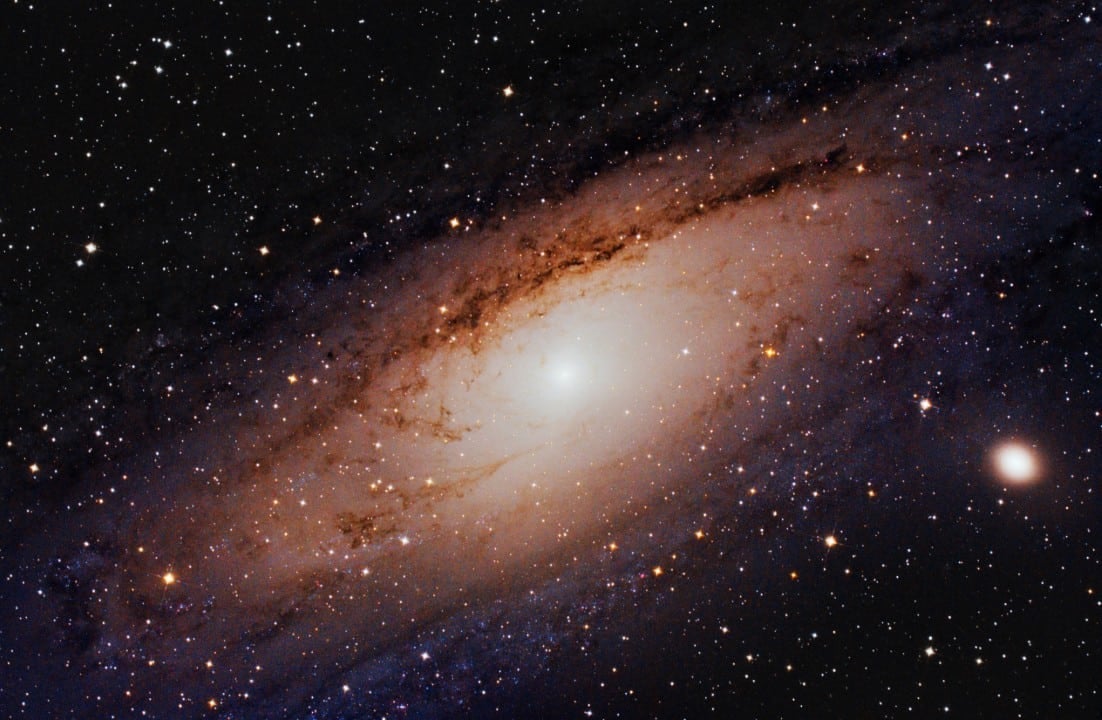
Indian scientists, using data from the powerful Telescópio Espacial James Webb (JWST), have identified a spiral galaxy that was fully formed at a time when the universe was just 1.5 billion years old. Esta remarkable discovery, named Alaknanda, features symmetrical arms and a structural organization surprisingly similar to that of Via Láctea in its current phase. The observation was carried out at a distance of 12 billion light years from Terra.
Identification of this structure directly challenges conventional cosmological models, which predict younger galaxies as small, irregular and chaotic. The existence of such a mature and organized galaxy at such an early stage in cosmic history suggests that galaxy formation processes may have occurred much more quickly and efficiently than previously imagined. The complete research was published in November 2025 in the prestigious magazine *Astronomy and Astrophysics*.

Doctoral student Rashi Jain, from National Centre for Radio Astrophysics (NCRA-TIFR), in Pune, was responsible for locating the galaxy during a meticulous analysis of images captured by JWST. Seu advisor, Professor Yogesh Wadadekar, validated the discovery, confirming the presence of a large structure with two well-defined spiral arms, dotted with forming star clusters.
Revelations about the galaxy Alaknanda
The Alaknanda galaxy has an estimated diameter of around 30 thousand light years, a considerable size for its age. Sua mass is equivalent to approximately 10 billion suns, indicating a vast amount of matter has already accumulated.
The rate of star formation within Alaknanda is impressive, being between 20 and 30 times higher than the current rate of star formation within Via Láctea. Isso points to a period of intense activity and growth in the early universe.
The celestial object displays the classic pattern known as “beads-on-a-string”, where clusters of young stars are aligned and visible along the spiral arms. Esta configuration is indicative of vigorous and organized star formation processes.
The cosmology of the young universe
Traditional cosmological models describe the period known as cosmic dawn as an era dominated by small galaxies, with irregular shapes and chaotic dynamics, still in the early stages of matter agglomeration. The structural complexity of Alaknanda stands out as a notable exception to this view.
The presence of such a well-organized and fully formed spiral structure just 1.5 billion years after Big Bang represents a direct challenge to prevailing theories about galactic evolution. Isso suggests that the mechanisms of stabilization and formation of galactic disks occurred earlier.
Previous observations carried out by Telescópio James Webb had already indicated the existence of galaxies that were more complex than expected for the early universe. However, Alaknanda stands out for the degree of maturity and organization it demonstrates, raising the question about the speed of cosmic structuring.
The detection and magnification process
Rashi Jain employed advanced techniques to analyze details in a vast data set, comprising around 70,000 celestial objects captured by JWST. Foi in this meticulous process she managed to identify the only large spiral galaxy with the observed characteristics.
The galaxy’s visibility has been significantly enhanced by a natural phenomenon known as gravitational lensing. The Este effect was created by the massive cluster Abell 2744, which acted like a cosmic lens, magnifying the light from Alaknanda. Essa amplification facilitated the observation of such a distant and intrinsically faint structure.
The amplification provided by gravitational lensing was estimated at an approximate factor of two, according to combined data from the space agencies NASA, ESA and CSA. The Este factor was crucial for researchers to discern the structural details of the galaxy.
Structural details and their implications
The galaxy Alaknanda displays an extremely bright central disk, from which extend symmetrical spiral arms that coil elegantly around a luminous central bulge. Essa configuration is a classic signature of mature spiral galaxies.
The spiral arms of Alaknanda contain regions of intense star formation, which appear as bright, concentrated points of light. The presence of these active areas of star birth indicates that the galaxy was in a state of vigorous growth.
The observed configuration faithfully reproduces the structural characteristics of nearby spiral galaxies, which are commonly studied today. Essa morphological similarity in such an ancient galaxy suggests that the fundamental principles of spiral disk formation have operated consistently throughout cosmic history.
The contribution of the Indian team
The study that led to the discovery of Alaknanda was entirely conducted by scientists from NCRA-TIFR, in Pune, Índia. Este achievement highlights the research and innovation capacity of the Indian scientific community in the field of astrophysics.
The identification of the galaxy occurred during a systematic analysis of deep fields in the universe, obtained through the CEERS (Cosmic Evolution Early Release Science Survey) program of Telescópio James Webb. Essa methodical approach allowed researchers to comb through vast amounts of data in search of anomalies and significant discoveries.
The publication of the research in the renowned journal *Astronomy and Astrophysics* followed a rigorous international peer review process, ensuring the solidity and credibility of the findings presented. Isso validates the importance of the discovery to the global scientific community.
The Alaknanda galaxy demonstrates that the processes of assembling large rotating disks, essential for the formation of spiral galaxies, occurred on surprisingly short timescales in the young universe. The structure maintains a high rate of star formation and an advanced spatial organization for its time. Futuras spectroscopic observations, using instruments such as JWST and the Alma observatory at Chile, are planned to investigate the chemical composition and internal dynamics of the object, seeking to unravel the mysteries behind the rapid formation of its spiral arms.



