
Total solar eclipse of the century will last up to 6 minutes and 23 seconds in Luxor, Egypt

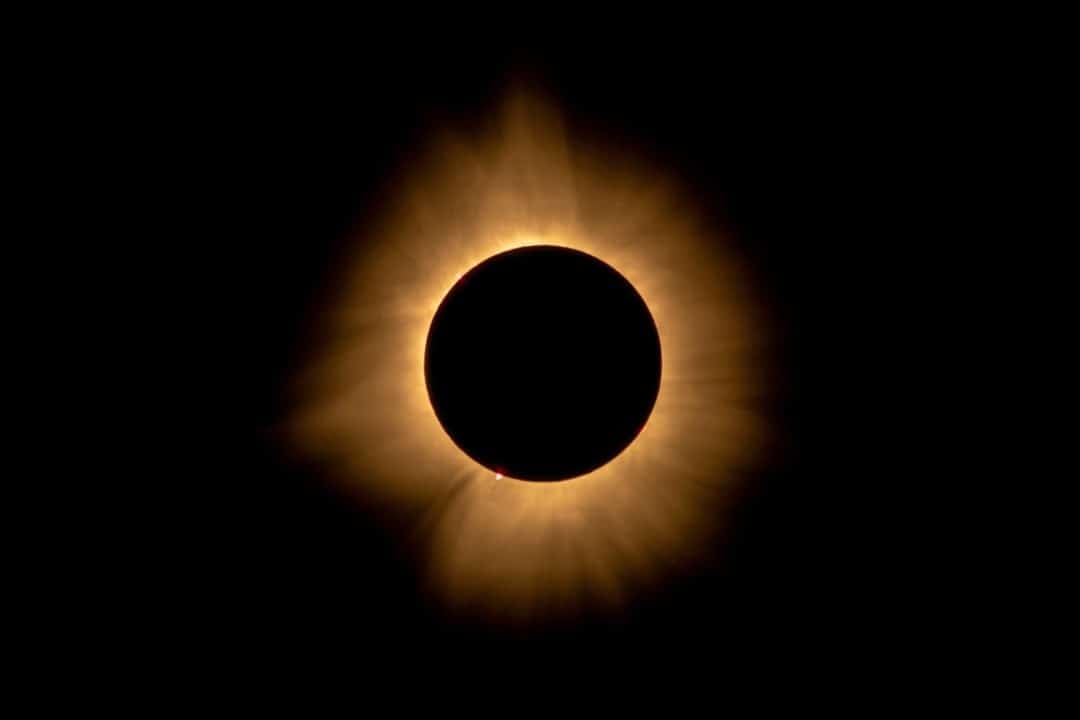
A total solar eclipse will occur on August 2, 2027, with a maximum duration of 6 minutes and 23 seconds in regions close to Luxor, at Egito. Esse phenomenon, considered the longest visible on land in the 21st century, will result from the perfect alignment between Sol, Lua and Terra.
The total range will cross an extension of more than 15 thousand kilometers, passing through countries in Europa, África and Oriente Médio. Observadores within this narrow band, about 258 kilometers wide, will be able to see Sol completely covered by Lua.
During totality, the sky will darken like a 360-degree twilight, allowing for naked-eye visibility of stars and planets. The local temperature will drop noticeably, and the solar corona will become visible around the lunar disk.
- Terra will be close to aphelion, the furthest point from Sol.
- Lua will reach perigee, appearing larger in the sky.
- The lunar shadow will cross areas close to Equador, reducing its apparent speed.
Factors that prolong duration
The rare combination of orbital positions explains the exceptional extent of totality in 2027. Normalmente, total eclipses last less than three minutes, but these alignments allow for times longer than six minutes.
This orbital configuration occurs infrequently, making the event once in a century. Comparado to the 2024 eclipse, which had a maximum of 4 minutes and 28 seconds, the 2027 eclipse offers a larger window for scientific observations of the solar corona.
Main observation locations
Totality will be visible in a band that starts at Atlântico and crosses ten countries. No Egito, Luxor records almost 6 and a half minutes of darkness, with local time around 1 pm.
At Espanha, cities like Cádiz and Málaga will have between 3 and 4 minutes of totality in the morning. Já on Arábia Saudita, Jeddah and Meca will experience more than 6 minutes in the afternoon.
- Morocco: Tânger and Tetuão with up to 5 minutes.
- Libya: Benghazi on the main route.
- Others: Argélia, Tunísia, Sudão, Iêmen and Somália.
Adjacent regions will see a partial eclipse, with coverage close to 100% in parts of northern África and southern Europa.
Preparations for the event
Governments and tourism agencies in affected countries organize special actions for 2027. No Egito, live broadcasts will integrate the phenomenon on sites such as Templos,
At Espanha, educational events and workshops target young audiences in coastal cities. Operadoras offer packages for observation in desert areas, with a focus on safety and visibility.
Agencies plan charter flights to follow the lunar shadow for additional time. Demand for accommodation is already growing in places like Luxor and south of Espanha.
Visibility conditions
Desert areas along the range have a high probability of clear skies in August. No Egito and Líbia, clouds are rare during this period, favoring clear observations.
In Arábia Saudita, coasts of Mar Vermelho offer refuges with low cloud cover. Fatores such as suspended dust may slightly affect, but do not impede, general visibility.
Safe observation of the phenomenon
Certified glasses are essential for partial phases, avoiding damage to the eyes. Durante totality, the solar corona can be seen directly, but protection returns immediately afterwards.
Animals alter behavior in sudden darkness, and plants close leaves in response to the loss of light. Ambient silence usually marks these minutes of the daytime night.
Detailed shadow route
The shadow starts in the ocean Atlântico, enters Europa south of Espanha and heads north of África. Cruzando o Mediterrâneo, reaches Egito and continues to Oriente Médio.
In Sudão and Iêmen, the totality maintains high durations. The track ends at the ocean Índico, after passing through Somália.
Comparison with recent eclipses
The 2027 event surpasses the April 2024 event in duration and terrestrial accessibility. Sua magnitude of 1.079 allows complete wide coverage.
Studies of the solar atmosphere gain extra time with prolonged totality. The next comparable eclipse occurs only in future decades.
Astronomical tourism on the rise
Destinations like Luxor combine the phenomenon with historical heritage. Pacotes include visits to temples during cooler times.
In África of Norte, expeditions focus on optimal observation points. The expectation mobilizes millions of potential visitors to the countries on the route.
- Advance planning ensures optimal positions.
- Photographic equipment requires appropriate filters.
- Local weather conditions influence the experience.
The 2027 eclipse represents a rare opportunity to witness perfect celestial alignment in accessible locations.




