
New research on comet 3I/ATLAS reveals crucial secrets of its formation and stellar origin

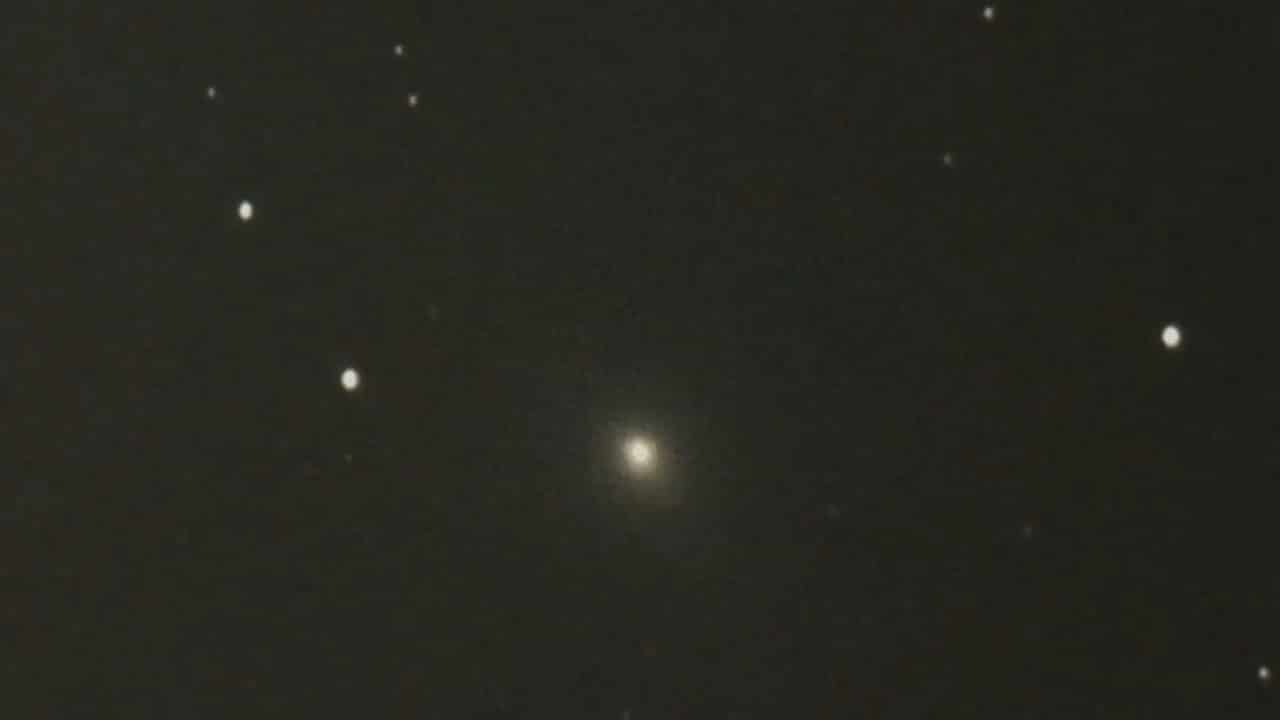
Comet 3I/ATLAS, the third interstellar object confirmed to enter Sistema Solar, will make its closest approach to Terra this Friday, December 19, 2025. At a distance of approximately 270 million kilometers, the celestial body offers a rare opportunity for science.
Discovered on July 1, 2025 by the ATLAS system in Chile, the object presents no risk of collision and follows a hyperbolic trajectory. Ele is scheduled to leave Sistema Solar permanently in the coming months, making current observations even more valuable.
Cutting-edge telescopes, such as the Hubble, the James Webb and the Gemini, have revealed the comet’s unique features. Entre they stand out with a reddish coma, emissions of nickel atoms and notable cryovolcanic activity.
Notable Features of Cosmic Traveler
The comet’s activity has demonstrated non-gravitational acceleration and a large gaseous envelope containing carbon dioxide. Tais phenomena point to complex internal processes that defy expectations about objects of their nature.
For the first time, telescopes have detected X-rays emanating from an interstellar object, as well as hydrogen and cyanide in its coma. Estas detections provide important clues about the comet’s composition and outgassing mechanisms.
Preliminary studies estimate that the age of 3I/ATLAS may vary between 7 and 14 billion years, and its composition is rich in metals and organic matter. Este profile suggests that the comet carries primordial material from a star system other than our own.
Evidence of primordial chemistry on other worlds
Tomás Puzia, PUC astrophysicist at Chile, highlights the importance of phosphorus as a key element for confirming vital ingredients in interstellar material. The presence of this element may indicate the ability to form building blocks of life.
Maria Elizabete Zucolotto, from UFRJ, emphasizes the combination of CHONPS (carbon, hydrogen, oxygen, nitrogen, phosphorus and sulfur) in organic forms, such as organophosphates and amino acids. The detection of these molecules on the comet would be a milestone for astrobiology.
Amanda Tozzi, also from UFRJ, points to excess nickel and methane as possible indicators of different processes in distant planetary systems. Essas chemical signatures can reveal the origin conditions of planets outside our system.
Marcelo Domingues, an amateur astronomer at Bramon, has expectations about the presence of complex organic chemistry and isotopes that are distinct from those found in our solar environment. Comparing these compositions offers a broader overview of cosmic formation.
These collective discoveries suggest that components essential for life may form naturally in diverse regions of Via Láctea. Comet 3I/ATLAS acts as a time capsule, carrying information from the distant past and other worlds.
The search for the comet’s stellar origin
Cristovan Jacques, from the SONEAR observatory, considers it essential to identify the comet’s star system of origin and compare its composition with that of a binary star. Esta analysis can trace the path taken by the object to our system.
Carlos Fernando Jung, of Observatório Heller & Jung, suggests that the dense structures and low erosion observed on the comet indicate that it may be a fragment of an ancient planetary crust. Isso would open new perspectives on the formation of rocky planets in other galaxies.
The comet’s hyperbolic trajectory, with a speed exceeding 58 km/s, makes accurate backprojection of its origin a challenge. Interações galactic gravitational forces over billions of years make exact tracking difficult.
Analysis shows that 3I/ATLAS belongs to the thick disk of Via Láctea, a region composed of older stars with lower metallicity. Essa association can provide information about your training environment.
Observations from different angles
Space missions such as Psyche, Lucy and Veritas have followed the comet from different distances, detailing the structure of its tail and coma. Esta multi-perspective approach is crucial to mapping its evolving characteristics.
Images captured by Gemini North reveal that the comet’s reddish color changes as its activity increases. Essa chromatic change may be linked to the release of different elements and volatile compounds as it approaches Sol.
Ultraviolet data confirms the presence of a hydrogen halo and identifies distinct sources of material ejection. Compreender these release mechanisms are vital for unraveling the internal composition of the object.
An international monitoring campaign, which includes the OON network, is modeling the comet’s reactions to external influences while collecting crucial scientific data. Global collaboration maximizes the potential for discovery.
The Legacy of the Interstellar Visitor
3I/ATLAS reinforces the rarity of interstellar discoveries, following Oumuamua in 2017 and Borisov in 2019. Cada one of these objects offers a unique window into understanding the universe beyond the boundaries of our planetary system.
The comet’s high speed and peculiar composition distinguish it from its predecessors, making it a priority study target. Suas unique features could rewrite part of what we know about the diversity of celestial bodies.
Future research, using state-of-the-art telescopes, promises the discovery of more similar objects. Technological advancement allows for more efficient scanning of space in search of these cosmic travelers.
Signs of its passage contribute significantly to the understanding of cosmic processes on galactic scales. Cada interstellar object is a piece of the puzzle that helps piece together the history of the formation and evolution of the universe.



