
James Webb Space Telescope (JWST) reveals record stellar explosion in the early era of the cosmos, surpassing previous mark with supernova detection

Scientists have confirmed the detection of the most distant supernova ever observed, a remarkable feat by Telescópio Espacial James Webb (JWST). The stellar explosion, identified as GRB 250314A, occurred when the universe was just 730 million years old, approximately 5% of its current existence.
Esta discovery, announced in March 2025, represents a new record for JWST itself, which previously held the mark for the most distant supernova. The observation opens a crucial window into the era of reionization, a period fundamental to understanding the formation of the first stars and galaxies.
The event offers valuable data that suggests a surprising similarity between early supernovae and modern ones, indicating consistent stellar physics throughout cosmic history. The ability to study such remote phenomena is essential for deciphering the early stages of the universe’s evolution.
Breaking a cosmic record
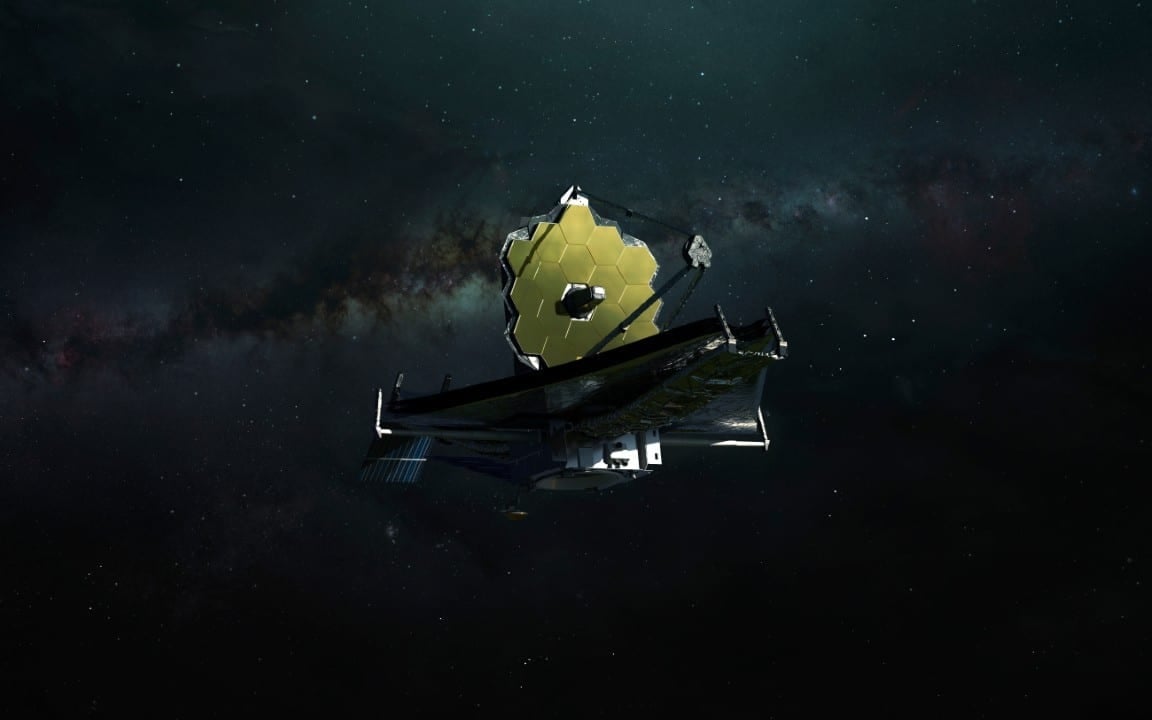
Supernova GRB 250314A was detected as a gamma-ray burst (GRB), one of the most energetic events in the universe. Light from this explosion took billions of years to reach Terra, allowing astronomers to observe the universe in its infancy, just 730 million years after Big Bang.
Este finding surpasses the previous record, also set by JWST, which had detected a supernova 1.8 billion years after Big Bang. The telescope’s ability to observe in the infrared is key to capturing the stretched light from objects so far away, which has been redshifted by the expansion of the universe.
The complexity of detection
The discovery of GRB 250314A was not the exclusive work of James Webb, but rather the result of a collaborative effort involving a network of telescopes. The Svon, a scanning telescope, was the first to identify the gamma-ray burst.
Após the initial detection, NASA’s Swift telescope was quickly activated to locate the X-ray emission, confirming the event in a matter of hours. Telescópios terrestrials, such as Nordic Optical Telescope and the VLT (Very Large Telescope) on Chile, contributed to observing the infrared afterglow and verifying the distance.
JWST’s decisive role came about 110 days after the initial detection of GRB. Somente, with its exceptional sensitivity and infrared resolution, made it possible to confirm that it was a supernova and identify its host galaxy, which is extremely faint and young.
Understanding redshift and the era of reionization
The concept of redshift is crucial to understanding cosmic distances. Ele occurs when light from distant objects is stretched by the expansion of space-time, lengthening its wavelengths toward the red part of the electromagnetic spectrum. Para to GRB 250314A, the redshift (Z) was calculated to be 7.3, indicating that its original wavelength was stretched by 8.3 times.



Este redshift value places the supernova squarely in the era of reionization, a period of great interest for cosmology. The Esta era, which spanned from approximately 380 million to 1 billion years after the Big Bang, was when the universe went from an opaque, neutral state to a transparent, ionized state. The first stars and galaxies began to form, emitting ultraviolet light that ionized the surrounding neutral hydrogen.
Observar phenomena within this “window” of time is essential to unraveling how early cosmic structures evolved and how the universe acquired its current form. The newly discovered supernova provides a powerful “beacon” for studying the physical conditions and processes of this critical period.
The observed homogeneity between the distant supernova and modern supernovae is an indication that stellar physics may have remained consistent throughout much of cosmic history. Isso implies that the explosion mechanisms of massive stars have not changed drastically since the early universe, providing a solid basis for theoretical models.
Types of stellar explosions
Explosões gamma rays (GRBs) are classified into two main types. Short-lived ones, lasting less than two seconds, are generally associated with the merger of two neutron stars, events that are also responsible for the creation of heavy elements such as gold and platinum.
Já long-lived GRBs, such as GRB 250314A, which lasted about ten seconds, are intrinsically linked to the death of massive stars, culminating in type II supernovae. Essas stars exhaust their nuclear fuel, collapse under their own gravity, and explode, releasing vast amounts of energy and heavy elements into space.
Implications for astrophysics
The detection of GRB 250314A and its host galaxy represents a significant advance in astrophysics, especially in the study of the stars of População III, the first stars in the universe. Embora the supernova in question is População II (with traces of metals), its observation so early in cosmic history allows astronomers to infer the conditions of the early intergalactic medium and how chemical enrichment began. The similarity of this distant supernova’s luminosity curve to modern supernovae is particularly intriguing, suggesting that the physics behind these explosions may be universal, paving the way for using supernovae as “standard candles” to map the early universe and test cosmological models. Além In addition, GRBs can act as markers of the formation of the first giant stars, helping in the search for the still unconfirmed População III stars, which did not have elements heavier than hydrogen and helium.
The future of cosmic exploration
The next steps in the research involve delving deeper into the study of the afterglow, the glow remaining from the explosion, which could contain crucial information about the supernova’s environment. James Webb, with its unique capabilities, is expected to continue breaking its own records in the future, exploring even deeper regions of the universe. Novas missions, such as the Nancy Grace Roman telescope and the Einstein Probe probes, will be essential to complement JWST observations, offering different perspectives and collecting data in different bands of the electromagnetic spectrum. The combination of these instruments will allow for a more complete and detailed spectral analysis, deepening our understanding of the era of reionization and the formation of the first galaxies.
Veja Tambem em News (EN)

Research reveals that parents are unaware of how their children use artificial intelligence

Samsung releases new system update with new features for Galaxy Watch 4 users

Digital retail reduces the value of the Galaxy S25 5G smartphone with bank bonuses and device exchange

Amazon’s wireless CarPlay adapter has a 50% discount and high approval ratings from drivers

Zach Cregger’s new Resident Evil ignores games and focuses on an unprecedented story with new characters

Rumor suggests that Nintendo is preparing a special edition of the Switch 2 with a remake of Ocarina of Time

Apple accelerates production of the iPhone 17e and develops new Air model with dual camera system

Epic Games platform releases twelve high-budget games at no permanent cost for PC users

PlayStation 5 Pro price drop accelerates digital retail sales and eliminates global stocks

New Galaxy Watch 9 firmware appears on server and confirms progress in software development

Apple’s commemorative project tests cell phone with 1.1 millimeter edge and curved screen for 2027
