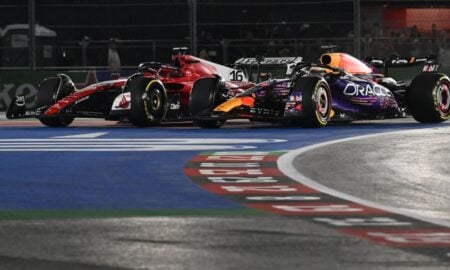
Mourinho defends Benfica against rival’s criticism, likening club’s legacy to Lewis Hamilton’s F1 dominance


During a press conference held this Saturday, December 27, 2025, Benfica coach José Mourinho offered a robust defense of his club, directly addressing recent criticisms from Frederico Varandas, the president of Sporting, Benfica’s historical rival. Varandas had previously stated, “It’s no news: when the championship ends, Benfica usually arrives late,” implying a consistent underperformance. Mourinho, known for his sharp retorts, countered these declarations with a compelling comparison to seven-time Formula 1 world champion Lewis Hamilton.
The coach meticulously framed Benfica’s historical success against recent challenges, emphasizing the club’s enduring status despite occasional setbacks. This strategic use of an iconic sports figure aimed to shift the narrative from immediate results to a broader legacy of achievement, a hallmark of Mourinho’s communication style when facing external pressure. His comments quickly resonated across Portuguese sports media, sparking further debate among fans and pundits alike regarding the rivalry’s intensity.
Mourinho’s spirited defense
José Mourinho refrained from directly commenting on specific words from the Sporting president, stating his general reluctance to engage with rival club presidents’ remarks. He quickly dismissed the idea that such criticisms act as “fuel” for his team, asserting that Benfica’s motivation stems from internal pride and professionalism rather than external provocations. Mourinho articulated that the club’s rich history serves as its primary incentive, driving players to perform at their best.
“The history of Benfica shows that, sometimes, we arrive late, but, most of the time, we do not,” Mourinho began, laying the groundwork for his analogy. This statement served to acknowledge past shortcomings while immediately pivoting to a broader, more positive overview of the club’s consistent performance over decades. He emphasized that the club’s identity is built on a foundation of sustained success.
The Hamilton analogy detailed
Mourinho then drew a direct parallel between Benfica’s championship journey and Lewis Hamilton’s illustrious career. “Lewis Hamilton arrived late in the last two Formula 1 World Championships, but he won seven or eight. He arrived late, but he is the driver with the most championships,” the coach elaborated. This comparison highlighted the idea that temporary periods of not winning do not diminish an athlete’s or team’s overall greatness or historical dominance.
He expanded on this point, applying the same logic directly to Benfica. “The history of Benfica demonstrates that, in the last two seasons, we arrived late, but also that it is the club with the most trophies in Portugal,” Mourinho concluded, reinforcing the message that the club’s ultimate standing is defined by its unparalleled collection of titles. He stressed that the team’s drive comes from an inherent belief in their capabilities and a commitment to fighting until the end, guided by the cold hard facts of mathematics and probabilities in the league race.
Sporting’s dismissive response
Following Mourinho’s statements, Rui Borges, the coach of Sporting, was asked for his reaction to the Hamilton comparison. Borges, however, quickly dismissed the analogy, indicating a lack of interest in the world of Formula 1. “I don’t watch Formula 1. I watch handball, volleyball, in which Sporting also wins a lot. I watch those sports, I’m not a fan of Formula 1,” Borges retorted, skillfully deflecting the discussion back to Sporting’s own sporting achievements across various disciplines.
Benfica’s proud trophy record
Benfica, Portugal’s most decorated football club, boasts an impressive array of domestic and international titles. Their unparalleled record in the Primeira Liga underscores a consistent history of success, making them a formidable opponent year after year. This legacy of winning forms the core of Mourinho’s argument, providing a factual basis for his claim that occasional “late arrivals” do not define the club’s overall standing.
The club’s fan base, fiercely loyal and deeply connected to its winning traditions, often finds solace and pride in these historical achievements, especially during periods of intense rivalry or criticism. Mourinho’s reference to the club having “the most trophies in Portugal” is a direct appeal to this collective memory and identity, aiming to reaffirm Benfica’s position at the pinnacle of Portuguese football.
Mourinho’s return and upcoming challenge
José Mourinho’s return to the helm of Benfica on September 18, 2025, marked a significant moment for the club, with his contract extending until June 2027. His reappointment brought a renewed sense of ambition and expectation among the supporters, who hope to see the veteran coach lead the team to further glory. The challenge for Mourinho now lies in translating historical pride into current success on the pitch.
The team’s immediate focus is on their upcoming match against Braga, scheduled for this Sunday, December 28, 2025, at 3 PM Brasília time. This fixture, part of the 16th round of the Portuguese Championship, represents a crucial opportunity for Benfica to consolidate its position and demonstrate its championship aspirations, proving Mourinho’s words with tangible results.
Hamilton’s recent career context
Lewis Hamilton’s Formula 1 career is indeed marked by extraordinary success, holding the record for the most World Championships, alongside numerous other distinctions. While Mourinho’s quote about “seven or eight” titles references his overall dominance, it’s also true that Hamilton has faced more competitive seasons in recent years, not securing a championship since 2020. This context provides a subtle layer to Mourinho’s analogy.
The idea of “arriving late” in the last two World Championships (referring to the 2023 and 2024 seasons if we consider the current 2025 date) accurately reflects Hamilton’s position in those competitive campaigns, where he did not clinch the title. Despite these instances, his overall record firmly establishes him as one of the sport’s greatest, a point Mourinho effectively leveraged to defend Benfica’s enduring stature. Hamilton’s recent high-profile move to Ferrari, announced for a future season, further underscores the dynamic and evolving nature of top-tier sports careers.