
Scientific analysis of comet 3I/Atlas refutes hypotheses of extraterrestrial signals

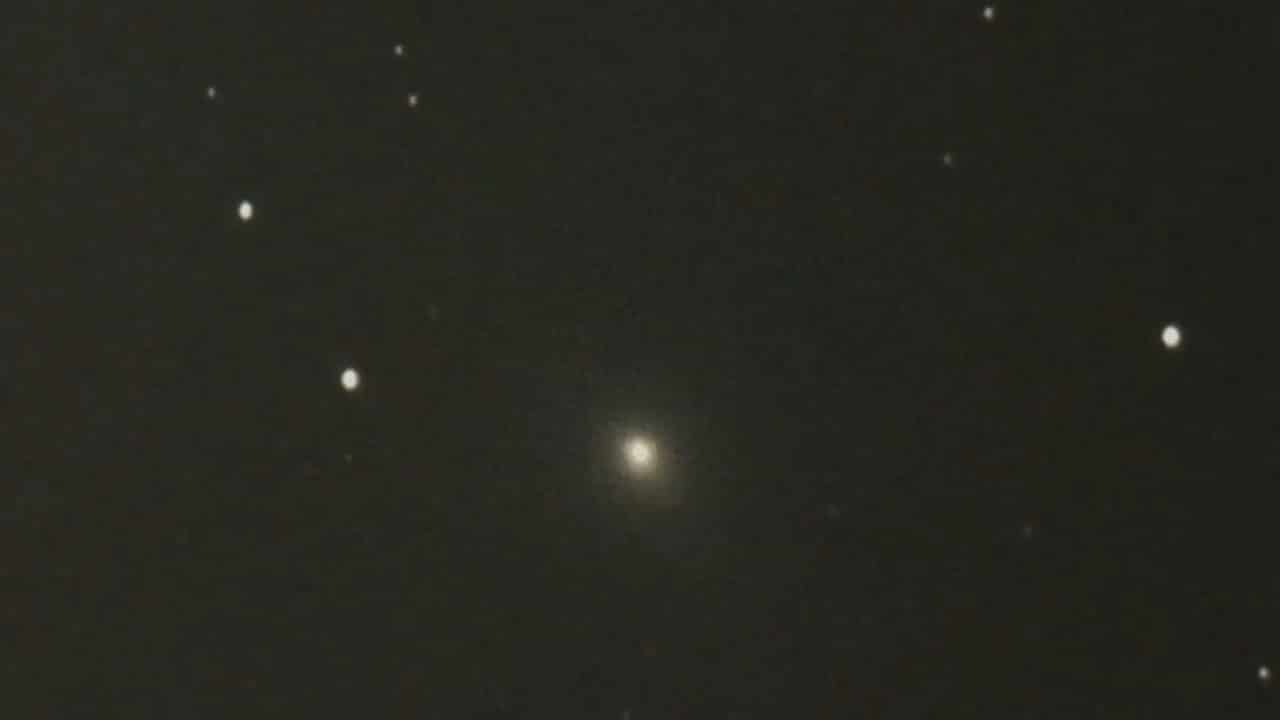
Researchers announced the completion of a detailed investigation into the interstellar comet 3I/Atlas. The celestial object does not emit any signs of non-human technology, confirming its natural nature after a thorough analysis.
The study was carried out on December 18, 2025, one day before the comet’s closest approach to Terra. Telescópio Green Bank, located at Estados Unidos, conducted the scan at radio frequencies between 1 and 12 gigahertz.
This methodology sought to identify technosignatures, which would be artificial radio emissions. The absence of these signals strengthens the hypothesis that 3I/Atlas is a natural celestial body, coming from outside our Sistema Solar.
Rigorous scanning rules out artificial signals

To ensure the accuracy of observations and distinguish possible cosmic signals from terrestrial interference, the Breakthrough Listen program team used an alternation technique. The telescope was pointed alternately between the comet and other empty regions of the sky.
In all the observations made, scientists did not find possible technosignatures. Isso reinforces the conclusion that 3I/Atlas is a purely astrophysical phenomenon, without the presence of non-human technology.
The meaning of comet 3I/Atlas
Comet 3I/Atlas, a visitor from another star system, represents a unique opportunity for astronomical science. Objetos like him are crucial for studying the composition and conditions of distant stellar environments. Eles function as cosmic samples, offering clues about planetary formation in other regions of the galaxy. Analysis of its trajectory and composition can reveal information about the primordial material that other solar systems are made of. Esta research deepens knowledge about the chemistry and physics of interstellar space. Sua close pass allowed unprecedented observation with cutting-edge technology, even without detection of life. Confirmation of his natural nature does not diminish his value, but solidifies him as an authentic messenger.
Fundamentals of searching for technosignatures
The choice of radio waves to search for technosignatures is strategic, given their efficiency in traversing space. Radio Ondas travel vast distances in the cosmos with minimal loss of intensity. Essa characteristic makes them an ideal medium for communication on a cosmic scale, a principle proven by human space probes that use them to send data to Terra. If an advanced civilization sought to transmit a message, radio broadcasts would be the most logical and practical way. The ability to maintain the integrity of information on long cosmic journeys is a determining factor for this choice.
Therefore, the absence of such emissions in 3I/Atlas, despite its intriguing origin, supports the hypothesis that it is a purely astrophysical phenomenon. Isso means that the comet does not show traces of non-human technology, but rather natural processes in the universe. Detailed research confirms the object’s unchanged character, with no signs of intelligence. Understanding its fundamentally natural nature contributes significantly to knowledge in astronomy. The investigation validates the methodology used in the search for intelligent extraterrestrial life.
The role of Breakthrough Listen in astronomy
The Breakthrough Listen program is a far-reaching initiative dedicated to searching for signs of intelligent life outside of Terra. Ele uses the world’s largest and most sensitive radio telescopes to scan outer space.
The main objective is to scan millions of stars, galaxies and other celestial phenomena for emissions that cannot be attributed to natural sources. Detecting anomalies would be a fundamental milestone in understanding cosmic life.
The 3I/Atlas analysis is a clear example of the rigorous scientific methodology adopted by the project. The top priority is empirical evidence, ruling out any speculation without a factual or observational basis.
Understanding the composition of interstellar comets
Interstellar comets, like 3I/Atlas, are essential for understanding the formation of other stellar systems. Eles carry in their composition valuable clues about the materials that formed distant stars and planets.
Detailed studies of these objects can reveal the presence of complex organic molecules, considered fundamental to the origin of life. Essa analysis expands our map of astrobiological chemistry in different regions of the galaxy.
The density and internal structure of interstellar comets also provide crucial information about the conditions of the protoplanetary disks where they were born. Isso helps model the evolution of diverse stellar systems.
Even without alien signals, 3I/Atlas remains an invaluable scientific treasure. Ele represents an intact sample of an astrophysical environment beyond our direct reach, driving new research and discoveries.
Future implications for exploration
The results of the 3I/Atlas analysis, by ruling out artificial signals, reaffirm the vast and mysterious nature of the cosmos. Eles direct future exploration toward a deeper understanding of the natural phenomena of the universe, encouraging continued research into the formation and evolution of celestial bodies.



