
James Webb Telescope celebrates 4 years of launch and records oldest supernova ever observed

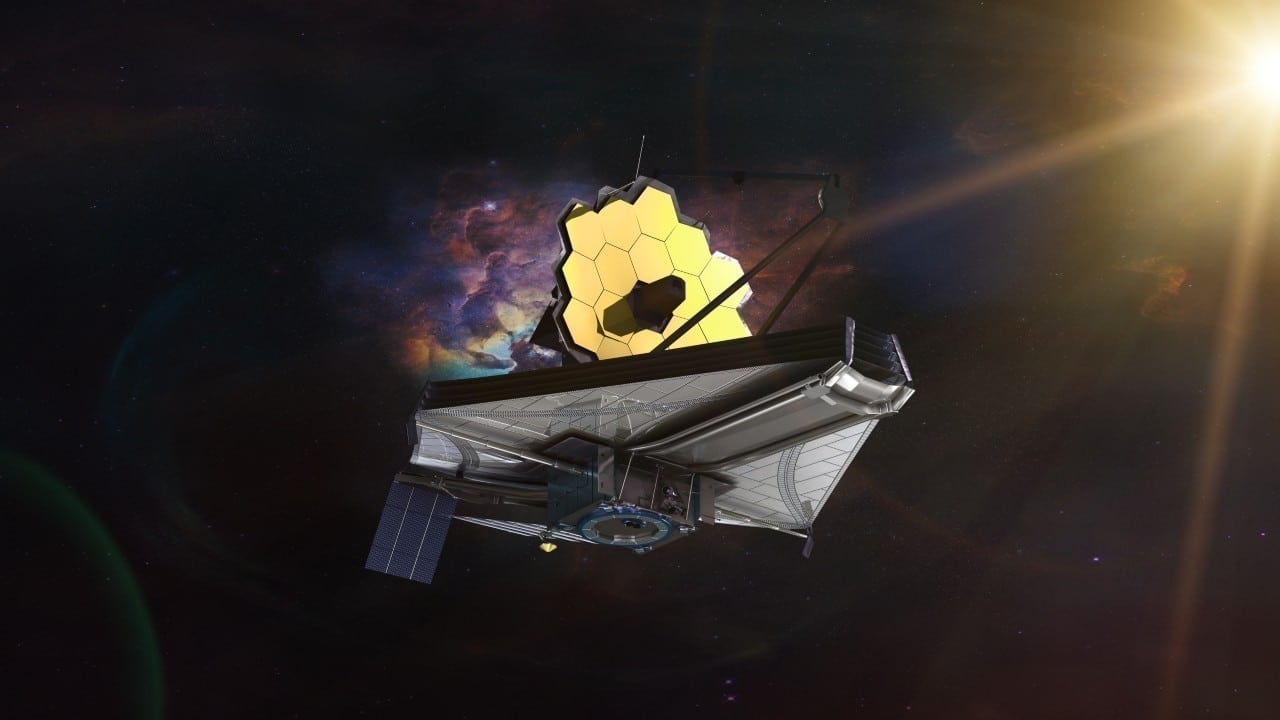
Telescópio Espacial James Webb reached four years since its launch on December 25, 2021. Desenvolvido in partnership between NASA, ESA and CSA, the equipment was sent into space by the Ariane 5 rocket from Guiana Francesa. Scientific observations officially began in July 2022. During the Nesse period, the telescope captured data that expanded understanding of the early cosmos.
Agência Espacial Europeia released a video lasting more than 40 minutes that simulates a virtual walk through space using images recorded by Webb. The material ranges from regions close to Sistema Solar to distant galaxies billions of light years away.
- Nebulae with intense star formation.
- Colliding and merging galaxies.
- Exoplanets with detailed atmospheric analysis.
- Supernovae and supermassive black holes in ancient times.
These captures highlight the telescope’s infrared capabilities, which penetrate dust clouds and reveal hidden structures.
Launch and orbital positioning
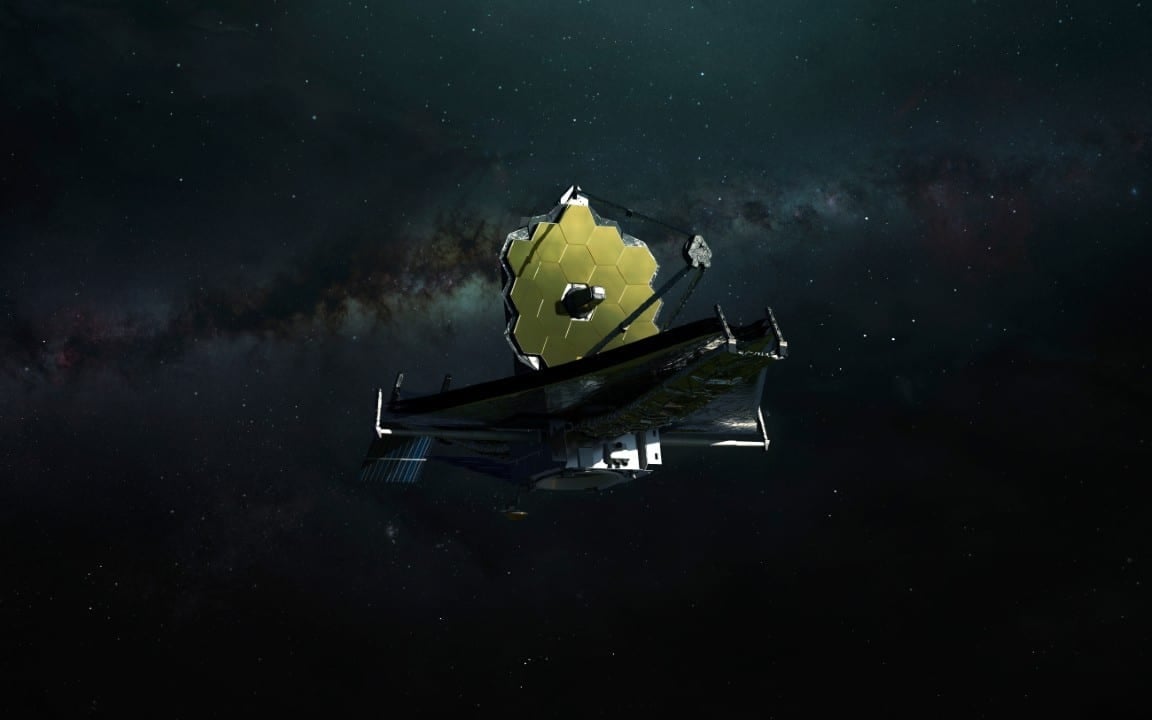
James Webb was launched on Natal 2021 and reached the Lagrange L2 point in January 2022. Essa position, 1.5 million kilometers from Terra, allows continuous observations without solar or terrestrial interference. The 6.5-meter primary mirror, composed of golden segments, collects infrared light with greater precision than Hubble. The heat shield keeps instruments at temperatures close to absolute zero to prevent thermal noise.
The initial mission expected five years of operation, but the efficient launch preserved fuel and extended the expectation to up to 20 years. Essa longevity guarantees continuity in research into the formation of stars and planets.
Main scientific achievements
The telescope recorded advances in multiple areas of astronomy in the four years of activity. One of the most notable detections was the oldest supernova ever observed, which occurred when the universe was less than a billion years old. Essa discovery, published in specialized journals, confirms models about massive stellar explosions in the early cosmos.
Webb also identified early galaxies with high rates of star formation, challenging previous theories about cosmic evolution. Observações of exoplanets have revealed atmospheres with complex organic molecules, advancing the search for habitable conditions.
Iconic images captured
The images from James Webb were highlighted for their clarity and depth in infrared.
- Caranguejo nebula, with details of expanding debris.
- Pillars from Criação to Nebulosa to Águia, showing columns of gas sculpted by young stars.
- Interacting galaxies, such as Pinguim and Ovo, with visible gas flows.
- Deep field with thousands of ancient galaxies in a small portion of the sky.
These records serve as a basis for studies on stellar birth and cosmic structures.
ESA and NASA celebrations
ESA produced the commemorative video that compiles captures from the four years into an immersive visual narrative. The material starts in nearby regions and advances to distant objects, illustrating the scale of the observable universe. NASA complemented it with an interview with scientist John Mather, involved in the project since its origins.
These initiatives highlight the telescope’s international collaborative impact.
Contributions to exoplanets
Webb analyzed atmospheres of extrasolar planets with precise spectroscopy. Detecções include water vapor, carbon dioxide, and methane on rocky and gaseous worlds. Esses data helps identify candidates for habitability and understand planetary formation processes.
Observations from systems like TRAPPIST-1 provide information about habitable zones in red dwarfs.
Advances in distant galaxies
The telescope observed galaxies formed a few hundred million years after Big Bang. Essas structures appear more massive and organized than predicted, prompting revisions in cosmological models. Natural gravitational Lentes amplify distant signals, allowing detailed studies of chemical composition.
These observations shed light on how the first galaxies clustered and evolved.
Discoveries about black holes
Webb detected supermassive black holes in young galaxies, with masses billions of times greater than that of the Sun. Esses findings indicate rapid growth in the early universe, possibly through mergers or accelerated accretion.
Images of distant quasars reveal jets of matter effluxing at relativistic speeds.
Legacy of the four years
In the four years since launch, James Webb has accumulated a vast archive of data accessible to the global scientific community. Milhares of articles based on his observations have been published, covering from Sistema Solar to the farthest reaches of the observable universe. The telescope continues to operate at full capacity, with observation programs scheduled for the coming years.
This trajectory consolidates its position as the main space observatory of the decade.




