
Samsung plans to expand the use of Exynos in future Galaxy to reduce costs with Qualcomm

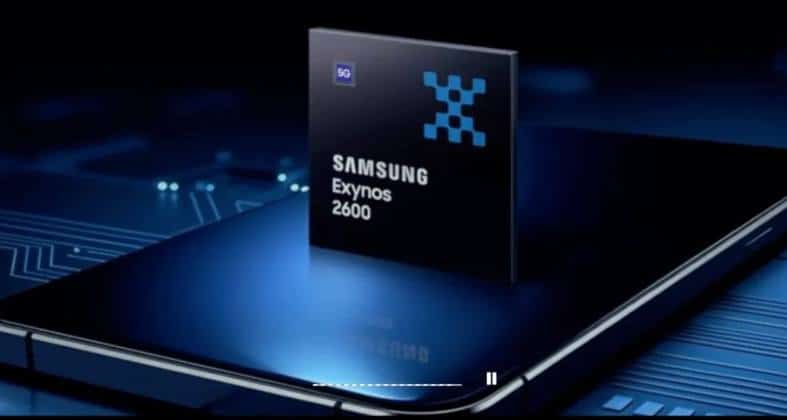
The Samsung prepares the Exynos to take on a majority role in its flagship smartphones starting with the Galaxy S26 line. Analistas point out that heavy investment in internally developed CPU and GPU cores indicates a long-term strategy to reduce dependence on Qualcomm. The current agreement with the American company limits the Exynos to around 25% of S26 series units, but this is seen as a starting point.
The Exynos 2600, manufactured using a 2nm process, has already entered mass production with initial yields estimated at 50%, which could improve with optimizations. Esse chip includes Xclipse 960 GPU based on custom AMD RDNA 4 architecture, promising significant gains in computing. Para the Galaxy S26 series, scheduled for launch in January 2026, the Snapdragon 8 Elite Gen 5 should equip 75% of the devices, while the Exynos will have the rest.
This division reflects the high costs of the Qualcomm chips, which reach values close to US$280 per unit in the current model, with projections of an increase next year. Samsung avoids these premiums by expanding the use of its proprietary technology.

Transition strategy to Exynos
The Samsung accelerates the development of proprietary components to power the Exynos in premium devices. Analyst Samir Khazaka highlighted that investments in internal CPU and GPU designs are not justified for a permanent minority role.
This approach signals ambition to position Exynos as a leading option in most global markets. The focus includes improvements in energy efficiency and thermal performance, areas criticized in previous generations.
- AMD-powered custom GPU for advanced ray tracing.
- Cores optimized in 2nm GAA process.
- Integration into an ecosystem beyond smartphones.
Exynos 2600 Technical Details
The Exynos 2600 represents progress with 2nm manufacturing, being one of the first mobile chips in this node. Ele incorporates the Xclipse 960 GPU, which offers up to twice the computing performance compared to its predecessors, thanks to the custom variant of AMD’s MGFX4 architecture.
Samsung prioritizes optimizations to increase production yields, essential for higher volumes in flagships. Comparações indicate competitiveness with rivals, including NPU gains for generative AI tasks.
The chip supports LPDDR5x memories and UFS 4.1 storage, as well as image processing for high-resolution cameras.
Comparison with Snapdragon in the S26 series
In Galaxy S26, the Snapdragon 8 Elite Gen 5 dominates with around 75% of units, especially in markets like Estados Unidos and China. The Exynos 2600 appears in selected regions, such as Europa and Coreia of the Sul, for standard and Plus models.
This division maintains uniformity across Ultra variants, which prioritize the Qualcomm chip globally. Initial Testes suggest a greater balance between the two processors in performance and efficiency.
The strategy allows Samsung to test Exynos at full scale while controlling costs.
Investments in own GPU and CPU
Samsung forms dedicated teams for internal CPU and GPU designs, aiming to compete directly with Apple and Qualcomm. The Exynos 2800, scheduled for 2027, should debut a fully proprietary GPU, expanding use beyond smartphones.
This movement reinforces technological autonomy and prepares the ground for greater adoption in future lines. The company has completed basic design of advanced processes, including optimized 2nm variants.
Outlook for future Galaxy lines
The gradual transition positions Exynos for majority participation in flagships from 2027. Analistas see the 25% share in S26 as a basis for expansion, driven by rising costs of external chips.
The Samsung balances the proven performance of the Snapdragon with the potential of its proprietary technology. Melhorias in yields and thermal temperatures support this evolution.
The focus on AI and advanced graphics aligns the Exynos with market demands for premium devices.
Regional chip distribution
The processor breakdown varies by market in the Galaxy S26 series. Modelos Ultra use Snapdragon globally for consistency.
In regions such as Europa, Coreia of Sul and parts of Ásia, the Exynos 2600 equips standard and Plus variants. Mercados North Americans and Chinese prioritize Qualcomm for regulatory approvals and local preferences.
- Snapdragon in 75% of total units.
- Exynos by around 25%, concentrated in specific markets.
- Hybrid strategy to minimize risks.



