
Samsung’s strategy with Exynos in the next Galaxy aims to reduce dependence and costs on Qualcomm

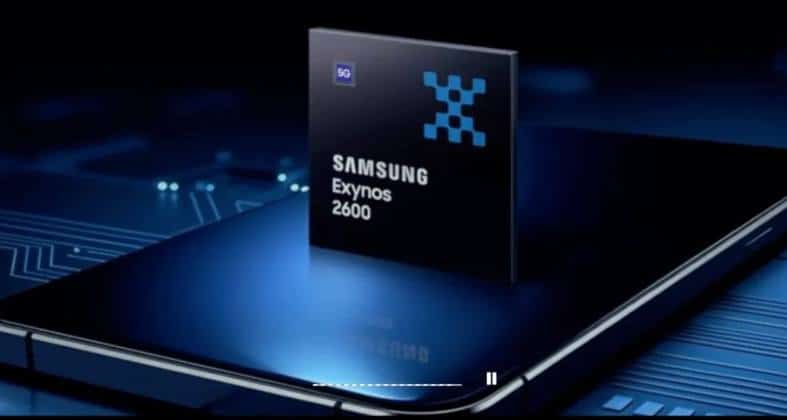
Samsung is redefining its component strategy for the Galaxy smartphone line, planning a significant expansion in the use of its Exynos processors. The measure, which should gain traction with the launch of the Galaxy S26 series in 2026, directly aims to reduce the company’s dependence on Qualcomm chips, whose rising costs have impacted the profit margins of high-end devices.
Industry sources indicate that the long-term plan is to position Exynos as the majority processor in most global markets. Embora the current agreement with Qualcomm still provides for a favorable division to the Snapdragon for the S26 generation, the massive investment by
The transition will be gradual, but assertive. Para the Galaxy S26 line, the expectation is that the Exynos 2600 chip will equip approximately 25% of the units manufactured, a number that serves as a starting point for more aggressive expansion in the following years. The initiative is a direct response to the high prices charged by Qualcomm, which reach almost US$ 280 per unit of the current Snapdragon, with projections of further increases.

Technical advances of the Exynos 2600
The Exynos 2600 represents a crucial technological leap for the Samsung, being one of the first mobile processors on the market to be manufactured using 2 nanometer (nm) lithography. Este advancement promises substantial gains in energy efficiency and gross performance, essential factors to compete in the premium segment. Mass production of the chip has already started, with initial yields of around 50%, a number that the company is working to optimize before launching at scale. The component integrates the new Xclipse 960 GPU, developed based on AMD’s custom RDNA 4 architecture, which promises to double computational performance compared to previous generations, especially in intensive graphics tasks and ray tracing. In addition, the chipset is designed to support LPDDR5x memory and UFS 4.1 storage, in addition to an enhanced Unidade of Processamento Neural (NPU) to accelerate generative artificial intelligence tasks directly on the device, aligning with new software trends.
Transition strategy from Galaxy S26
For the Galaxy S26 series, Samsung will adopt a hybrid approach to processor distribution. The Snapdragon 8 Elite Gen 5, from Qualcomm, will still be dominant, equipping around 75% of all devices. Essa majority guarantees the brand’s presence in strategic and regulated markets, such as Estados Unidos and China, where chip approval is a complex process and consumer preference historically leans towards Qualcomm.
The Exynos 2600, in turn, will be allocated to the remaining 25%, focusing on regions such as Europa, Coreia of Sul and parts of Ásia. Essa division allows Samsung to conduct a large-scale test of its new chip in key markets, collecting performance data and user feedback, while simultaneously managing production costs and mitigating risks associated with an abrupt transition.
Heavy investment in R&D for autonomy
Samsung’s ambition to strengthen its Exynos range is underpinned by significant investment in research and development. The company has assembled teams of engineers dedicated exclusively to the design of proprietary CPU and GPU cores, with the clear goal of directly rivaling the solutions offered by the Apple and the Qualcomm itself. Analistas from the sector point out that an investment of this magnitude would not be justified if the plan were to maintain Exynos as a minority option permanently.
In-house development focuses on overcoming past criticisms, especially related to energy efficiency and thermal management, which affected the perception of some previous models. The goal is to create a fully optimized hardware ecosystem, where the processor, memory and other components talk more fluidly.
The company’s roadmap already foresees the next steps, such as the Exynos 2800, expected for 2027, which is expected to debut the first GPU fully developed by Samsung, marking the end of dependence on AMD’s architecture and expanding the applications of the chips beyond smartphones, including tablets, notebooks and augmented reality devices.
Implications for the global market
Samsung’s decision to boost Exynos has the potential to reconfigure the mobile semiconductor market. By reducing its dependence on Qualcomm, the South Korean giant not only cuts costs, but also increases its bargaining power and stimulates competition in the sector.
For consumers, this change could result in a greater variety of performance between models in the same line, depending on the region. Samsung works to minimize these discrepancies, ensuring the user experience is consistent regardless of the embedded processor.
The performance of the Exynos 2600 will be closely watched by the industry. A commercial and critical success could validate Samsung’s strategy and encourage other manufacturers to explore the development of their own chips, reducing the current dominance of a few companies.
In the long term, technological autonomy will allow Samsung to more deeply integrate artificial intelligence and other software innovations directly into silicon, creating unique features for the Galaxy ecosystem and differentiating its products in a highly competitive market.
The regional division of processors
The distribution of chips in the Galaxy S26 line will follow a well-defined geographic pattern. More advanced models, such as the Ultra variant, must use the Qualcomm processor in all markets, ensuring a standard of performance and feature compatibility globally, which is seen as essential for the flagship product in the series.
The standard models and Plus will be the targets of the hybrid strategy. Mercados, Europa and Ásia will predominantly receive versions with Exynos 2600, while consumers in América, Essa segmentation considers both local preferences and the complex regulatory requirements of each country.
The future of the Galaxy ecosystem
The consolidation of Exynos as a central pillar of Samsung’s hardware strategy reinforces the company’s vision of an integrated ecosystem. By controlling the development of the “brain” of its devices, the company can optimize the interaction between smartphones, watches, headphones and other products, offering a more cohesive and intelligent user experience.
Competitiveness and future challenges
Samsung’s journey to elevate the status of Exynos is not without its challenges. The company will need to prove to the market that its chip not only matches, but in certain aspects surpasses the Qualcomm solution, especially in efficiency and sustained performance. Consumer perception will be a determining factor, and the company will have to invest in marketing to communicate the benefits of its proprietary technology. The success of this initiative will define Samsung’s ability to innovate and compete on its own terms over the next decade.



