
Astronomers discover interstellar tunnel that connects Solar System to distant stars

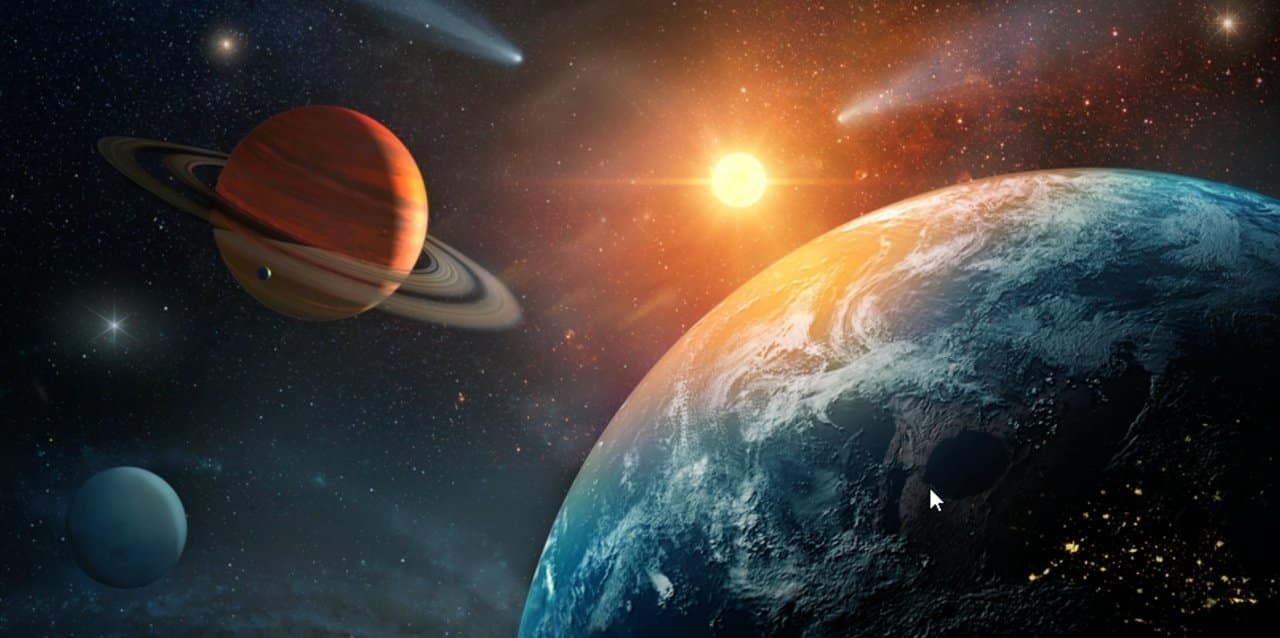
Astronomers tied to Instituto Max Planck of Física Extraterrestre have announced the discovery of a vast, linear structure of hot plasma that appears to function like an interstellar tunnel. The Esta formation connects the immediate neighborhood of our Sistema Solar, known as Bolha Quente Local, to significantly more distant regions of the Via Láctea, specifically toward the constellations of Centauro and The finding was made possible thanks to data obtained by the eROSITA telescope, which carried out detailed mapping of the cosmic soft X-ray background radiation across the entire sky.
The study indicates that this low-density, high-temperature corridor could be the result of supernova explosions that occurred millions of years ago. Tais Violent cosmic events have not only cleared the space around Sol, but also carved out thermal pathways that allow different star clusters to connect.
- Bolha Quente Local extends approximately 300 light years around Terra.
- The plasma detected in the tunnel has temperatures ranging between 101 and 122 electron volts.
- The discovery confirms the theory that the interstellar medium is composed of a network of connected bubbles.
- The eROSITA telescope used more than 2,000 space bins to create this three-dimensional map.
Cutting-edge technology in mapping the cosmos
Using the eROSITA instrument allowed researchers to filter out common solar interference to focus exclusively on the diffuse emission of hot gases. Unlike previous observations, the high spectral resolution of this equipment made it possible to clearly distinguish between cosmic dust and the low-density plasma filling the newly discovered interstellar tunnel.
This technical precision revealed that Bolha Quente Local does not have a uniform or closed structure, presenting openings that suggest a continuous flow of galactic material. Detailed mapping now provides a solid foundation for understanding how gas and energy are transported through the galaxy.
Origin linked to ancient supernova explosions
Analysis of the data collected suggests that the structure was shaped by stellar winds and shock fronts resulting from multiple supernovae that occurred between 10 and 20 million years ago. Essas explosions were responsible for pushing the cold gas to the edges, creating immense cavities filled with ionized plasma that remain active and detectable to this day.
The researchers observed that the thermal pressure inside this tunnel is lower than that of isolated supernova remnants, which reinforces the idea of an interconnected network. Esse scenario suggests that the interstellar medium works similar to a tunnel system, where energy travels along paths of least resistance.
Thermal differences between the galactic hemispheres
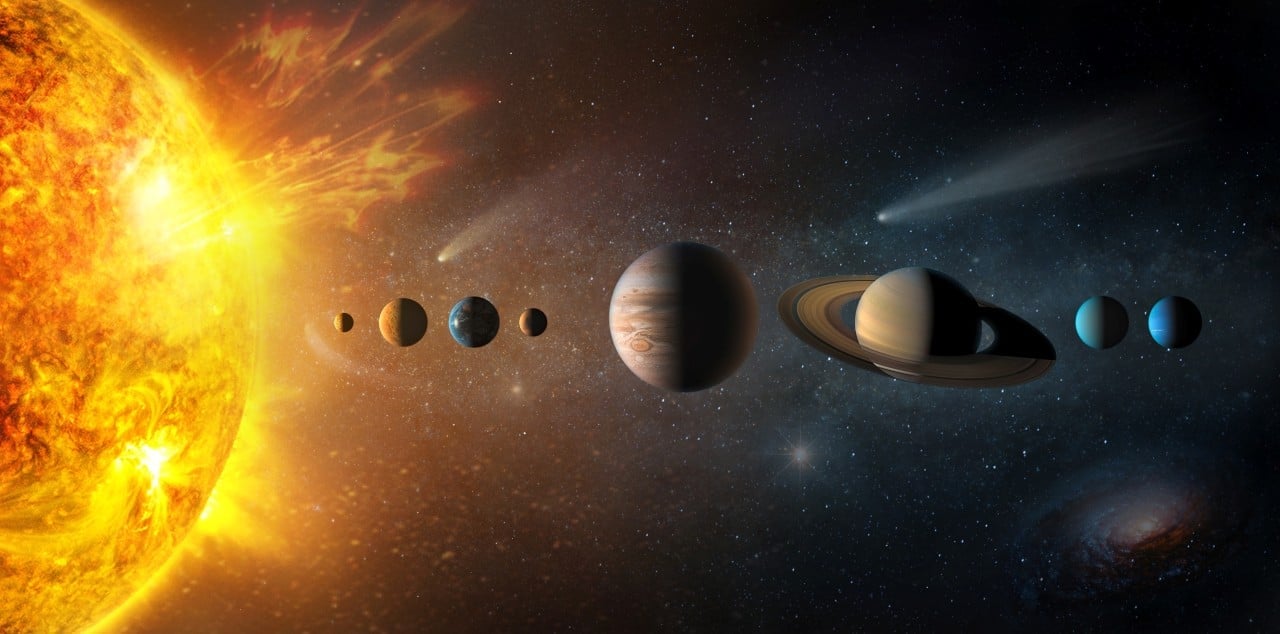
One of the most intriguing revelations from the research is the existence of a significant temperature gradient between the north and south of Bolha Quente Local. The plasma located in the southern galactic hemisphere reaches around 122 eV, while the northern region records an average of 101 eV, indicating an asymmetric heating of the region.
This disparity suggests that the warming events that gave rise to the bubble were not evenly distributed across space. Fluxos directional output and new energy injections may be maintaining these thermal differences over the millennia.
Dynamics of the interstellar medium and cosmic ray transport
Detailed study of these plasma tunnels opens up new avenues of investigation into how cosmic rays and stardust move through Via Láctea. Because they are low-density regions, these corridors facilitate the transport of high-energy particles that would otherwise be blocked by dense clouds of cold gas.
Sistema Solar’s privileged position within this bubble allows scientists to use Terra as a central observatory to study large-scale galactic dynamics. Understanding these pathways is fundamental to predicting how matter evolves and is distributed among the galaxy’s spiral arms.
Perspectives for modern astronomy
The three-dimensional mapping carried out by the German team sets a new standard for astrophysics, integrating data from multiple satellites and wave frequencies. Combining information about neutral hydrogen and X-ray radiation allows an unprecedented view of the solar neighborhood.
This new model not only validates hypotheses formulated decades ago, but also challenges the simplistic view of isolated bubbles in a vacuum. The structure observed in Centauro and Cão Maior is just the beginning of identifying a vast mesh that could encompass our entire galaxy.
Physical structure and properties of interstellar plasma
The elongated cavities identified present an almost total absence of dust, which results in an exceptionally high X-ray brightness at certain frequencies. Essas physical characteristics confirm that the tunnel is an open passageway through the surrounding dense interstellar gas.
The coherent geometry observed in the emission maps reinforces the interpretation that the space between stars is not a random void, but an environment structured by gravitational and thermal forces. The stability of these formations over millions of years is one of the points that arouse the greatest interest in the international scientific community.



