
Migration barriers and geopolitical expansion in the ‘Donroe’ Doctrine: Donald Trump’s agenda for the Americas in 2026

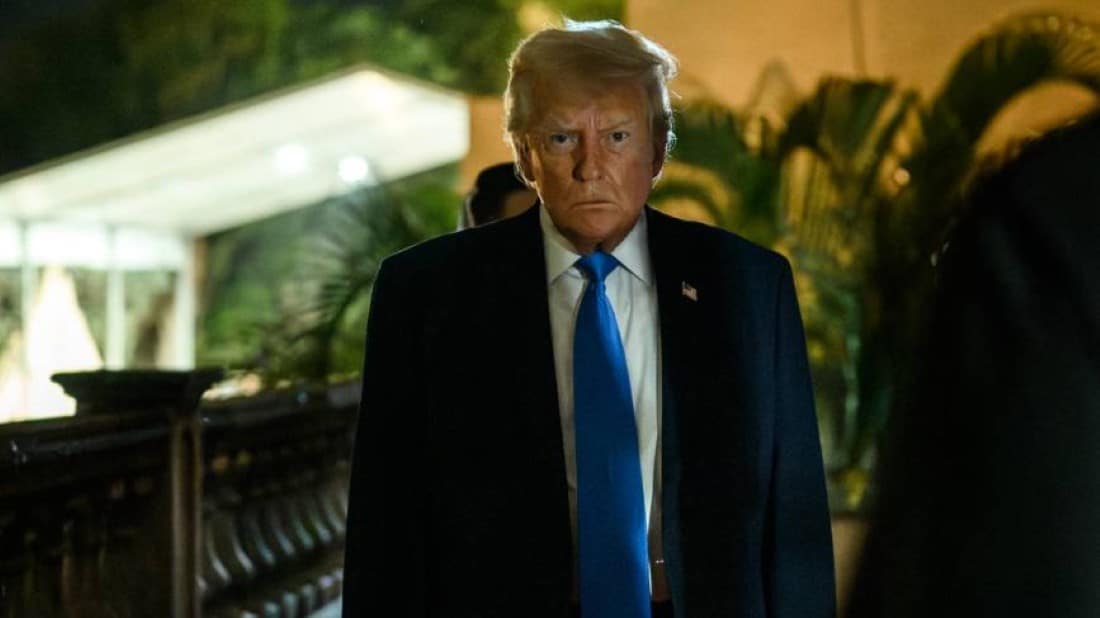
The president of the Estados Unidos, The administration intensified the hunt for immigrants within the country, applied significant commercial tariffs and intervened to combat crime in several cities, especially those administered by Democrats, in addition to engaging in attempts to resolve international conflicts. Este roadmap, although predictable in essence, outlined the basis for an administration that would not hesitate to implement its most audacious proposals. However, the trajectory for 2026, his second year in his second term, appears with a high degree of uncertainty, as experts point out. The slowness in resolving global conflicts, growing political weariness due to immigrant arrests, and internal divisions in the Partido Republicano are expected to shape and redefine the government’s priorities.
Thus, the agenda for next year suggests a reinforced focus on foreign policy, especially on América Latina, and a new approach to immigration, now centered on entry restrictions. The signals include military operations near Venezuela and the release of a foreign policy document that emphasizes the region as a crucial strategic point. Essas maneuvers indicate a reinterpretation of the traditional Doutrina Monroe, dubbed by some as “Donroe Doctrine”, a central pillar for the geopolitical plans of
Domestically and internationally, the Trump government must undertake a series of strategic actions to consolidate its influence and address emerging challenges. Analistas predict significant movements on several fronts, which include:
- Double bet on anti-immigration policies, now focusing on blocking new arrivals of foreigners and making it difficult to grant visas.
- Search for ceasefire agreements in international conflicts, to the detriment of definitive and lasting solutions.
- Implementation of the “Donroe Doctrine”, expanding US influence in América Latina to counter the rise of powers such as China and Rússia in the region.
- Efforts to regroup the Partido Republicano, now fragmented, with an aggressive campaign for the midterm elections.
- Opening of a regulatory battlefront on artificial intelligence, involving state governments and large technology companies.
- Maintaining a governance style characterized by unpredictability and

Toughening of migration policy in 2026
Before resuming Casa Branca in January 2025, Donald Trump promised a mass expulsion of irregular immigrants, a measure that, although not fully realized on its most radical scale, translated into a highly aggressive anti-immigration campaign. Throughout the year, thousands of agents from the Serviço of Imigração and Alfândega of the Essa tactic, replicated in different regions of the country, generated a climate of apprehension and insecurity in immigrant communities, redefining the panorama of immigration law enforcement.
The prospects for 2026 indicate a deepening of these restrictive policies, with a change in strategic focus. Instead of focusing efforts solely on deporting individuals already residing in the country, the Trump administration should direct its energy to the borders, significantly tightening restrictions on the entry of new foreigners and carefully reviewing visa granting processes. The director of government relations for Associação of Advogados of Imigrantes of the USA,
This new approach has already begun to manifest itself in late 2025, with Washington suspending visa applications for citizens of 19 countries, including nations such as Afeganistão, Irã, A foreign policy document released in December by the Trump administration reinforces this view, declaring the “end of the era of mass migration” and the imperative need to “protect borders against uncontrolled migration, terrorism, drugs, espionage and human trafficking.” Essas statements foresee a scenario where entry permits will be severely controlled, prioritizing national security and sovereignty above other humanitarian or economic considerations.
Repercussion of anti-immigration measures
The aggressive migration policy of the Trump administration in 2025 generated a significant increase in criticism and protests across the country, highlighting a growing polarization on the issue. Prefeitos from several cities, along with resident groups and activists, attempted to block ICE operations, arguing civil rights violations and the negative impact on local economies and community cohesion. Mesmo Within the Partido Republicano, voices emerged that questioned the effectiveness and humanity of certain approaches, indicating a political weariness that manifested itself beyond traditional party lines, making the migration issue a point of internal tension.
This erosion was corroborated by survey data and election results. A survey conducted in the second half of 2025 by Centro of Pesquisa of Assuntos Públicos of Associated Press and Instituto Norc of Universidade of The repercussion of these measures was felt even in Republican electoral bases, such as in Miami, where the victory of a Democratic mayor was interpreted by analysts such as Sandra Cohen as a reflection of the local Latino community’s dissatisfaction with the immigration hardline. Esses events signal that, despite the rhetoric, the practical implementation of anti-immigration policies is generating complex political and social consequences for the government.
Truce agreements and the search for global stability
Throughout 2025, Donald Trump, in a kind of “self-campaign” for an Prêmio Nobel of Azerbaijão. However, a more detailed analysis of these “agreements” reveals that, for the most part, they were temporary truces or ceasefires, with some lasting only days, as was the case with the territorial dispute between Tailândia and Camboja. Essa pragmatic approach, which favors the immediate suspension of hostilities over complex and lasting political solutions, should remain a constant in American diplomacy in 2026, with the president seeking quick and symbolic victories to reinforce his image as a peacemaker.
Despite this preference for volatile agreements, two specific regions, Faixa of Gaza and Ucrânia, will require slightly different approaches. Para Gaza, Trump announced plans to form an international Conselho from Na Ucrânia, the American president has avoided explicitly referring to a ceasefire since his last meeting with Vladimir Putin, who defends a definitive agreement to the conflict. The plan drawn up by Trump, however, leaves open the crucial territorial issues, which are the main point of contention between Moscou and Kiev, indicating that the search for lasting peace in the region still faces significant barriers.
America Latina in focus of ‘Doctrine Donroe’
A crucial document detailing the military strategy and foreign policy of the Estados Unidos, released in December 2025 by the Pentágono, clearly signaled the intention of the Washington to rescue the essence of the Doutrina Monroe. Estabelecida in 1823, this doctrine historically claimed US sovereignty over the Ocidente, especially over the American continent, transforming the América Latina into its main geopolitical “backyard”. Essa contemporary reinterpretation, dubbed the “Donroe Doctrine” – a play on words that mixes the original name with that of the announcement in December of a cooperation agreement with the Paraguai, which provides for American military operations in the country, reinforces this new strategy of expanding influence and presence in the region. Segundo Roberto Uebel, teacher of Relações Internacionais at ESPM and coordinator of Núcleo of Estudos and and Rússia. Uebel emphasizes that Trump sees the geopolitical scenario as dominated by three great powers, seeking, with this doctrine, to position the entire Ocidente under the aegis of the Estados Unidos, in a clear return to economic nationalism and a multipolar worldview, but centered on American primacy.
Republican rearticulation and midterm election
The internal fragmentation of the Partido Republicano, a phenomenon observed and deepened throughout 2025, represents one of the main domestic challenges for the Trump administration in 2026. The ideological divergences between the party’s factions, the unshakable loyalty of some to the president versus the search for a more traditional identity on the part of others, have created a scenario of internal disputes that weaken party cohesion. Essa division could hamper the passage of key legislation and the implementation of strategic policies, requiring Trump to devote significant efforts to consolidating its base and realigning domestic interests.
In November 2026, the Estados Unidos will host the midterm elections, a crucial event that will renew all of the seats in the Câmara of the Deputados and a third of the Senado. Essas elections are a vital barometer for the popularity of the president and his party, as Legislativo’s control can determine Casa Branca’s ability to advance its agenda. An aggressive and focused campaign will, therefore, be essential for Trump to be able to elect allies and maintain or expand the Republican majority, avoiding a “divided government” scenario that could paralyze his administration in the following years.
The campaign strategy for 2026 must be marked by intense rallies, a strong presence on social media and rhetoric that mobilizes its most fervent electoral base, while at the same time trying to win back dissatisfied or undecided voters. Temas such as border security, protectionist economic policy and cultural issues must be explored to galvanize the electorate. The party’s performance in these elections will serve as a direct indication of the political strength of Trump and its legacy, directly influencing its negotiating power and ability to implement its proposals.
The president’s attention will be focused on articulating support within the party, financing campaigns for aligned candidates and holding events that reinforce the image of a united Partido Republicano under his leadership. The outcome of these elections will not only define the composition of the Congresso, but will also shape the internal political dynamics of the Estados Unidos and the ability of
Regulation of artificial intelligence in the Estados Unidos
The growing and rapid evolution of artificial intelligence (AI) will launch the agenda for its regulation as one of the most debated topics in the Estados Unidos in 2026, causing a clash between different spheres of power and large technological corporations. Questões crucial factors such as data privacy, ethics in the use of algorithms, the prevention of bias and the implications for national security and the job market will be at the center of discussions. Haverá an intense battle between state governments, which seek to create their own legislation to protect citizens, and technology giants, which advocate a more flexible approach or unified federal regulation, while the federal government tries to coordinate a national response. The goal is to balance innovation with the need for protection and control, defining the future of technology and its impact on American society.



