
Renault Filante Record 2025 sets new energy efficiency record for electric vehicles

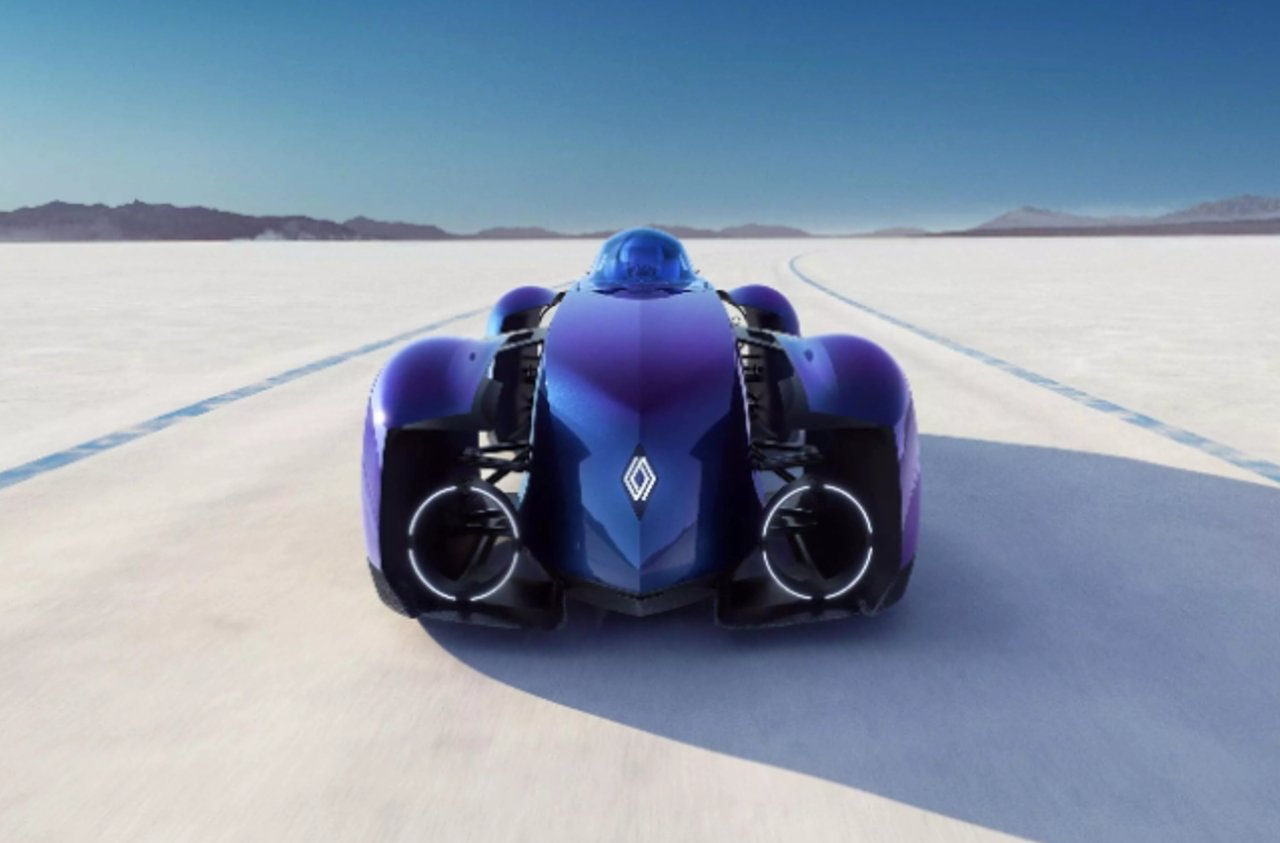
French automaker Renault recently presented its new experimental electric vehicle, the Filante Record 2025, focused exclusively on overcoming limits in energy efficiency and aerodynamics. The project was developed to test technologies that could increase the autonomy of the brand’s future passenger cars, using the knowledge accumulated in decades of participation in the Fórmula 1. Practical tests carried out on a flat track demonstrated that it is possible to achieve energy consumption rates drastically lower than those recorded by current production models.
This prototype represents a fundamental shift in the company’s engineering philosophy, prioritizing distance traveled intelligently over absolute final speed. Instead of gigantic engines, the focus is on the lightness of the structure and the fluidity with which the air passes through the body during movement. The initiative seeks to understand how every gram removed from the total weight and every millimeter adjustment in the design can directly impact the durability of the battery charge in real road use conditions.
- The vehicle used an 87 kWh battery, the same one that equips the Renault Scenic E-Tech model as standard.
- The construction was carried out in partnership with Ligier, a specialist in high-performance chassis.
- Tires with very low rolling resistance were supplied by Michelin to optimize consumption.
Focus on advanced aerodynamics
The Renault advanced design team focused efforts on the SCx index, which represents the product of the vehicle’s frontal area and drag coefficient. Durante the initial phases in the wind tunnel, engineers detected turbulence that prevented the achievement of the efficiency targets established in the original planning. To fix these problems, the wheel fairings were simplified and the cockpit was redesigned to ensure the airflow was as clean as possible.
Experts say the Filante Record 2025 has a natural predisposition for aerodynamic efficiency, but required fine adjustments to side surfaces and transitions between wings. Joint work between designers and fluid experts allowed the car to cut through the air with minimal resistance, reducing the strain on the electric motor to maintain constant speeds. Essas improvements are fundamental for electric vehicles, where the energy available in batteries is still limited compared to traditional fossil fuels.
Strategic weight reduction
Following the historic principle that lightness is the key to overall performance, the design utilized composite materials and carbon fiber on a large scale. The objective was to keep the total weight of the prototype at around 1,000 kg, an impressive mark considering that modern batteries are dense and heavy components. Cada detail of the structure was analyzed to identify where it would be possible to reduce grams without compromising the integrity of the assembly.
Mass distribution was also optimized to ensure the center of gravity contributed to stability and efficiency on the test tracks. With a lighter vehicle, the energy required to overcome inertia and maintain movement is significantly less, which directly increases the final autonomy. Essa approach allows the car to travel greater distances without the need for excessively large and heavy battery packs, which would ultimately degrade performance.
Test results on Marrocos
The official resistance and consumption tests took place at the UTAC center Ceram, located at Oued Zem, at Marrocos, under controlled climatic conditions. Três drivers from team Alpine took turns behind the wheel for almost 10 uninterrupted hours of driving on a long, flat course. The average speed was maintained at 102 km/h, simulating the behavior of a driver on a conventional long-distance highway.
At the end of the session, the Filante Record 2025 covered 1,008 kilometers and still had 11% charge remaining in its 87 kWh battery. The recorded consumption was just 7.8 kWh for every 100 kilometers travelled, an unprecedented figure in the current automobile sector. Para comparison effect, the most efficient electric cars on the production market rarely manage to lower than 12 or 14 kWh per 100 kilometers under the same conditions.
Applied technological innovations
In addition to the lightweight housing and fluid design, the prototype incorporated advanced electronic control systems derived directly from competition tracks. The use of electronically controlled braking and steering (wire-by-wire) eliminated heavy mechanical components, contributing to the reduction of the vehicle’s total mass. Essas technologies allow for more precise integration with the battery’s energy management system, minimizing losses during acceleration and regenerative braking.
The Renault integrates these systems to see how electronics can replace physical parts without losing safety or driver control. While many of these components are still expensive to mass produce, they serve as proof of concept for future vehicle architectures. The learning gained from battery thermal management during the ten-hour continuous effort will also be applied to the development of new cooling systems for commercial cars.
Comparison with market models
The performance of the Filante Record 2025 even surpasses luxury prototypes famous for their efficiency, such as the Mercedes EQXX. Enquanto the German model achieves excellent marks, the Renault experiment managed to raise the miles per kWh level to a level almost double that of production cars. Essa difference highlights how much the specialization of a single-seater can extract from existing hardware when the focus is strictly on energy savings.
The battery used in the test is the same as the Scenic E-Tech, which under normal conditions of use in the WLTP cycle has a range of 610 kilometers. The fact that the prototype surpassed the thousand kilometer mark with the same energy source demonstrates the impact of aerodynamics and weight. It is technical proof that efficiency engineering can be as important as increasing the capacity of the batteries themselves.
Future of electric mobility
The lessons learned from the Filante Record will not be discarded, directly influencing the French brand’s next generation of electric vehicles. Although ultra-thin tires and carbon fiber suspension parts are not viable for the average consumer today, the management software and airflow design are transferable. Renault believes that continued innovation is necessary to make electric vehicles more practical and affordable for long-distance travel.
Technological evolution in the electrification sector occurs at an accelerated pace, with significant improvements being implemented with each new launch cycle. Projetos experiments like this serve to break new frontiers and ensure that the energy transition is accompanied by real gains in utility. Energy efficiency remains the central pillar for sustainable transport to meet global mobility needs.



