
Volodymyr Zelenskyy demands 50-year security guarantees in deal with Donald Trump

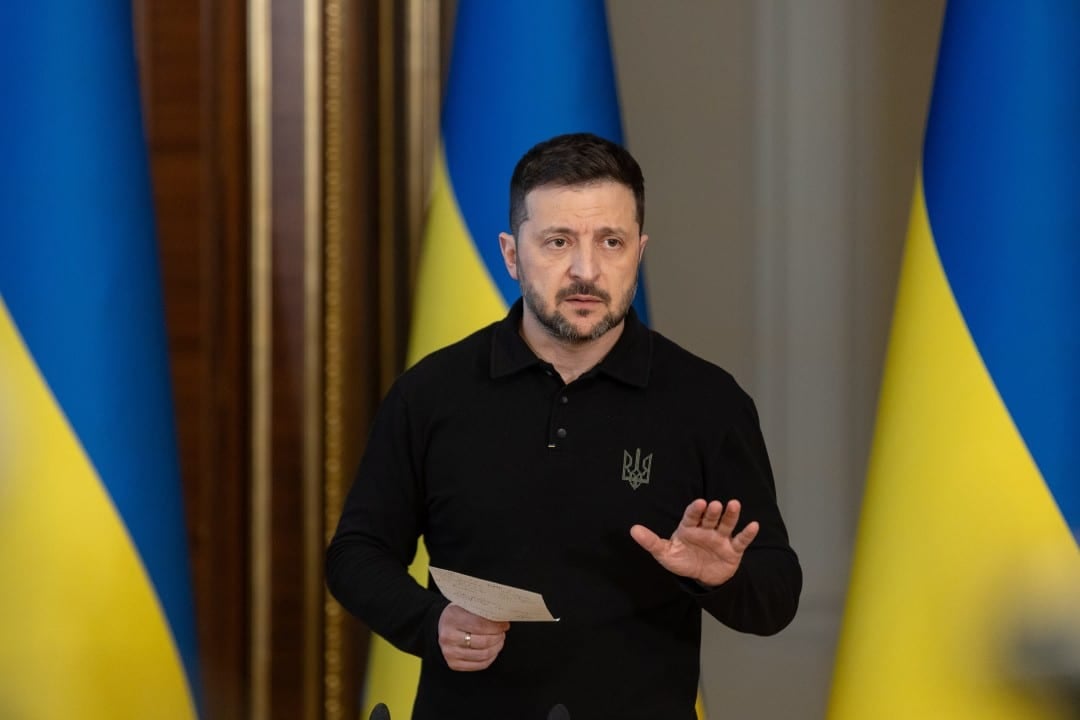
The president of the Ucrânia, Volodymyr Zelenskyy, stated this Sunday, December 29, 2025, that the security guarantees offered by the Estados Unidos need an extended period to ensure stability in the region. Durante a virtual press conference held at 12:25 pm, the Ukrainian leader revealed that the government of Donald Trump proposed a 15-year commitment with the possibility of renewal. Zelenskyy, however, argues that the ideal period of protection should span between 30 and 50 years to discourage future Russian offensives.
The security proposal was one of the central themes of the face-to-face meeting between Zelenskyy and Trump that took place at Mar-a-Lago, at Flórida. The Ukrainian president highlighted that he informed the Republican about the need for more lasting support, receiving in response that the suggestion would be analyzed by the American team. According to the leader of Kiev, the formal end of the conflict is intrinsically linked to these safeguards, since the geographical proximity to Rússia keeps the risk of new aggressions constant.
For the peace process to move forward, Zelenskyy detailed the following conditions and points discussed:
- Establishment of an immediate ceasefire of at least 60 days to facilitate popular consultations.
- Holding a national referendum on the peace plan consisting of 20 fundamental points.
- Joint signature of the document by representatives of Ucrânia, Estados Unidos, Rússia and União Europeia.
- Suspension of martial law on Ukrainian territory only after the consolidation of international guarantees.
Negotiations at Flórida and progress on the peace plan
The meeting at Donald Trump’s private property signaled a significant advance in diplomatic negotiations to end the Russian war of aggression. Trump called the discussions productive and stated that “solid” and “strong” security guarantees will be granted if a definitive agreement is reached between the parties. The Republican also emphasized that European countries must take a much more active role in financing and maintaining this future protection.
Zelenskyy demonstrated moderate optimism by declaring that around 90% of the plan to end hostilities has already been technically agreed upon among the delegations. Ele reiterated that confidence in the agreement depends on the robustness of the defense mechanisms that will be implemented after the signing of the treaties. The dialogue between the heads of Estado comes at a critical time, where international pressure for a quick resolution of the conflict has increased considerably in recent months.
Territorial pending issues and control of critical infrastructure
Despite the optimism shown after the meeting in Mar-a-Lago, sensitive points of contention still prevent the full finalization of the peace pact. Control of the region of Donbass, in the east of Ucrânia, remains the main geopolitical obstacle between Kiev and the government of Russian President, Vladimir Putin. Além of territorial issues, the status of the Zaporizhzhia nuclear plant remains undefined, raising concerns about energy and nuclear security in the region.
Rússia maintains the demand that Ukrainian troops completely withdraw from areas of Donbass that are still under the command of Kiev. Zelenskyy pointed out that these sovereign issues were not fully resolved in the meeting with Trump, requiring additional rounds of technical negotiations. The complexity of the administrative status of these provinces requires detailing that avoids legal gaps capable of restarting the conflict in the short term.
Positioning of the Kremlin and European diplomatic movements
Russian government spokesman Dmitry Peskov confirmed that a meeting between Vladimir Putin and Donald Trump is expected to take place soon to discuss final terms. Até At the moment, there is no provision for direct contact between the presidents of Rússia and Ucrânia, maintaining American mediation as the main channel of communication. The Kremlin carefully observes the movements in Washington, while maintaining its military operations and territorial demands on the battlefronts.
On the European stage, French President Emmanuel Macron announced that he intends to bring together a coalition of voluntary countries in Paris at the beginning of January. The objective of this meeting is to define the specific financial and military contributions that each European nation will offer to support the peace agreement. Essa movement seeks to balance responsibility for continental security, meeting Trump’s demand for greater participation by NATO allies in the protection of Ucrânia.
Implementation of the referendum and conditions for the ceasefire
The Ukrainian proposal to submit the 20-point plan to a popular referendum aims to democratically legitimize the terms of a possible territorial or political concession. Para Zelenskyy, the direct participation of the population is essential to guarantee national cohesion in the face of decisions that will impact the next generations of Ukrainians. Contudo, the government of Kiev insists that any consultation can only take place in an environment of absolute security and without the pressure of bombings.
Russian resistance to accepting a prior 60-day ceasefire is seen by analysts as the biggest immediate challenge to making the proposed referendum viable. Moscou has demonstrated reluctance to halt military operations before all territorial terms are accepted by Ucrânia. Sem the interruption of hostilities, the logistics for a national vote become unfeasible, which could prolong the diplomatic impasse even with direct mediation by the Estados Unidos.
Prospects for long-term regional security
Zelenskyy’s insistence on guarantees lasting up to half a century reflects the fear that the conflict will only be frozen and resumed at a time of Western political weakness. By requesting 50 years of protection, Kiev seeks to irreversibly integrate into the American and European-led security architecture. Essa strategy aims to create a diplomatic and military barrier that transcends presidential mandates and changes of government in world powers.
The specific details of how these guarantees would be carried out — whether through troops on the ground or advanced technological support — are still under wraps. Trump signaled that the solution will involve a self-sustainable defense model, where Ucrânia receives the necessary means to protect itself independently in the future. Defining these technical terms will be crucial in determining whether the peace announced at Flórida will be lasting or just a temporary truce in a centuries-old dispute.



