Ferrari F2004: the story of the legendary car that gave Michael Schumacher his seventh title


The Ferrari F2004 is often celebrated as one of the most dominant and iconic cars in Fórmula 1 history.
The 2004 season was a true monologue for the Maranello team, with Schumacher winning 13 of the 18 races contested, an impressive record for the time. The F2004, with its refined aerodynamic design and the unmistakable sound of its V10 engine, has become a symbol of technical perfection, the result of an impeccable collaboration between the driver and a team of engineers led by figures such as Ross Brawn and Rory Byrne.
The dominance was so overwhelming that it forced the Federação Internacional of Automobilismo (FIA) to intervene with drastic changes to the regulations for the following years, in an attempt to restore the balance of the competition. The F2004’s legacy, however, transcends statistics, remaining alive in fans’ memories as the culmination of a legendary partnership and a golden era for Fórmula 1.
The engineering behind the dominant machine
The success of the Ferrari F2004 was the result of a project that represented the pinnacle of the technical evolution of that generation of cars from the Fórmula 1. The chassis, constructed from carbon fiber and honeycomb composites, is designed to be lighter and stiffer, providing a stable base for the aerodynamic package. Aerodynamics, in fact, was one of the strong points, with a refined front wing and a redesigned rear wing to maximize downward pressure and efficiency in high-speed corners. The heart of the F2004 was the Ferrari Tipo 053 engine, a 3.0-liter V10 that revved at more than 19,000 RPM and produced around 920 horsepower, making it one of the most powerful and reliable on the grid. The synergy with the Bridgestone tires, developed specifically for the car’s characteristics, was another determining factor, guaranteeing consistent grip and performance on different types of circuit.
A season of records and victories
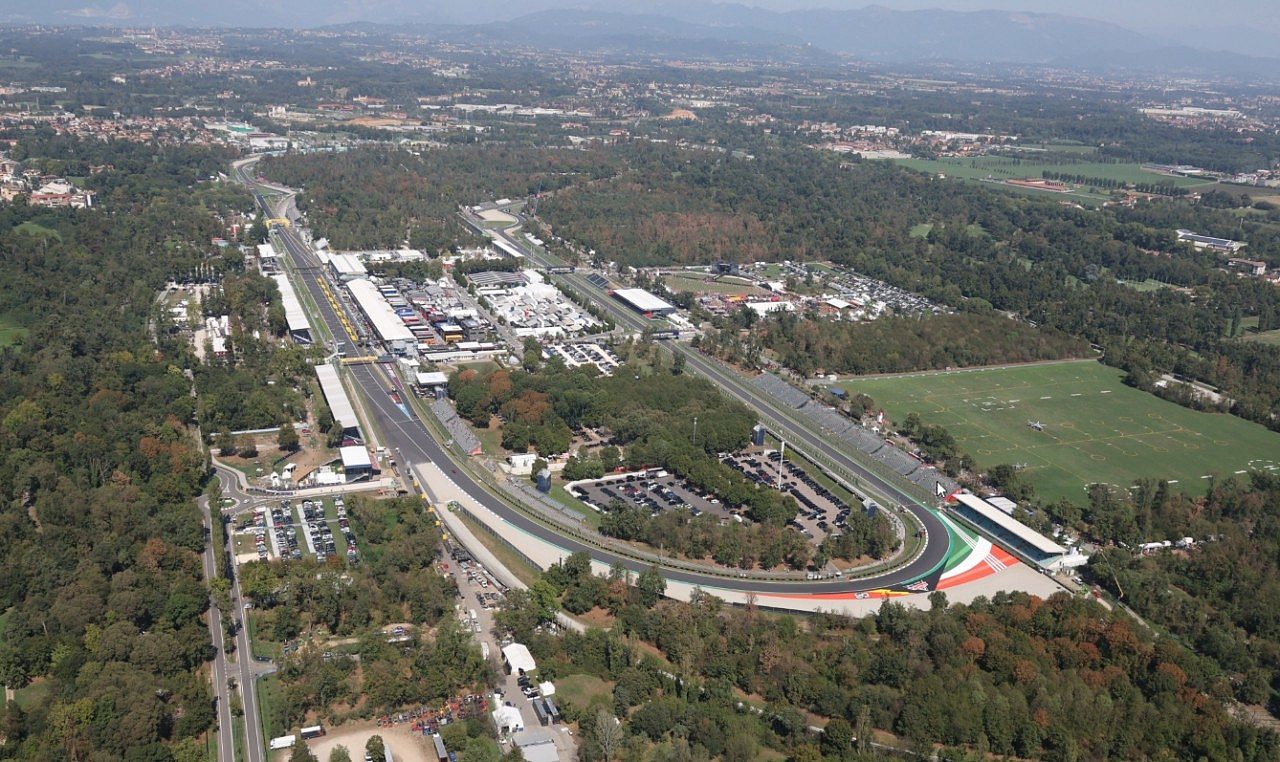
The 2004 campaign got off to a flying start, with Michael Schumacher winning the first five races of the year, making it clear that the driver-car combination would be almost unbeatable. The superiority of the F2004 was evident on all types of tracks, from high-speed circuits like Monza to the most difficult ones like Mônaco.
Over the 18 stages, Schumacher reached the podium 15 times, 13 of them on the highest step. Seu teammate, Rubens Barrichello, also had a solid season, winning two races and contributing to Ferrari taking Campeonato from
The F2004’s performance set lap records at numerous circuits, many of which remained intact for over a decade. The victory in Grande Prêmio by França, where the team executed a daring four pit stop strategy for
The seventh championship of Schumacher was mathematically guaranteed in the Grande Prêmio of the Bélgica, in Spa-Francorchamps, with four races to spare. The achievement consolidated the German as the most successful driver in the history of the Fórmula 1 until then, a feat that seemed unattainable and which was built on the basis of one of the most successful cars ever created.
Maranello’s ‘dream team’
The success of the F2004 cannot be attributed to the machine alone, but to the extraordinary team assembled at Maranello under the leadership of Jean Todt. The so-called “dream team” included the technical director Ross Brawn, master of strategies, the chief designer Rory Byrne, responsible for the genius of the design, and, of course, Essa organizational structure worked with surgical precision, where each member performed their role with excellence, from the mechanics in the pits to the engineers in the factory.
Communication between Schumacher and the technical team was one of the pillars of this domain. The German driver was known for his ability to provide detailed and accurate technical feedback, which allowed engineers to tune the car to perfectly suit his aggressive and methodical driving style. Essa collaboration allowed the F2004 to be continually improved throughout the season, always remaining one step ahead of rivals such as McLaren and Williams, who were struggling to keep up with the pace set by the Italian team.
Rule changes in response to dominance
The absolute dominance of Ferrari with the F2004 provoked a direct reaction from the FIA. Preocupada with the predictability of the races and the drop in public interest, the entity implemented a new set of rules for the 2005 season, specifically designed to reduce the Italian team’s advantage and increase the overall competitiveness of the category.
Among the main changes were the ban on changing tires during the race, forcing compounds to last the entire Grande Prêmio distance, and the requirement that engines last two race weekends. Além Additionally, aerodynamic modifications were introduced, such as raising the front wing and reducing the rear diffuser, with the aim of reducing aerodynamic pressure and, consequently, the cars’ cornering speed.
The cultural and sporting legacy of the F2004
Even after its era of dominance ended, the F2004 continued to exert a strong influence on the Fórmula 1. The car became an engineering and performance benchmark, inspiring designs from rival teams in the years that followed. The Ferrari’s approach to seamlessly integrating engine, chassis, aerodynamics and tires has set a new standard of excellence in the category.
For new generations of drivers, the 2004 season and the image of Schumacher driving the F2004 have become a source of inspiration. Pilotos like Sebastian Vettel, who grew up idolizing his compatriot, often cite that time as one of the reasons that led him to dream of competing and, eventually, driving for Ferrari himself.
Today, the F2004 is a featured piece in Museu by Ferrari in Maranello and a coveted item by collectors at historic car auctions. The Sua image, coupled with the vibrant red of the Ferrari and the helmet of the Schumacher, remains one of the most powerful postcards in the history of motorsport, symbolizing a period of unparalleled glory.
The perfect synergy between driver and car
The F2004 was a car designed to adapt to Michael Schumacher’s driving style. Sua stability in fast corners and precise steering response allowed the German driver to explore the limits of the track with a confidence that few opponents could match. Essa harmony between man and machine was essential for the consistency of results throughout the season.
The affective memory of motorsport fans
For many Fórmula 1 enthusiasts, the Ferrari F2004 represents more than just a race car; he is the symbol of a golden age. The sharp, deafening sound of the V10 engine, a feature that was lost with later regulations, still echoes in fans’ memories as the soundtrack to a period of intense racing and technology taken to the extreme.
The combination of the iconic red livery, the blistering speed and the figure of a legendary driver at the height of his career created a lasting emotional connection with the audience. On forums and social media, the F2004 is frequently voted one of the most beautiful and beloved cars of all time, a testament to its lasting impact on motoring culture.