
Sporty design of the new Honda HR-V 2026 attracts, but limited technology and space create challenges


The Honda HR-V continues to be a consolidated force in the compact SUV segment, remaining among the best sellers with an impressive sales performance that reflects consumer confidence in the brand. Lançado in its new generation, the model relies on a bold design and turbo engine to justify its position in the market, attracting an audience that values aesthetics and a dynamic driving experience.
Despite its commercial success, a more in-depth analysis reveals critical points that place the SUV in a vulnerable position in the face of increasingly aggressive and innovative competition. Questões as an embedded technology that does not keep up with industry advances, a trunk with reduced capacity and the absence of a hybrid option in the portfolio are significant challenges that Honda needs to face.
While drivability and mechanical reliability remain pillars of the HR-V, direct rivals, including models from Hyundai, Toyota,
Style and handling remain strong points
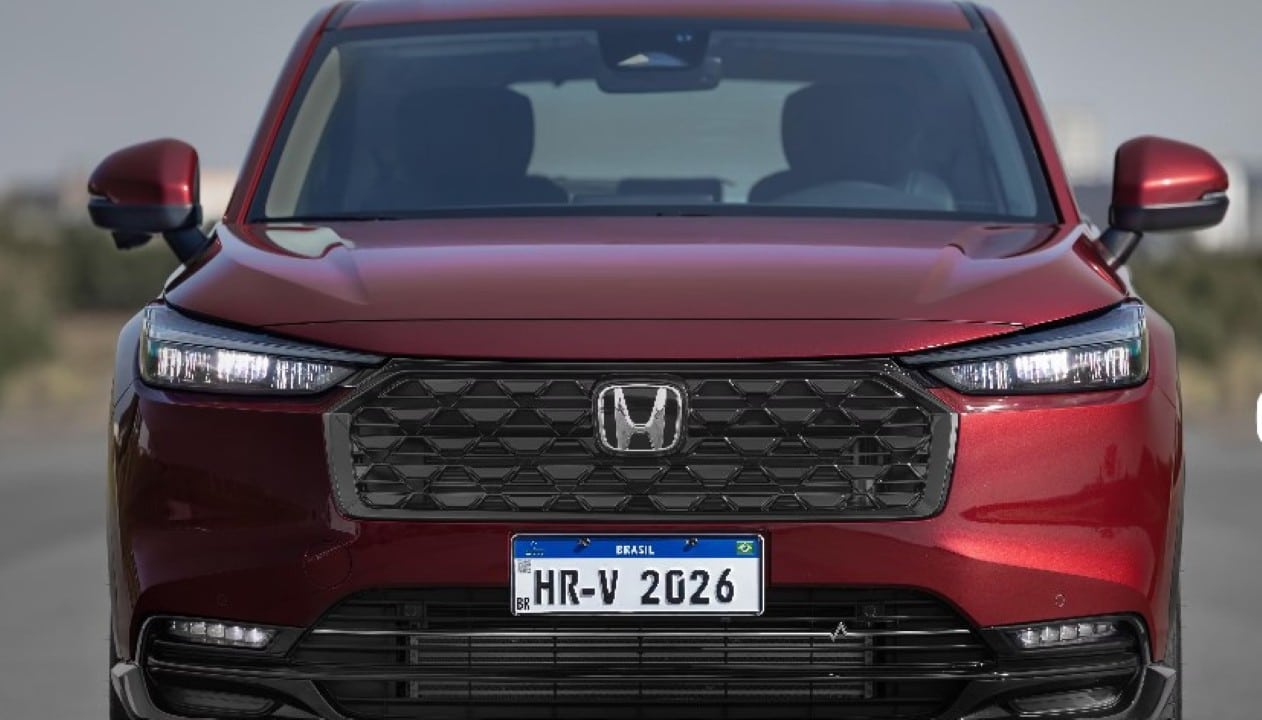
One of the main attractions of the Honda HR-V 2026 lies in its exterior design, which has been subtly refined to reinforce its sporty character. The top-of-the-line version, Touring, stands out for its glossy black front grille, sequentially lit turn signals and LED rear lights that give it a modern and sophisticated visual identity. The silhouette with a sharp drop at the rear, reminiscent of a coupe style, contributes to an aggressive and dynamic appearance, distancing it from competitors with more conservative lines. The real difference, however, is the experience behind the wheel. Inspirado in the Civic sedan, the HR-V offers a lower driving position than the average SUV, which gives the driver a feeling of greater connection with the vehicle and the road. Essa characteristic, combined with a well-calibrated suspension that guarantees exemplary stability in curves without sacrificing comfort, creates handling that pleases those looking for more than just a means of family transport, but also driving pleasure. Manual gear changes using paddles on the steering wheel complement this proposal, allowing greater control over the performance of the 1.5 turbo engine.
1.5 turbo engine delivers consistent performance
The heart of the Touring version is the 1.5 turbo engine with direct injection, which develops 177 horsepower and 24.5 kgfm of torque. Esses numbers translate into vigorous performance for the SUV, with accelerations and speed regains that convey safety when overtaking and agility in urban traffic. In performance tests, the model is capable of accelerating from 0 to 100 km/h in approximately 8.9 seconds, a competitive time that, although surpassed by some direct rivals such as the Hyundai Creta in its most powerful version, still positions itself favorably in the segment.

In practice, drivability benefits from this engine, which responds promptly to accelerator commands. The CVT (continuously variable) transmission was adjusted to simulate gears and extract the best from the engine, running smoothly most of the time. Contudo, in situations of more intense acceleration, the noise characteristic of this type of gearbox becomes more present in the cabin, which can be a point of discomfort for some drivers. Regarding consumption, the averages are around 10 km/l in the city and 12 km/l on the highway, reasonable numbers for a combustion engine, but which are already widely surpassed by the hybrid options available on the market.
Driver assistance systems fail
The driving assistance technology package, known as
The adaptive cruise control (ACC), for example, demonstrated erratic behavior during tests on fast traffic roads, such as Marginal Tietê in São Paulo. The system even activated the brakes suddenly without there being any obstacle in front, forcing the driver to intervene to maintain safety and the flow of traffic.
Another important limitation is the lane keeping assistant. The system is only activated above 72 km/h, which makes it useless on most urban routes, where it could be of great help in avoiding unintentional departures from the road. The lack of an audible alert for this function is also a notable flaw.
Blind spot warning, in turn, adopts an impractical solution. Disponível only for the right side of the vehicle, the camera image is projected on the multimedia center screen. In maneuvers that require simultaneous viewing of the GPS, such as a prolonged lane change to access an exit, the driver loses the map reference, a clear disadvantage compared to competitor systems that display the image on the instrument panel.
Disadvantaged interior and trunk space
Practicality is a decisive factor when choosing an SUV, and in this regard the HR-V 2026 falls short. Seu 354-liter trunk is the smallest among its main competitors, a significant limitation for families or those who need to transport larger volumes frequently.
For comparison purposes, the Volkswagen T-Cross offers 373 liters, the Hyundai Creta offers 422 liters and the Toyota Corolla Cross leads with 440 liters. The Essa difference, which reaches almost 25% compared to the Toyota model, could be the determining factor for a consumer who prioritizes load capacity for travel or everyday needs.
Advancement of hybrid competitors in the market
The absence of a hybrid version of the HR-V on the national market has become one of its biggest strategic weaknesses. Enquanto electrification advances, direct competitors are gaining ground with more efficient and, in many cases, more affordable options.
The Haval H6 One, for example, is offered as a conventional hybrid for a lower price than the HR-V Touring. Já the BYD Song Pro goes further, with a plug-in hybrid system that allows dozens of kilometers to be driven in pure electric mode, also with a lower purchase price.
The Toyota Corolla Cross Hybrid, a strong and already established competitor, combines a 196 hp engine with fuel consumption that can reach 17 km/l. Essa combination of performance and economy represents a powerful selling point, leaving the HR-V combustion engine at a competitive disadvantage for consumers looking at the total cost of ownership of the vehicle.
Interior retains traditional look
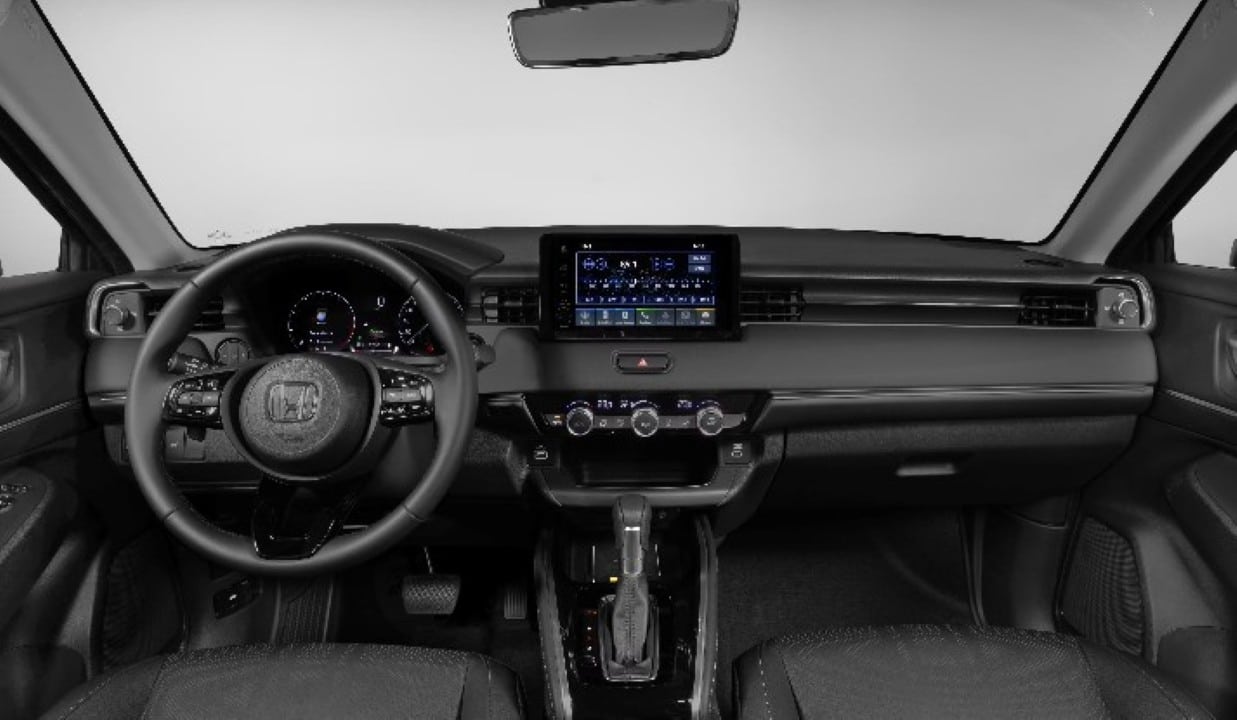
Internally, the Honda HR-V features a good quality finish and careful assembly, characteristics expected from the brand. The panel design is clean and functional, with well-positioned and easy-to-operate controls, which contributes to good ergonomics. The materials used are correct for the category, mixing soft plastics with more rigid ones.
However, the general environment is perceived as conservative, without the same level of innovation seen abroad. The multimedia center, although compatible with Android Auto and wireless Apple CarPlay, has a modestly sized screen and an interface that already looks dated compared to the larger, more modern screens offered by rivals, which deliver a more fluid and visually appealing user experience.
Cost-benefit analysis compared to rivals
With the Touring version priced at R$208,900, the Honda HR-V 2026 faces a challenging scenario in terms of cost-benefit. The value puts it in direct confrontation not only with the top-of-the-line versions of its combustion rivals, but also with hybrid models that offer a superior technological package and greater energy efficiency for a lower price, such as the Haval H6 One and the BYD Song Pro. Honda’s strong after-sales reputation and the reliability of its products still weigh in favor of the HR-V, but the equation between price and what is delivered has become more difficult to justify in such a competitive market.



