
Toyota confirms Hilux 2027 with hybrid powertrain and renewed look for the Brazilian market

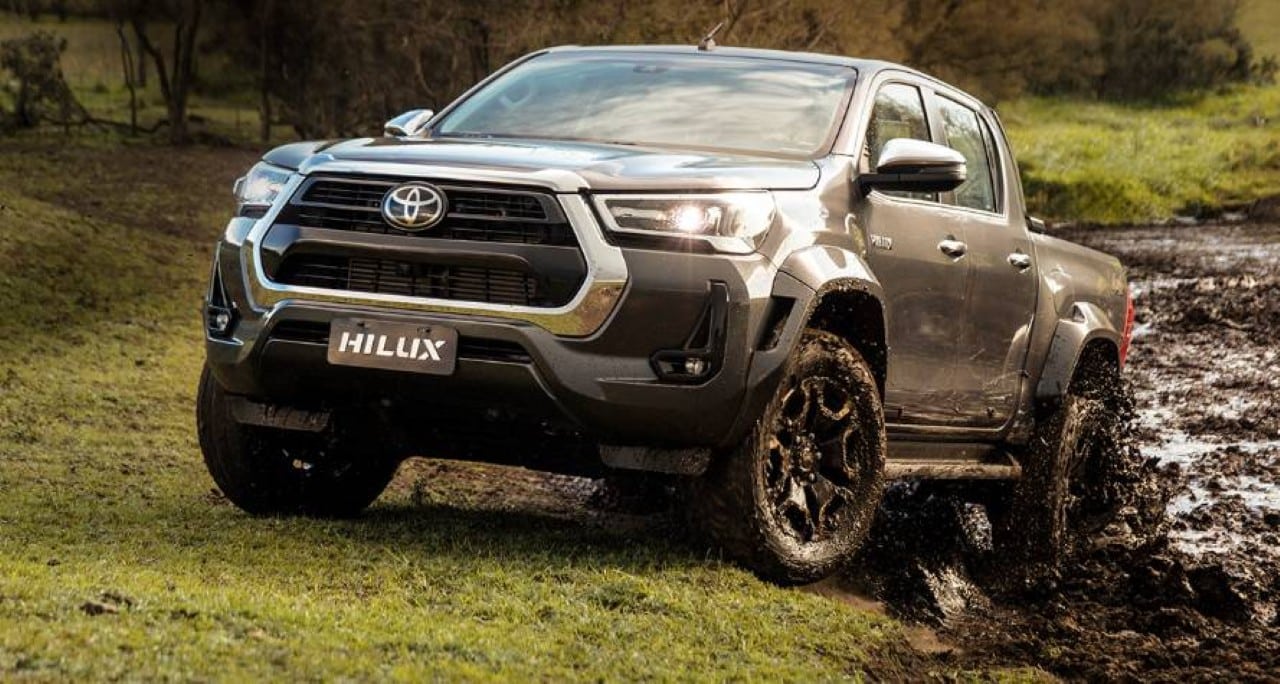
The Toyota is preparing for one of the most anticipated launches in the medium pickup truck segment in the Brasil. The new generation of the Hilux, scheduled to arrive in the second half of 2026 as a 2027 model, will bring as its main novelty a mild-hybrid engine system, as well as a profound visual redesign and an improved technological package to face increasingly fierce competition.
Produced at the Zárate factory, at Argentina, the pickup will continue to be a strategic pillar for the automaker at América of Sul. The update aims not only to consolidate the model’s historical leadership in the national market, but also to respond directly to the advancement of new competitors, especially Chinese brands that invest in electrification and technology.
Spotted undergoing tests on the Ásia and Argentina, the new Hilux adopts a renewal strategy on the existing platform, similar to that adopted by direct rivals, focusing on improvements that directly impact the consumer experience, from efficiency in fuel consumption to safety and comfort on board.

A new visual identity inspired by Tacoma
The aesthetic renewal of the Hilux 2027 is one of its strongest points, seeking direct inspiration from its bigger “sister”, the North American pickup truck Tacoma. The design adopts a more robust and imposing stance, with a prominent hexagonal front grille and full LED headlights that are more tapered and integrated into the bodywork, giving the vehicle a more modern and aggressive appearance. The general lines of the cabin and doors were maintained to optimize production costs, but new bumpers and side creases update the whole.
At the rear, the lights have also been redesigned and, in the more sophisticated versions, they can be linked by a functional bar or a chrome strip, a current trend in automotive design. The design maintains the spar chassis, known for its durability, but the structure received reinforcements to increase torsional rigidity and improve safety. Rodas light alloys with a new design, possibly up to 18 inches in top-of-the-line configurations, complete the package of external novelties.
Mild-hybrid powertrain as a competitive differentiator
The great technical highlight of the new Hilux is the introduction of the MHEV system (Mild Hybrid Electric Vehicle), or mild hybrid. Essa technology combines the renowned 204 horsepower 2.8 turbodiesel engine with a small 48V electric motor-generator, which delivers around 16 additional hp in specific situations.
This system does not allow the pickup to run in purely electric mode, but it assists the combustion engine when accelerating and restarting, resulting in more agile performance and, above all, a significant reduction in fuel consumption and pollutant emissions.
Combined power should be around 220 hp, with a robust torque of 55 kgfm. Toyota projections indicate an improvement of up to 20% in efficiency, with average consumption reaching 14 km/l, an impressive number for a pickup truck of its size.
To meet all consumer profiles, the automaker will maintain conventional engine options, including the 2.7 flex version with 163 hp for entry-level configurations. The automatic transmission has also been improved, now with eight gears, promising smoother shifts and better management of engine power.
Technology and connectivity on board
Internally, the Hilux 2027 promises a leap in quality to match more modern competitors. The dashboard has been completely redesigned, abandoning the conservative style for a more horizontal and technological layout. The finish will use higher quality materials, such as soft-touch surfaces and brushed metal details, elevating the perception of sophistication. The main highlight is the new multimedia center with a 12-inch floating screen, which will be compatible with Android Auto and Apple CarPlay without the need for wires. The system will offer over-the-air updates and improved voice commands, ensuring a more intuitive and connected user experience. The instrument panel will also be fully digital in the more expensive versions, with a configurable 10-inch screen that displays information from the on-board computer, navigation and security systems. Para greater convenience, the pickup will offer an induction cell phone charger and multiple USB-C ports distributed throughout the cabin, in addition to the Toyota Connect system, which allows control of vehicle functions through a smartphone application.
Enhanced security with the Toyota Safety Sense 3.0 package
Active and passive safety received special attention in the new project. The Hilux 2027 will come equipped with the latest version of the brand’s driver assistance package, the Toyota Safety Sense 3.0.
This set of technologies includes adaptive cruise control (ACC), automatic emergency braking with pedestrian and cyclist detection, lane keeping assistant and a traffic sign recognition system.
In addition to the advanced systems, the pickup will maintain essential items such as six airbags, stability and traction controls, and hill start assistant as standard equipment in all its versions.
Production at Argentina and strategy for Mercosul
The decision to maintain Hilux production at the Zárate plant, at Argentina, is strategic for Toyota, as it takes advantage of Mercosul’s commercial agreements. Isso allows the pickup truck to reach the Brazilian market at more competitive prices, without the incidence of high import taxes, a crucial factor in maintaining leadership in such a competitive segment. The Argentine factory must receive investments to modernize and expand production capacity to meet the expected demand for the new generation.
Market scenario and price positioning
The new Hilux will arrive in a transformed market, with the recently renewed Chevrolet S10 and the strong offensive of Chinese models such as the GWM Poer and the long-awaited BYD Shark, which rely on plug-in hybrid engines and a vast technological package. The Toyota will use its reputation for reliability and robustness, now combined with the efficiency of the hybrid system, as its main selling points.
The price range of the Hilux 2027 should be adjusted to reflect the innovations, with estimates pointing to an initial value close to R$210,000 for the entry-level flex versions, reaching R$290,000 or more in the top-of-the-line hybrid configuration. The sales strategy will continue to focus on both the end consumer and the fleet sector, which represents a significant portion of the model’s sales in the country.



