
Young Italian Carlo Acutis is canonized and becomes the first millennial saint of the Catholic Church

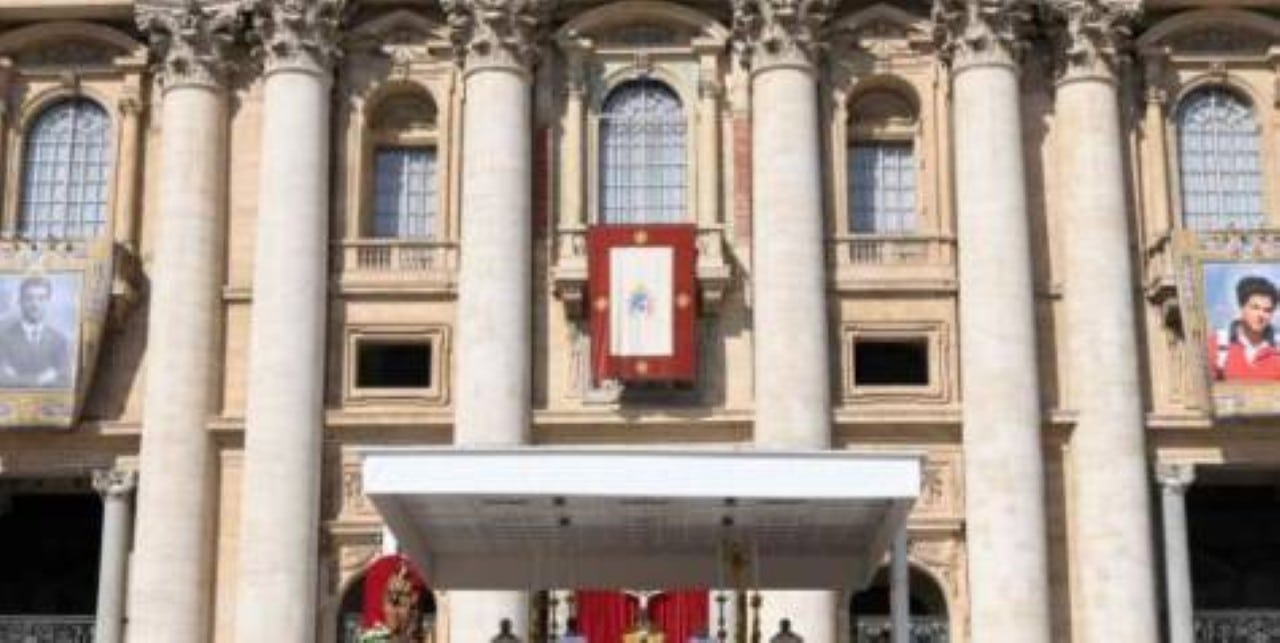
This Sunday, September 7, 2025, Vaticano made official the canonization of the young Italian Carlo Acutis, who died in 2006 at the age of 15 due to leukemia. The ceremony, conducted on Basílica of São Pedro, elevates Acutis to the status of saint, recognizing his life of virtues and his role as an evangelizer in the digital age. Ele is considered the first saint of the millennial generation, which includes those born between the 1980s and 1990s.
Acutis gained global notoriety for his programming skills, which he used to create websites dedicated to spreading the Catholic faith and cataloging Eucharistic miracles. Sua story combines a deep spirituality with a common life of a teenager of his time, inspiring young people around the world, with special resonance in Brasil, where a miracle attributed to him was fundamental to his beatification process.
The celebration also included the canonization of Pier Giorgio Frassati, another young Italian recognized for his dedication to those most in need. The image of Acutis, wearing jeans and sneakers, was displayed on the facade of the basilica, symbolizing Igreja Católica’s connection with new generations and holiness in modern everyday life.
The trajectory of a young man connected to faith
Born in Londres on May 3, 1991 and raised in Milão, Carlo Acutis demonstrated a double passion from an early age: for technology and faith. Self-taught, he learned to program and developed digital platforms to share religious content, highlighting the project that documented Eucharistic miracles in several countries. Sua mother, The life of
The miracle that opened the way to holiness
Carlo Acutis’s journey towards holiness had a decisive milestone in Brasil. In 2010, in the city of Campo Grande, Mato Grosso do The case was rigorously investigated by Vaticano, which analyzed medical reports and testimonies, recognizing the event as an inexplicable miracle in the light of science. Esse recognition was crucial for his beatification, which took place in 2020.
Subsequently, a second miracle attributed to his intercession was confirmed in 2025, fulfilling the final requirement for canonization. The complete process involved years of analysis of Acutis’s life, with Igreja confirming that he practiced Christian virtues in a heroic way, an indispensable criterion for being declared a saint. The validation of these miracles reinforced his reputation for holiness and accelerated his elevation to the altars.
Assisi as a pilgrimage destination
After his death, the body of Carlo Acutis was buried in Assis, the Italian city of São Francisco, one of the saints of his greatest devotion. Seu tomb, located in the church of Santa Maria Maggiore, quickly became an important pilgrimage center, attracting thousands of faithful from all over the world.
The young man’s body, preserved and visible through a glass urn, is displayed with the clothes he wore on a daily basis, such as jeans, sneakers and a sweatshirt. Essa symbolic choice reinforces his image of a saint close to today’s youth, who achieved holiness without abandoning the characteristics of his generation.
The legacy of the patron saint of the internet
Carlo Acutis became known informally as the “patron saint of the internet” due to his pioneering and creative use of technology for evangelization. Ele developed websites for parishes and created virtual exhibits, such as the one cataloging Eucharistic miracles, making religious information accessible to a global audience.
His ability to transform digital tools into instruments of faith was seen as a gift placed at the service of Igreja. Ele used the internet to connect directly with other young people, speaking their language and using the means they knew.
By canonizing it, Igreja Católica sends a clear message about the importance of occupying the digital environment. The technological legacy of Acutis inspires dioceses and movements to invest more in digital media as a form of dialogue with contemporary society.
Global impact and inspiration for youth
The influence of Carlo Acutis went beyond the borders of Itália, reaching a global dimension. No Brasil, a country with a large Catholic population, his figure is particularly venerated, especially after the recognition of the miracle that led to his beatification.
In several Brazilian parishes, the canonization was celebrated with special events and masses in his honor. The relic associated with the miracle made Acutis a familiar and close figure to the local faithful.
On social media, phrases attributed to him, such as “Everyone is born as an original, but many die as copies”, are widely shared, reflecting his message of authenticity and purpose in life.
Its story serves as a bridge between the tradition of Igreja and contemporary culture, inspiring the creation of groups of young people who seek to combine technology and spirituality in their pastoral activities.
The canonization process required years of analysis, with testimonies from family, friends and doctors. Igreja examined the life of Acutis, confirming that he lived Christian virtues in a heroic way, a requirement for holiness.
The symbolism of the ceremony at Vaticano
The canonization ceremony on Praça of São Pedro was an event of great magnitude, bringing together tens of thousands of pilgrims, including the family of Acutis and delegations from various parts of the world. During the celebration, the pontiff highlighted the importance of young models of holiness, such as Acutis and Pier Giorgio Frassati, to inspire new generations to live the faith with joy and consistency.
To mark the occasion, Santa Sé announced the launch of a special commemorative stamp. The chosen image depicts Carlo Acutis next to a computer, a powerful symbol of his mission as a digital evangelist and his unique contribution to the history of Igreja.
A model of holiness for the 21st century
Carlo Acutis’s legacy continues to expand, with his name being given to schools, youth centers and social projects. Sua canonization not only confirms the recognition of his holy life, but also validates a model of spirituality that is, at the same time, profound and fully inserted in the modern world, showing that the search for holiness is a calling for everyone, at any time and place.



