
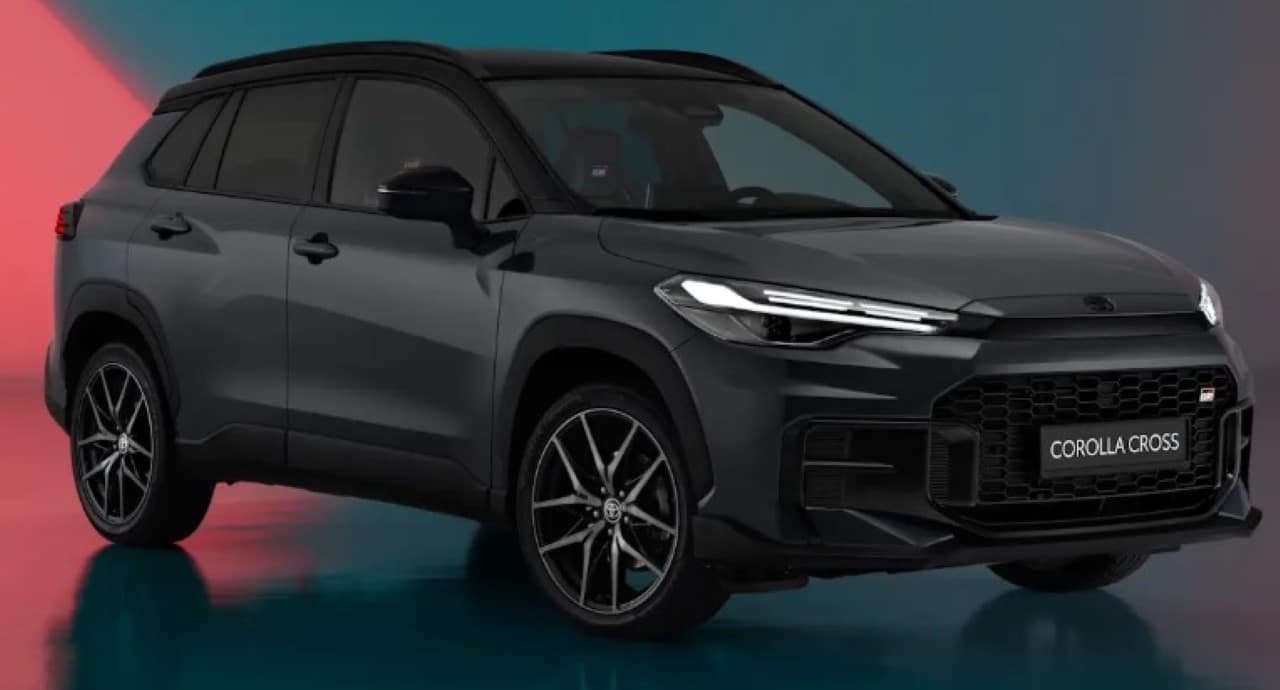
National production of the Toyota Corolla Cross 2027 will have a plug-in hybrid engine and a sports version GR-Sport


The Toyota is preparing for one of the most awaited launches in the Brazilian automotive market, the new generation of the
The strategic move by Toyota not only raises the technological level of Corolla Cross, but also reinforces the brand’s commitment to the development of the national industry. Production on Brazilian soil guarantees the vehicle’s adaptation to local conditions and strengthens the supply chain, positioning the country as a hub for the development of electrified vehicles.
Among the main new features is the introduction of an advanced plug-in flex hybrid system (PHEV), which promises to combine high performance with energy efficiency. Além of the innovative engine, the model will also feature a long-awaited GR-Sport sports version, which adds a more aggressive look and improved driving dynamics.
Performance and the new plug-in hybrid drive system
The biggest technical highlight of the Corolla Cross 2027 is, without a doubt, its new plug-in hybrid propulsion system. Combinando a combustion engine with a more powerful electric motor, the system will deliver a combined power of 223 horsepower, representing a significant leap in performance compared to the current generation. Essa configuration was designed to offer more vigorous acceleration and more agile responses, making driving more pleasurable both in the city and on the highway. Acceleration from 0 to 100 km/h, estimated at around 8 seconds, puts the SUV on a competitive level with models from higher categories, offering a dynamic driving experience without compromising efficiency. Engine integration is intelligently managed to optimize consumption and emissions in any usage scenario.
Electric range and fuel consumption
Plug-in technology will allow the Corolla Cross 2027 to travel up to 70 kilometers using only electric mode. Essa autonomy is enough to cover most drivers’ daily commutes in urban centers, allowing trips to work, school or the supermarket to be made without using a drop of fuel, which translates into substantial long-term savings and zero local emissions.
When the battery runs out or more power is needed, the combustion engine comes into action automatically, operating in hybrid mode. In Nessa configuration, the fuel consumption of the PHEV version is estimated at around 16 km/liter, an impressive number for an SUV with more than 220 horsepower. Battery recharging is another strong point, reaching 80% of its capacity in approximately two hours when connected to a 220V socket.
National production in Sorocaba and the strengthening of industry
Toyota confirmed a significant investment in its Sorocaba factory, in the interior of São Paulo, to enable local production of the Corolla Cross 2027, including the complex PHEV version.
This decision is a milestone for the Brazilian automotive industry, as it demonstrates the automaker’s confidence in the market and in the national workforce to manufacture vehicles with high technology on board.
The nationalization of production will bring direct benefits to the country’s economy. The expectation is to generate new qualified jobs, both in the assembly line and in related sectors, in addition to boosting the entire supply chain.
Currently, Corolla Cross already has around 40% of its parts manufactured in Brasil, and Toyota’s goal is to increase this rate with the new generation, strengthening the industrial base of the Brazilian automotive sector.
Design and technology integrated in the new generation
The look of the Corolla Cross 2027 will be deeply updated to align with the latest Toyota design language. The SUV will adopt an optical assembly entirely in Full-LED, with headlights and taillights with a more tapered and modern design, giving it a more sophisticated and technological appearance.
Internally, the technological revolution will be even more evident. The instrument panel will be fully digital, with a 12.3-inch configurable screen, which will display driving, navigation and hybrid system information in a clear and intuitive way.
In the center, a new multimedia center with a 10-inch screen will offer wireless connectivity with Android Auto and Apple CarPlay, as well as a 15W induction cell phone charger, eliminating the need for cables.
Exclusivity and dynamics of the GR-Sport version
Developed for enthusiasts looking for a more immersive driving experience, the GR-Sport version of the Corolla Cross 2027 will be a chapter in itself. Inspirada by the Gazoo Racing competition division of Toyota, this variant will not be limited to aesthetic changes.
The model will receive a uniquely tuned suspension, lowered by 10 millimeters, which, combined with 18-inch light alloy wheels with an exclusive design and lower profile tires measuring 225/50R18, will guarantee firmer and more precise dynamic behavior.
Additional engines and transmission
In addition to the PHEV version, the Toyota will continue to offer other engines to meet different consumer profiles. Estarão Conventional flex hybrid options are available, such as the 1.8 liter with 122 horsepower, and the 2.0 flex engine, which can reach 169 horsepower in the most equipped configurations.
All hybrid and combustion versions will be equipped with a CVT automatic transmission, known for its smoothness and contribution to fuel economy, ensuring a balanced and efficient driving experience across the range.
Market positioning and expectations
With the arrival of the new generation, the Toyota Corolla Cross is preparing to face increasingly fierce competition in the medium SUV segment. The introduction of plug-in hybrid technology and the GR-Sport version are important assets to attract new consumers and maintain sales leadership. The model will compete directly with vehicles such as the Jeep Compass, Volkswagen Taos and future electrified launches from other automakers.
The price structure must reflect the technological evolution of the product. The entry-level versions, such as XR and XRE, equipped with the 2.0 flex engine, must have their values adjusted. The conventional hybrid versions will occupy the mid-range, while the unprecedented PHEV version will be positioned at the top of the range, with a higher starting price, justified by its advanced technology, greater power and ability to run in pure electric mode.



