
Study reveals genetic lineage isolated in 7,000-year-old mummies in Libyan Sahara


Researchers have extracted DNA from two naturally preserved mummies, dating to around 7,000 years ago, found in the Takarkori rock shelter in southwestern Líbia. The remains belong to two women who lived during the Período Úmido Africano, when the Saara was a green savannah with rivers and grasslands. The genomic analysis, published in the journal Nature, identified a previously unknown North African lineage that had remained isolated for thousands of years.
The study was led by scientists from Instituto Max Planck of Antropologia Evolucionária, at Alemanha, in collaboration with Italian teams responsible for excavations carried out between 2003 and 2006.
This lineage diverged from sub-Saharan populations approximately 50,000 years ago, at the same time that human groups began to migrate out of the África.
Context of Período Úmido Africano
The current Saara is an arid desert, but between 14,500 and 5,000 years ago it went through a humid phase that transformed the region into a habitable environment.
Lakes, wetlands and pastures allowed human occupation and the expansion of pastoralism.
Excavations at Takarkori revealed tools, pottery and the remains of domesticated animals such as cattle, sheep and goats.
- The individuals analyzed were pastoral workers.
- They lived off local resources.
- They showed no signs of significant genetic admixture with outgroups.
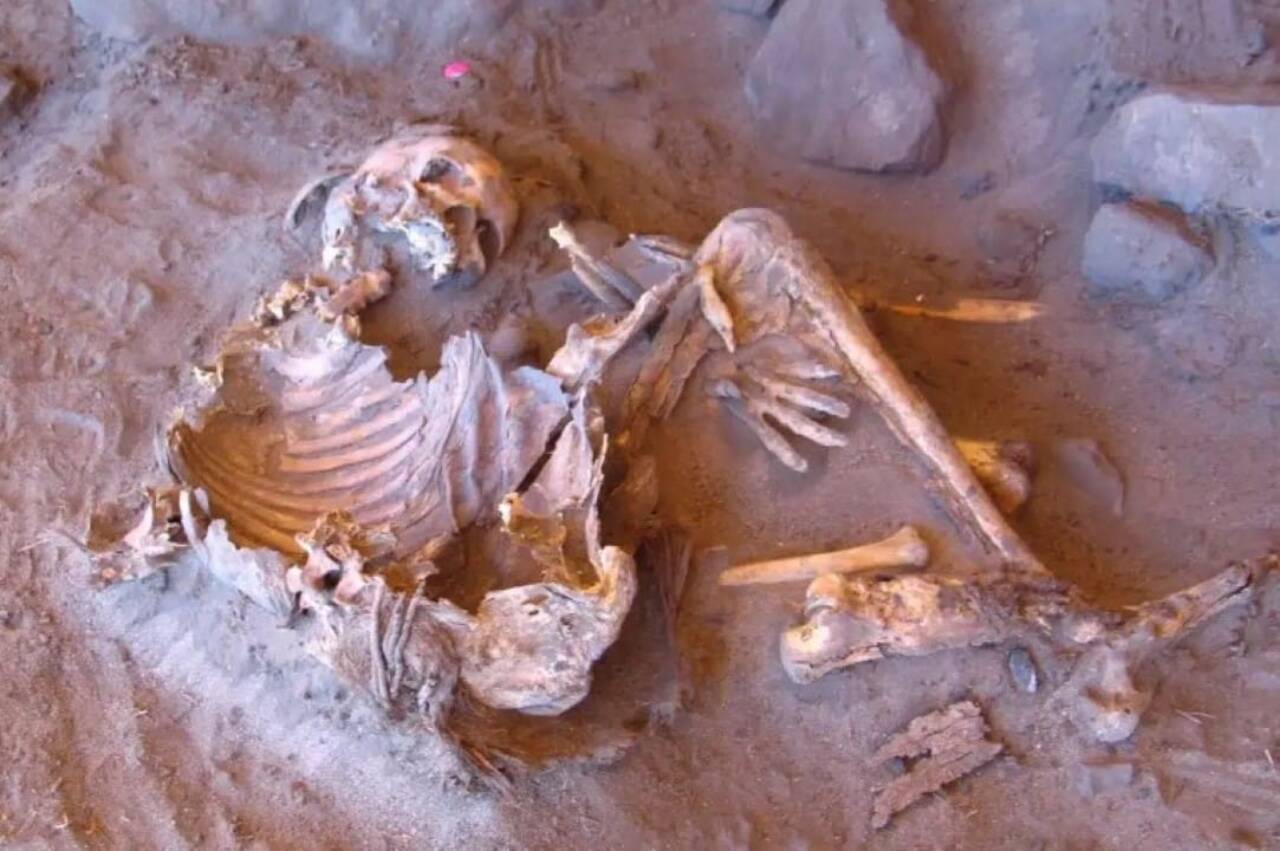
Genomic analysis details
Preserving DNA in arid regions is challenging, but samples of mummies’ teeth and bones have allowed complete genome sequencing.
Most ancestry derives from an ancient North African lineage related to hunter-gatherers from 15,000 years ago found in Taforalt, in Marrocos.
This population maintained genetic isolation, with limited gene flow between the north and south of África during the green period.
Minimal traces of Levante’s ancestry indicate sporadic contacts, without large-scale migrations.
Reduced presence of Neanderthal DNA
The mummies showed around 0.15% of Neanderthal DNA, a value ten times lower than that found in current non-African populations.
This percentage is higher than that of contemporary sub-Saharan groups at the time.
The researchers attribute this presence to limited contacts with populations that already carried Neanderthal genes, likely via the Oriente Próximo routes.
The low quantity reinforces the relative isolation of the Takarkori lineage in relation to groups that migrated to the Eurásia.
Adoption of pastoralism through cultural diffusion
Artifacts at the site indicate a gradual transition to pastoralism, with milk processing and animal husbandry.
The absence of genetic admixture with groups from Levante or Europa suggests that the technology was adopted locally.
- Changes in pottery and tools occurred slowly.
- There was no population replacement.
- Indicates cultural exchange between communities.
This diffusion explains how pastoral practices spread across the green Saara without large migratory movements.
Isolation and environmental barriers
The diversity of habitats in the green Saara, such as mountains, savannas and wetlands, acted as a natural barrier to gene flow.
Populations remained separated despite geographic proximity.
Previous isotopic analyzes confirm that individuals from Takarkori depended on local resources, reinforcing the idea of sedentary or semi-nomadic life in a specific area.
Implications for African population history
The identification of this lineage challenges previous models of migrations in northern África.
It contributes to the genetic component of present-day North African populations, although not in pure form.
The study highlights the importance of ancient genomic data for reconstructing the demographic history of África, a continent still underrepresented in ancient DNA research.
Future research at other Saharan sites may reveal more about this extinct population.
Genetic legacy in modern África
Components of this ancestral lineage persist in contemporary North Africans.
The aridification of the Saara, which began around 5,000 years ago, led to migrations and mixing that diluted the pure lineage.
Discoveries like this enrich the understanding of human diversity on the African continent.



