

Swiss bar fire survivor initially thought blaze a joke before deadly flashover trapped 159 people
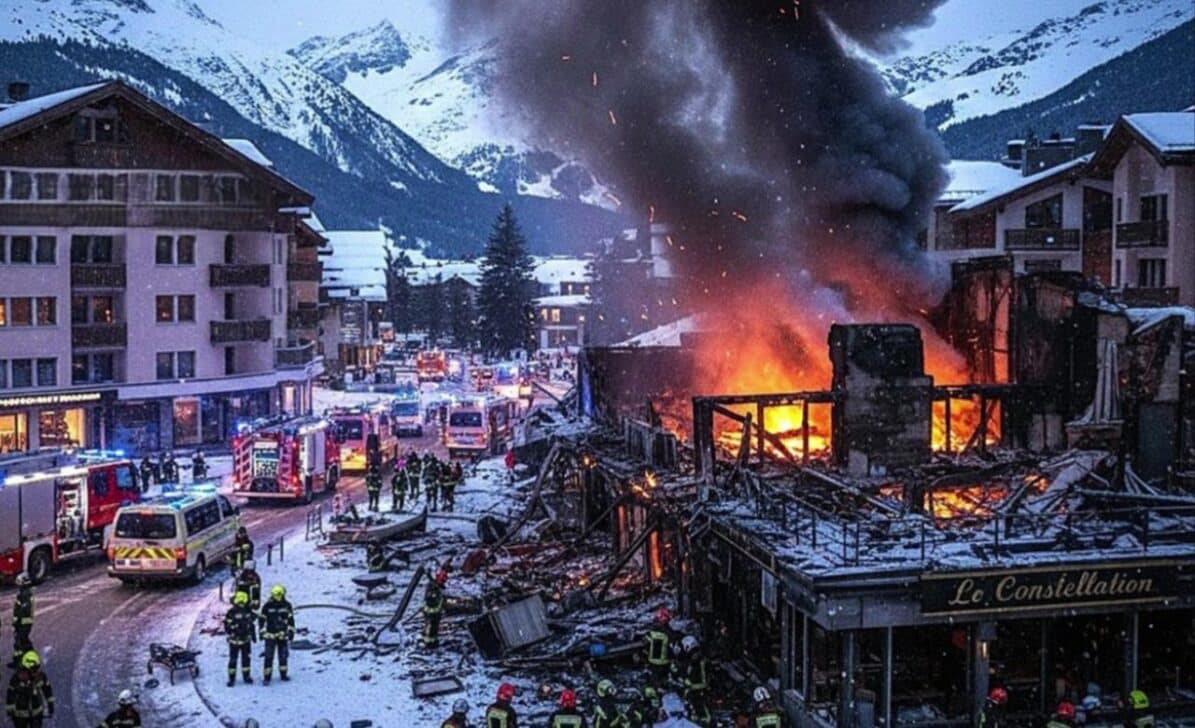
A survivor of a devastating New Year’s Eve bar fire at a Swiss ski resort, which tragically claimed 40 lives and injured 119 others in early 2025, has described initially dismissing the flames as a prank. This grave misunderstanding quickly turned into a fatal struggle for escape as the blaze intensified, trapping revelers in the crowded venue. Investigations are actively seeking to determine the exact cause, with early indications suggesting that candles on champagne bottles might have triggered a rapid and deadly “flashover” phenomenon.
Axel, one of the individuals present, recounted the chilling progression of events. He initially perceived the shouts of “Fire! Fire!” as a lighthearted jest among the New Year’s Eve crowd. However, the atmosphere shifted abruptly when a massive cloud of black smoke engulfed the area, making breathing impossible and revealing the true, dire nature of the situation. The sudden escalation caught many off guard, transforming a festive celebration into a scene of urgent peril.

The escape proved immensely challenging due to the large number of people converging on the exits. Axel described the desperation of finding pathways blocked by the sheer volume of the crowd. His desperate attempt to break a window with a table initially failed, leading him to believe he would perish. Ultimately, a forceful kick shattered the glass, creating a crucial escape route and enabling others to follow him to safety from the rapidly deteriorating conditions inside the establishment.
Initial moments of chaos and misjudgment
The initial moments of the fire were characterized by widespread confusion and a dangerous underestimation of the hazard. Many revelers, caught in the festive spirit of New Year’s Eve, did not immediately recognize the seriousness of the situation. This delay in reaction, as recounted by survivors, played a significant role in the tragic outcomes as the fire quickly gained intensity.
This critical misjudgment highlights the challenges of emergency response in crowded, celebratory environments. The rapid onset of smoke, coupled with the festive atmosphere, created a scenario where immediate, life-saving actions were delayed. Such incidents often demonstrate the thin line between celebration and catastrophe when safety protocols are not clearly understood or immediately followed.
Harrowing escapes amid blocked exits
As the fire progressed, the primary challenge for those inside became the lack of clear and accessible escape routes. Witnesses consistently reported that usable emergency exits were either non-existent or rendered ineffective by the surging crowd. This critical deficiency exacerbated the danger, turning what might have been a manageable incident into a mass casualty event.
The struggle to exit was compounded by the structure of the bar, which, like many older buildings, may not have been designed with modern fire safety standards for high-occupancy events. The accounts of individuals resorting to desperate measures, such as Axel breaking a window, underscore the extreme pressure and immediate threat to life experienced by those trapped within.
Community grapples with profound loss
Nathan, another survivor, shared the profound shock and grief that enveloped the community in the aftermath. He spoke of the immediate, desperate search for friends and loved ones, acknowledging that some had perished, others were injured, and many remained unaccounted for. The emotional toll on the survivors and the broader community was immense, marked by widespread concern for the missing.
The incident sparked a period of communal mourning and support, with many gathering to offer solace and assistance to those affected. Public statements emphasized the collective need for healing and remembrance as the full extent of the tragedy became clear. This collective experience underscored the deep bonds within the ski resort community and beyond.
Investigation focuses on potential ignition source
Authorities are conducting an extensive investigation into the exact cause of the fire, meticulously examining all available evidence. The primary hypothesis under consideration by the police involves candles placed on champagne bottles, which may have ignited flammable materials within the bar. This scenario is being explored in conjunction with the “flashover” effect.
A flashover is a technical term describing the rapid, near-simultaneous ignition of all combustible materials in an enclosed space due to a sudden increase in heat. If confirmed, this effect would explain the swift and overwhelming nature of the blaze, leaving little time for patrons to react or escape effectively. Investigators are recreating potential scenarios to understand the chain of events.
Expert forensic teams are analyzing debris and structural remnants from the bar to confirm the sequence of events leading to the flashover. This includes studying the types of materials present, ventilation patterns, and the layout of the venue. The investigation aims to provide a definitive account of how the fire started and spread with such devastating speed.
Safety protocols reviewed after 2025 tragedy
Following the tragic fire, authorities across Switzerland and in other ski resort regions have initiated comprehensive reviews of fire safety protocols for public venues. These reviews, reflecting current 2025 standards, are focusing on ensuring that all establishments, especially those with high occupancy during festive periods, comply with stringent safety regulations. The goal is to prevent similar incidents from occurring in the future.
Key areas under scrutiny include the adequacy of emergency exits, the presence and functionality of fire suppression systems, and the use of fire-retardant materials in construction and decoration. Inspections are being ramped up, and compliance checks are becoming more rigorous to ensure that all safety measures are not only in place but also properly maintained and understood by staff.
Training for employees in emergency procedures, including crowd management and evacuation protocols, is also being emphasized. Regular drills and clear communication plans are deemed essential to guide patrons safely during an emergency. These proactive measures are vital in mitigating risks associated with large gatherings in enclosed spaces.
Furthermore, regulations regarding the use of open flames, such as candles or pyrotechnics, in bars and clubs are being re-evaluated. Strict guidelines are expected to be implemented or reinforced, particularly for events during holidays like New Year’s Eve, to minimize potential ignition sources that could lead to catastrophic fires. This includes assessing the risks associated with decorative elements and service practices.
Broader impact on ski resort safety
The incident has prompted a broader reevaluation of safety standards across ski resorts globally, particularly concerning their nightlife venues. Industry experts and safety advocates are urging a holistic approach to risk assessment that considers all aspects of a resort’s infrastructure, from slopes to entertainment facilities. This includes updating building codes and operational procedures to reflect contemporary safety best practices.
Calls for enhanced emergency preparedness
There is a growing consensus among safety experts for enhanced emergency preparedness and public awareness campaigns. These initiatives aim to educate both venue operators and the public on the importance of knowing exit routes and reacting swiftly to potential dangers. Clear, consistent messaging on safety procedures is considered paramount for preventing future tragedies.
Local and national governments are exploring partnerships with hospitality businesses to implement advanced safety technologies and ensure adherence to best practices. The emphasis is on creating environments where safety is a visible and integral part of the visitor experience, fostering a culture of vigilance and readiness across the tourism sector.
Swiss bar fire, ski resort tragedy, flashover, emergency exits, New Year’s Eve fire