
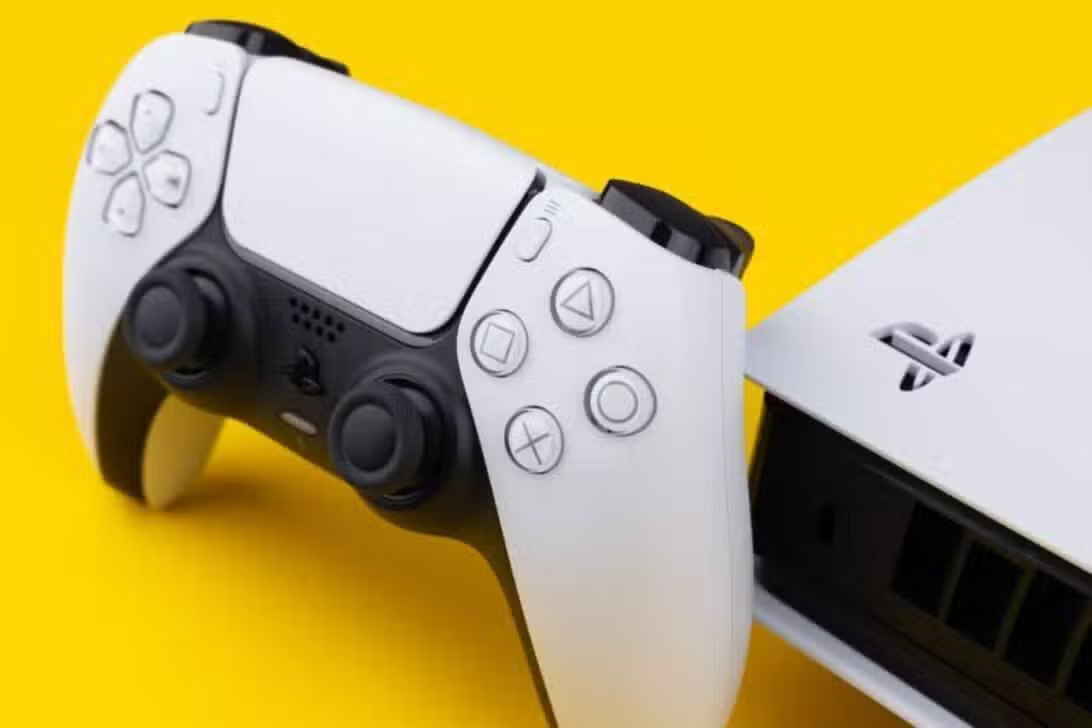
A new patent registered by Sony Interactive Entertainment has raised great expectations in the gaming community, suggesting a future where the entire legacy of the PlayStation brand could be accessed on a single console. The document, led by Mark Cerny, the chief architect behind the PlayStation 4 and PlayStation 5, describes a robust native backwards compatibility system that could be implemented on the highly anticipated PlayStation 6.
The proposed technology aims to allow the future console to run games from all previous generations, from the original PS1 to the PS5. If implemented, the feature would represent a monumental strategic shift for Sony, which has historically had a inconsistent and often limited approach to compatibility with older titles.
The initiative would align the company with one of the most praised features of its main competitor, promising to unify almost three decades of video game history on a single platform. The direct participation of Cerny gives great credibility to the project, indicating that backwards compatibility is a priority in the development of the Japanese giant’s next major release.

How the new patent technology would work
The patent, titled “Running an application on a lower-performance device by synchronizing a high-performance application,” details a complex system designed so that the PlayStation 6’s hardware can accurately replicate the behavior of older consoles. The technology focuses on synchronous emulation of CPU and GPU processing, ensuring that games behave exactly as they were originally programmed, regardless of architectural differences. Este method is crucial to avoid performance bottlenecks or compatibility failures that can occur on less sophisticated emulation systems.
One of the biggest technical challenges has always been emulating the PlayStation 3, whose Cell processor had a unique and notoriously complex architecture. The new patent addresses this problem with solutions such as “instruction counting per cycle” and “clock frequency gate”, techniques that allow the new system to adjust its performance in real time to match the exact specifications of the original hardware. Isso means that, in theory, even the most difficult to emulate PS3 games could run natively and efficiently on the PS6.
Sony’s history with backwards compatibility
Sony’s approach to compatibility with past generation games has been marked by inconsistency. The PlayStation 2 was a success in this regard, offering almost complete compatibility with the PS1 library, which boosted its initial sales. However, the PlayStation 3 had a more complicated trajectory; Early models included dedicated PS2 hardware to ensure backwards compatibility, but this feature was removed in later versions to reduce manufacturing costs, limiting functionality to a small number of titles via software emulation and, later, only to classics available on the PlayStation Store. With the PlayStation 4, native backwards compatibility was completely abandoned, and Sony focused on the PlayStation Now streaming service, which offered access to a selection of PS3 games. The current PlayStation 5 offers robust backwards compatibility, but is almost entirely limited to PlayStation 4 games, leaving out the vast catalog of the first three generations. Essa new patent, therefore, signals a possible and welcome course correction, with the aim of creating a unified ecosystem that values the brand’s entire history.
Direct impacts for players and the market
Implementing such comprehensive backwards compatibility on the PlayStation 6 would bring direct and significant benefits to consumers. Primeiramente, would ensure that the vast library of games accumulated over decades would not become obsolete.
Gamers would be able to access their favorite PS1, PS2, PS3, PS4 and PS5 titles, in both physical and digital formats, on a single console. Isso not only preserves the history of video games, but also adds immense value to the platform.
Additionally, the technology described in the patent could enable performance improvements in older games. Títulos that suffered from frame rate drops or low resolutions could run smoother and with improved graphics on the modern PS6 hardware.
A strategic response to competition
Microsoft, Sony’s main competitor, has invested heavily in backward compatibility since the Xbox One era, and its program is widely praised. The Xbox Series X and S consoles can play games from four different generations, often with automatic enhancements such as HDR and FPS Boost.
Sony’s strong commitment to a similar solution with the PS6 would be a direct and necessary response to remain competitive in this aspect, offering its users a functionality that has become an expected standard in the console market.
Technical challenges and the future of PlayStation
Although the patent is promising, its implementation represents a formidable technical challenge. Emular five different console architectures, especially that of the PS3, natively and efficiently on a single piece of hardware requires extraordinary computing power and software development.
It is important to note that registering a patent is not a guarantee that the technology will be used in a final product. Empresas often trademark concepts to protect their intellectual property, and many of them never reach the market.
Still, Mark Cerny’s involvement is a strong indication of Sony’s intentions. Como the mind behind the successful PS4 and PS5 architectures, his signature on the project suggests that full backwards compatibility is a seriously considered goal.
Industry analysts speculate that the PlayStation 6 is not expected to launch until 2027 or 2028, which would give the engineering team enough time to refine this technology and potentially make it one of the key features of the next console.
The legacy and vision of Mark Cerny
The presence of Mark Cerny as the main inventor in the patent reinforces the seriousness of the proposal. Sua vision was fundamental to the success of the last two generations of PlayStation, focusing on developer-friendly architectures and powerful hardware.
His involvement in solving the complex backwards compatibility puzzle points to a long-term vision for the brand, creating an ecosystem where past, present and future coexist harmoniously.
The importance of game preservation
If realized, this functionality on the PlayStation 6 would represent a milestone for the preservation of video games. Permitiria for new generations of players to discover iconic classics while enjoying the latest innovations, ensuring the platform’s rich history remains alive and accessible for everyone.