
Chinese manufacturer Zephyr reveals critical core flaw in Radeon RX 6800 and 6900 XT GPUs

A revelation made by Chinese hardware manufacturer Zephyr has brought to light a significant concern for owners and potential buyers of AMD graphics cards. The company stated that it had identified a serious and recurring flaw directly in the silicon core of the Navi 21 GPUs, which equip the Radeon RX 6800, RX 6800 XT and RX 6900 XT models. Este problem, according to Zephyr, is the root cause of a series of instabilities that affect a large volume of these units on the market.
Unlike common defects in components such as VRAM memory or voltage regulator modules (VRM), the fault identified is located in the graphics processor matrix itself. Essa condition makes diagnosis and repair extremely complex for most technical assistance, as it requires specialized knowledge and equipment to intervene directly on the chip.
Zephyr claims not only to have diagnosed the fault, but also to have developed a method to fix it. The company would be acquiring batches of defective GPUs on the second-hand market, repairing the core and reselling the cards as functional units, which exposes a little-known facet of the hardware refurbishment market and raises questions about the original quality control of the parts.
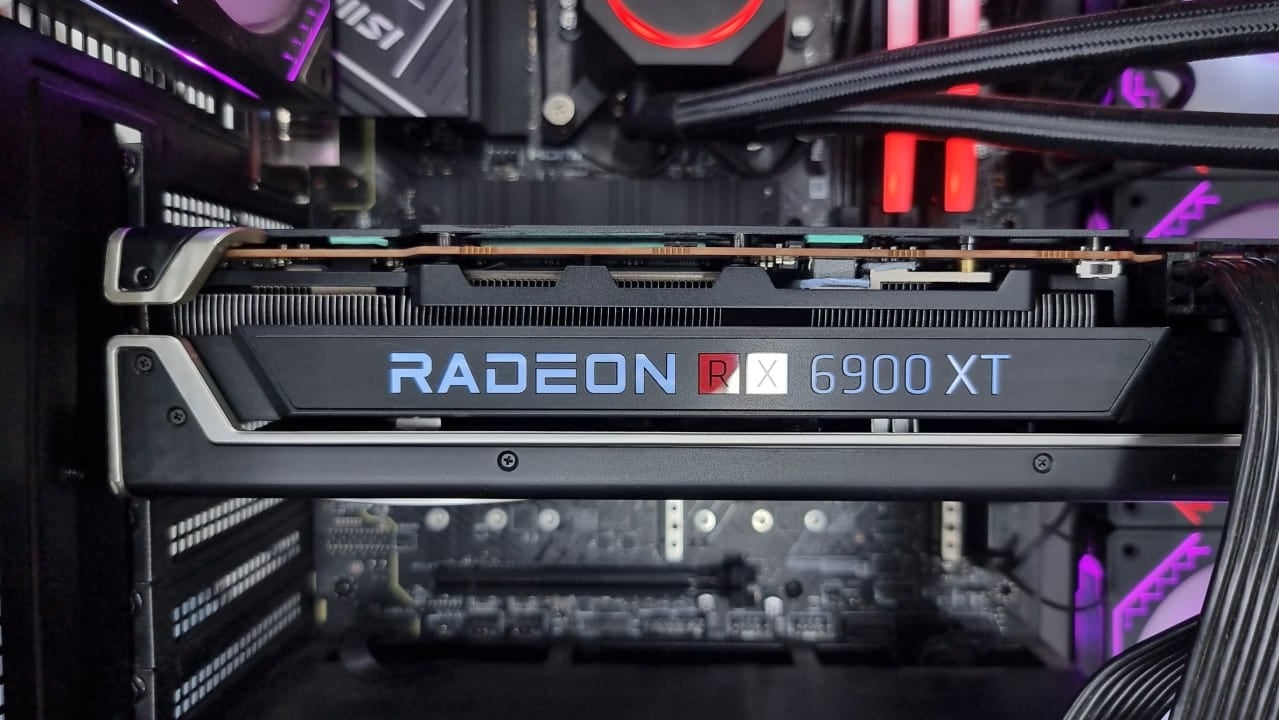
The nature of the defect in the core Navi 21
According to reports released by Zephyr, the manufacturing defect in the Navi 21 chip manifests itself in several ways, the most common being the display of a sudden black screen during use, system freezes and the rendering of visual artifacts, such as distorted colors or incorrect geometric shapes, even in low-demand tasks. Esses symptoms can be easily confused with driver issues, overheating, or power supply failures, making accurate identification difficult for the end user.
The origin of the problem would be imperfections in the silicon lithography process, resulting in unstable connections within the GPU die. Over time and heating and cooling cycles, these fragile connections can permanently fail, leading to partial or complete rendering of the graphics processor. The Chinese manufacturer suggests that a considerable percentage of Navi 21 chips came off the production line with this latent vulnerability, which may or may not manifest itself depending on the conditions of use and the luck of the owner.
The controversial business model of Zephyr
Zephyr’s strategy of massively acquiring these defective boards for repair and resale is indicative of the scale of the problem. The company capitalizes on a failure that, for many, would mean discarding the component. The repair process, although not publicly detailed, would involve advanced micro-soldering techniques and possibly the reconfiguration of parts of the chip to isolate defective areas, a highly complex practice. Essa commercial operation raises an ethical debate about transparency in the used hardware market, as consumers purchasing these repaired boards may not be aware of the product’s history. Confidence in the second-hand market, especially for high-performance components, could be undermined if such practices become commonplace without proper communication to the end buyer. Embora to Zephyr presents its activity as a solution, it also highlights a systemic failure that directly affects consumers who invested in products that should have a long useful life.
Impact on the used graphics card market
The news has a direct and profound impact on the second-hand hardware market, where the RX 6800 and RX 6900 XT models are still highly sought after for their good performance, especially at resolutions such as 1440p.
Consumers seeking these plates now face an additional risk that is difficult to verify. Core failure is not something that can be easily detected by visual inspection or quick testing.
Uncertainty could lead to a devaluation of these specific models as buyers become more cautious. Vendedores honest people, with perfectly functional units, can also be harmed by the general distrust generated in the market.
It is recommended that anyone interested in purchasing one of these used GPUs ask the seller to run extended stress tests, such as FurMark or 3DMark Time Spy, to try to force any latent instability to manifest before closing the purchase.
The continued relevance of the RDNA 2 architecture
Despite the revelation about the failure of some chips, the RDNA 2 architecture, on which the RX 6000 series is based, was an important milestone for AMD. Ela represented a significant leap in performance and energy efficiency compared to its previous generations, making the company competitive again in the high-performance segment.
Graphics cards equipped with the Navi 21 GPU continue to be a viable option for many gamers, delivering a satisfying experience in most modern games, especially when combined with upscaling technologies like AMD FidelityFX Super Resolution (FSR).
This technology helps extend the lifespan of hardware, allowing cards to achieve higher frame rates even in demanding titles, relieving the load on the GPU without a drastic loss in visual quality.
Recommendations for owners and buyers
For current owners of an Radeon RX 6800 or RX 6900 XT who do not have problems, the recommendation is to continue monitoring the stability and temperatures of the system. Manter updated video drivers and ensuring good ventilation in the case are practices that can help mitigate stress on the component. If the symptoms described begin to appear, especially outside the warranty period, diagnosis may be complex, and the cost of a specialized repair may not be advantageous.
For anyone considering purchasing a used model, caution should be exercised. It is essential to negotiate with sellers who have a good reputation and, if possible, look for products that still have a valid guarantee. Running a full battery of benchmark and stress tests before finalizing payment is crucial to identify instabilities. Checking the board’s history, such as whether it was used for cryptocurrency mining, can also provide clues about the component’s level of wear.
Official position and AMD’s silence
To date, AMD has not issued an official statement specifically addressing the allegations made by Zephyr or acknowledging a mass manufacturing flaw in the Navi 21 chips.



