
BYD challenges the Japanese market with Racco, its electric kei car with sliding doors scheduled for 2026


Chinese manufacturer BYD has made an audacious strategic move official for the Japanese automotive market, confirming the launch of a new compact electric car. Batizado of Racco, the vehicle was designed specifically for the kei car segment, an ultra-competitive and culturally significant category in the Japão. The model is scheduled to arrive in 2026.
This launch represents a calculated step by the automotive giant to deepen its presence in one of the most demanding markets in the world. By developing a tailored product, BYD signals its intention to compete directly with local brands that have historically dominated this niche, which accounts for a significant share of total vehicle sales in the country.
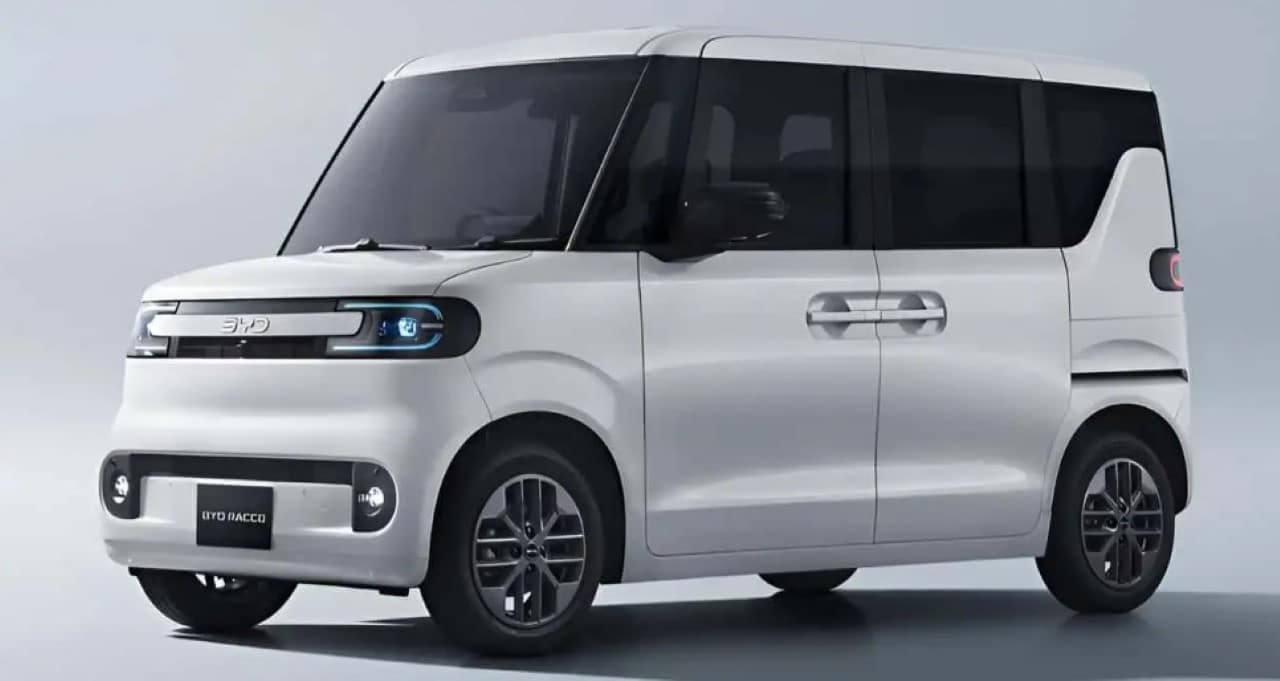
The Racco incorporates features highly valued by Japanese consumers, such as sliding doors on both sides, which optimize access in restricted urban spaces. The project aims to combine BYD’s advanced battery technology with a design that perfectly aligns with the lifestyle and preferences of local drivers, seeking to gain a prominent position in the growing compact electric market.
A design focused on local needs
The development of the BYD Racco was conducted with meticulous attention to the strict regulations that define kei cars in the Japão. The vehicle’s dimensions are 3,395 mm long, 1,475 mm wide and 1,800 mm high, using the maximum limit allowed by legislation to maximize space and internal functionality without giving up the tax and insurance benefits associated with the category.
The adoption of the body shape known as “super-height wagon” or “tall wagon” allows for a surprisingly spacious interior, capable of comfortably accommodating four occupants. The inclusion of double sliding doors, one of the model’s main differentiators, not only facilitates boarding and disembarking of passengers, but also proves to be a practical solution for tight parking lots common in Japanese cities, positioning the Racco as an intelligent and functional alternative.
Battery technology and expected performance
The heart of the Racco will be BYD’s proven Blade battery technology, widely recognized for its high standards of safety, durability and energy density. Esta technological choice is fundamental to optimizing internal space, as the more compact battery design frees up more usable area in the cabin, while also offering greater peace of mind to owners regarding the system’s reliability.
Initially, the entry-level model of the vehicle will have an estimated range of up to 180 kilometers according to the WLTC test cycle. Este range is considered more than enough for the vast majority of daily urban and suburban commutes in the Japão, meeting the needs of the average driver.
Thinking about customers who need greater range for longer trips, BYD also plans to make available a version equipped with a higher capacity battery. Embora details about the power of the electric motor have not yet been released, it is expected that performance will be in line with the regulatory limits of the kei car category, prioritizing energy efficiency.
Pricing strategy and government subsidies
BYD intends to adopt an aggressive pricing strategy to ensure the competitiveness of the Racco from its launch. The initial expectation is that the vehicle’s list price will start at approximately 2.6 million yen, a level that puts it on par with other electric kei cars already established in the Japanese market.
However, the final price paid by the consumer should be significantly lower. The Japão government maintains a robust policy of incentives for the acquisition of electric vehicles, offering generous subsidies as part of its efforts to accelerate the electrification of the national fleet and achieve targets for reducing carbon emissions.
With the application of these tax benefits, it is estimated that the actual cost of purchasing the BYD Racco can be reduced to below the 2 million yen mark. Este price positioning is crucial for direct competition with highly successful models such as the Nissan Sakura and Mitsubishi eK X EV, which currently lead sales in the segment.
This pricing approach, combined with the advanced technology and functional design of the Racco, has the potential to attract a significant volume of consumers looking for an urban mobility solution that is at the same time accessible, modern and aligned with the principles of sustainability.
BYD’s strategic offensive in the Japão
The Racco announcement is the latest and perhaps most significant move within BYD’s ambitious Japão expansion strategy, which began nearly two years ago. The company had previously introduced global passenger models such as the Atto 3 SUV and the Dolphin hatchback, while working in parallel on building a solid network of dealerships and service centers across the country, a key step towards building local consumer trust. The decision to not just import a model, but to design and develop a kei car from scratch, demonstrates a much deeper level of commitment to the particularities of the Japanese market.
This project challenges the long-held perception that foreign brands face insurmountable barriers to compete in the compact car niche, which is the heart of the local automotive industry. By delving into Japanese automotive culture and creating a product that directly responds to your needs, BYD leverages its global production scale and leadership in battery technology to create a unique value proposition. Essa approach can not only guarantee market share, but also redefine the competitive dynamics of one of the most traditional and protected segments in the world.
Competitive scenario in the electric kei car segment
BYD is entering an arena that, although historically dominated by local manufacturers, is experiencing a moment of intense transformation driven by electrification. The kei EV segment already has fierce competition, led by the successful alliance between Nissan and Mitsubishi, which conquered the market with the Sakura and eK X EV models, respectively. Esses vehicles have set a new benchmark in terms of design, technology and public acceptance, becoming the targets to beat. Além of the leaders, other Japanese giants are mobilizing to not be left behind. Honda, for example, recently launched the electric version of its popular commercial vehicle, the N-VAN e:, targeting the fleet and small business market. Suzuki, a traditional force in the kei car segment, has already presented the Vision e-Sky concept, signaling its plans to launch a production version around 2026, directly coinciding with the arrival of the Racco. The entry of an international player with BYD’s productive and technological capacity promises to further intensify this competition, potentially accelerating the pace of innovation and leading to a greater diversity of options and, potentially, a reduction in prices for the end consumer, reshaping the future of urban mobility in the Japão.
Challenges of a foreign brand
Despite its global strength and cutting-edge technology, BYD will face the daunting challenge of winning the trust of Japanese consumers, who are known for their strong loyalty to domestic brands. Para the success of Racco, it will be crucial to build a solid reputation based on quality, reliability and, above all, agile and efficient after-sales service throughout the national territory.
The future of urban mobility in Japão
The arrival of an international competitor of BYD’s caliber in the electric kei car segment is an event with the potential to significantly influence the direction of urban mobility in the Japão. The initiative not only drives the transition to more sustainable vehicles, but also redefines the dynamics of a market that has long been considered relatively isolated from direct global competition, promising greater innovation and benefits for consumers.



