
From total eclipse to lunar missions: The 10 unmissable phenomena in the sky and cosmos that define the year 2026


The year 2026 holds a series of astronomical phenomena and advances in space exploration that attract global attention. The highlight is thetotal solar eclipseon August 12, visible in a band that includes parts ofGreenland, Iceland e Spain, with a maximum duration of around two minutes and 18 seconds. Esse event marks the first total eclipse on the European continent since 1999, with partiality observable across much of Europa, including Portugal and regions of África and América of Norte.
Several scheduled space missions reinforce the period as a milestone in exploration. THENASAplans to launchArtemis II, the first manned mission to the lunar environment since 1972, with four astronauts on a trajectory around Lua. THEChinaadvances with theChang’e-7, directed towards the lunar south pole in search of resources such as water ice, while theESAsend toIvyto study the Didymos asteroid system after previous impact.
August total solar eclipse
The August 12 eclipse begins in Siberian Rússia at sunrise and heads west, passing throughGreenlandeastern, west coast ofIcelandand north ofSpain. Totality reaches a maximum near Islândia, with the lunar shadow completely covering Sol for up to two minutes and 18 seconds. Observadores in the band of totality experience brief daytime darkness, with visible solar corona.
InSpain, the phenomenon occurs at dusk, creating an eclipse effect at sunset in some regions, includingIslands Baleares. Grande part of Europa sees deep partial eclipse, with more than 90% of Sol hidden in countries such asIreland, Kingdom Unido, France e Italy. Preparações include logistics coordination for large audiences in affected areas, with recommendations for the use of certified sunscreens.

NASA Mission Artemis II
A Artemis IIrepresents the program’s first manned flightArtemis, scheduled for launch in early 2026 from theKennedy Space Center, inFlorida. Quatro astronauts, including representatives fromNASAand Agência Espacial Canadense, make a free return trajectory around Lua, lasting around 10 days. Mission tests critical rocket systemsSpaceLaunch Systemand the capsuleOrionin a deep space environment.
This flight sets the stage for subsequent missions, including lunar landings planned for years to come. THEArtemis IIvalidates life support operations, communications and maneuvers in lunar orbit, contributing to objectives of sustained presence on Lua.

Chinese lunar exploration with Chang’e-7
A Chinalaunch theChang’e-7in mid-2026, with composition including orbiter, lander, rover and miniaturized flying probe. The mission focuses on the lunar south pole, a region of interest for possible ice deposits in permanently shadowed craters. Instrumentos analyze soil composition, distribution of volatiles and internal structure of Lua.
The flying probe accesses areas inaccessible to the rover, collecting data on the presence of water. THEChang’e-7integrates international contributions, with payloads from countries such asRussia, Egypt e Switzerland, expanding collaboration in lunar exploration.
Mission Hera to system Didymos
Agência Espacial Europeia sends theIvyto arrive at the binary asteroid systemDidymos e Dimorphosat the end of 2026. The probe carries out detailed post-impact investigation caused by the missionDARTfrom theNASAin 2022, measuring changes in the orbit and crater formed in theDimorphos.
A Ivyreleases two CubeSats for close observations, evaluating the composition, mass and internal properties of asteroids. The data validates the kinetic impact deflection technique as a method of planetary defense against asteroid threats.
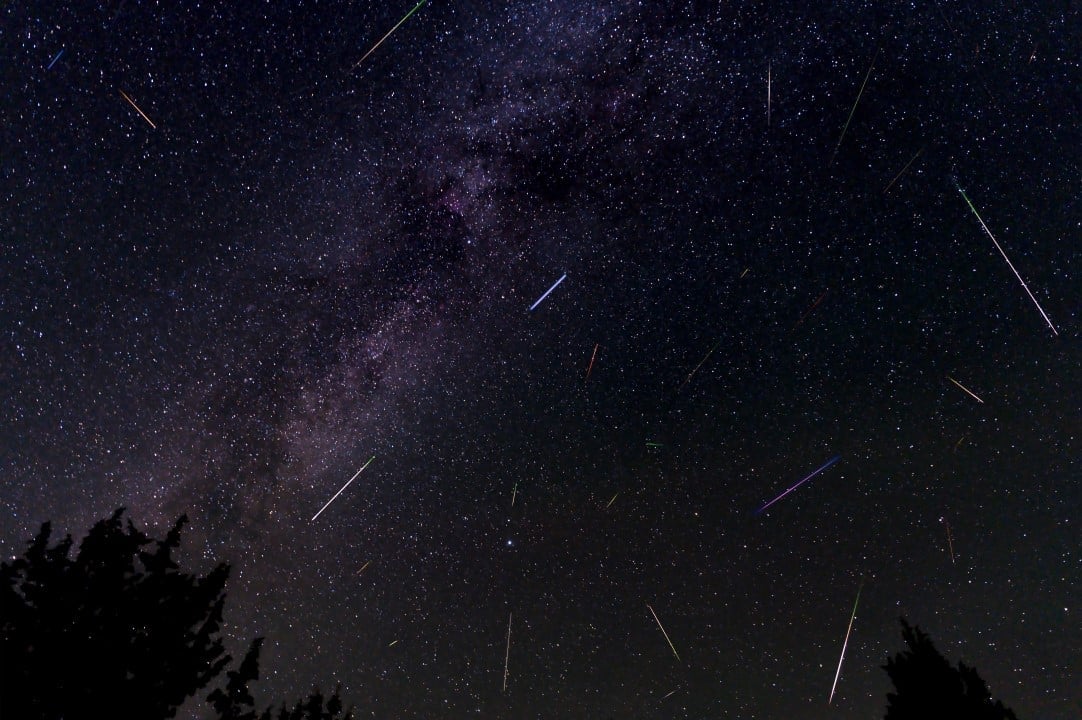
Featured meteor showers
- Quadrantids— Pico in January offers up to 120 meteors per hour in ideal conditions.
- Lyrids— In April.
- Eta Aquáridas— In May, associated with comet Halley.
- Perseids— In August they coincide with a new moon, favoring high visibility.
- Geminids— In December they close the year with an intense display.
These rains provide opportunities for naked-eye observation in places with low light pollution.
Other phenomena in the sky
The year includes a total lunar eclipse on March 3, visible in Américas, Pacífico and parts of Ásia, with Lua acquiring a reddish hue. Eclipse annular solar occurs on February 17, with a ring of fire observable mainly inAntarctica. Superluas appear in January, November and December, with Lua appearing largest and brightest at perigee.
Planetary conjunctions and alignments make it easy to identify planets asJupiter, Venus e Marsthroughout the year.
These events combine accessible observations with scientific advances, consolidating 2026 as a relevant period for astronomy and space exploration.



