
Astronomical phenomenon offers more than 6 minutes of total darkness in Luxor and African route


The total solar eclipse will occur on August 2, 2027 and will last up to 6 minutes and 23 seconds at its maximum. The Esse phenomenon occurs when the Lua is positioned between the Terra and the Sol, completely blocking sunlight in a specific range of the planet.
The trajectory of the lunar shadow will begin at Atlântico and cross south of Espanha, north of África and Oriente Médio. Países like Egito, Arábia Saudita and Líbia will be in the path of totality.
- Spain (south)
- Morocco
- Algeria
- Tunisia
- Libya
- Egypt
- Arabia Saudita
- Yemen
These regions will experience complete daytime darkness. Fora of this band, the eclipse will be partial in wide areas of Europa, África and Ásia.
Astronomical configuration explains exceptional duration
The long duration results from a rare alignment between orbital positions. Lua will be close to perigee, the closest point to Terra, appearing larger in the sky.
Terra will be close to aphelion, moving slightly away from Sol and making the star appear smaller. Essa combination allows Lua to cover Sol longer than usual.
The lunar shadow will move more slowly near the equator, prolonging totality. Especialistas highlight that events like this are rare in the 21st century.
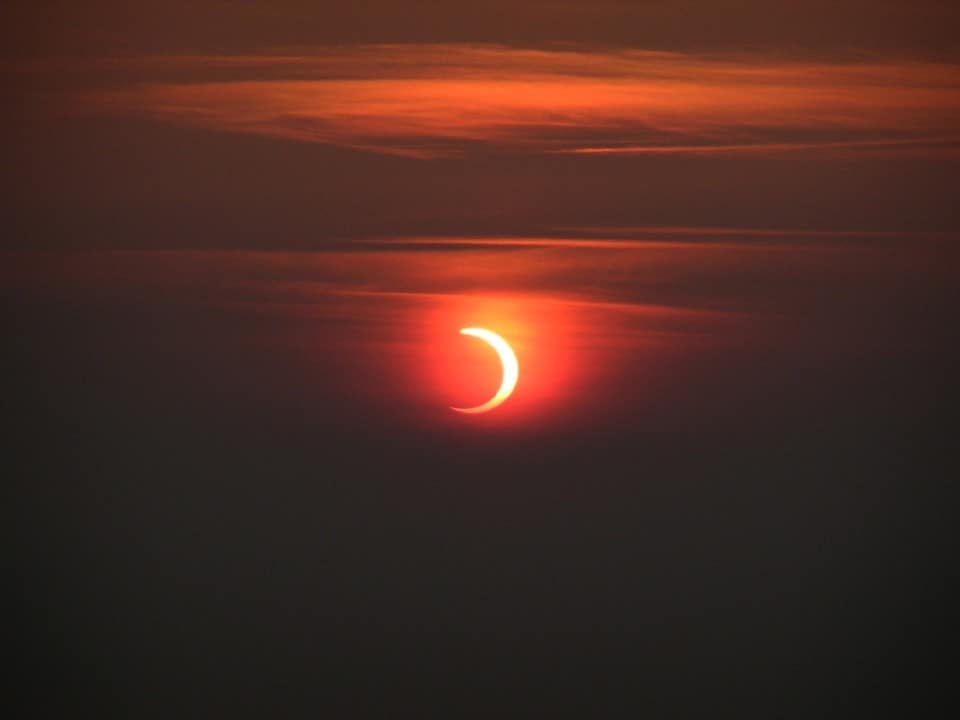
Luxor at Egito emerges as an ideal observation point
Luxor, formerly Tebas, will offer the longest duration of totality, reaching 6 minutes and 23 seconds near the city. The place is home to famous temples and archaeological sites, combining the celestial event with historical heritage.
The region has favorable weather conditions in August, with low cloud cover in the desert. Observadores wait for clear skies to view the solar corona.
Other points on Egito, such as areas close to Nilo, will also attract attention. Cientistas plan expeditions to study the phenomenon in detail.
Detailed trajectory spans multiple continents
The band of totality will begin in the Atlântico ocean and touch land south of Espanha. It will then cross the Gibraltar strait and advance north of África.
Countries like Marrocos, Argélia and Tunísia will experience minutes of total darkness. The shadow will proceed through Líbia and enter Egito, reaching a peak near Luxor.
Afterwards, you will cross Mar Vermelho towards Arábia Saudita and Iêmen. The phenomenon will end in the ocean Índico after passing through parts of Somália.
Safe observation requires appropriate equipment
Observers must wear glasses certified to ISO 12312-2 during partial phases. Apenas in its entirety it is possible to remove the protection to see the corona directly.
Equipment such as telescopes need suitable solar filters. Autoridades recommend avoiding improvised methods that can cause permanent damage to vision.
- Wear certified glasses at all times outside of totality
- Check international safety standards
- Consult experts for optical equipment
These measures guarantee protection throughout the event. Organizações astronomical companies plan awareness campaigns.
Scientific importance of the prolonged phenomenon
The extended duration allows for detailed studies of the solar corona, the normally invisible outer layer. Pesquisadores will analyze plasma and magnetic fields with greater precision.
The event will help understand solar flares and impacts on satellites and electrical grids. Dados collected will contribute to space weather predictions.
International teams will install instruments at key points along the route. Atmospheric stability in desert regions favors high-quality observations.
Preparations already boost astronomical tourism
Destinations such as Luxor and south of Espanha are seeing increased interest in bookings. Operadores offer packages combining observation with cultural visits.
Local authorities plan public events with secure telescopes. The phenomenon is expected to attract thousands of visitors from different countries.
Specialized agencies organize expeditions guided by experts. Early Planejamento is recommended due to expected demand.
The total solar eclipse of August 2, 2027 represents one of the most significant astronomical events of the century. Sua record duration and route through historic regions make it unique for observers and scientists.



