
Lack of LFP batteries forces Volkswagen to delay the launch of the entry-level version of the new ID.Polo


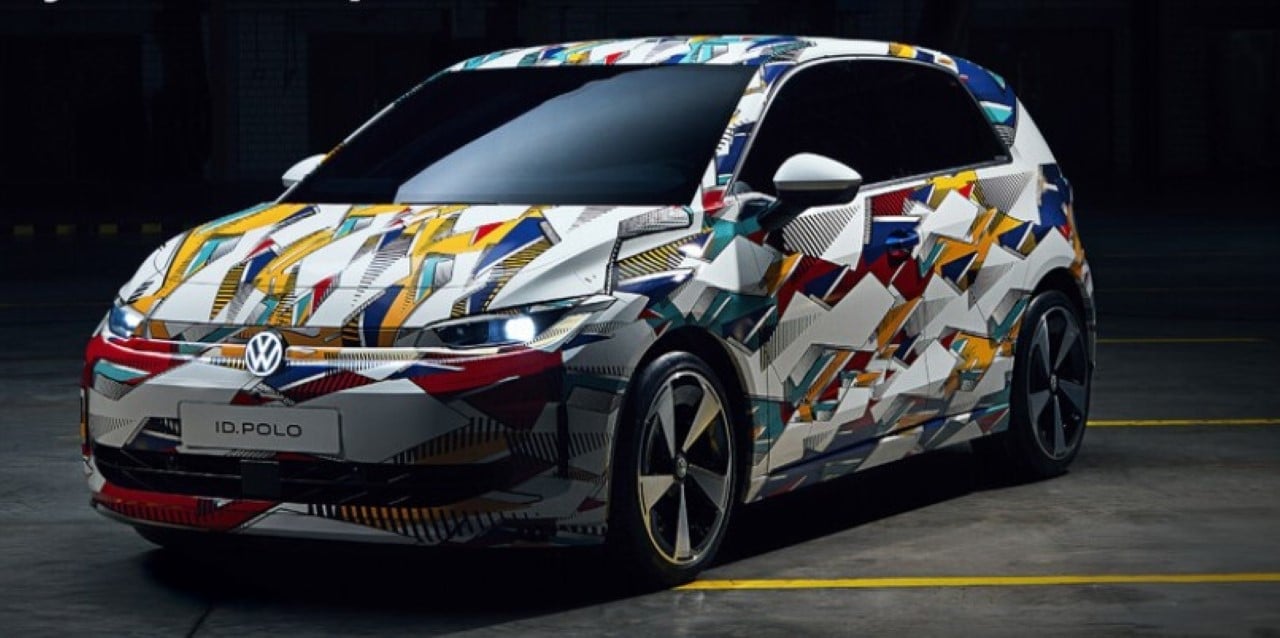
Volkswagen confirmed plans for the launch of its long-awaited electric compact, the ID.Polo, scheduled to reach the European market in spring 2026. Contudo, the entry-level version, which promises a competitive price of around 25 thousand euros, will face a significant delay. The main obstacle is the automaker’s difficulty in guaranteeing a large-scale supply of lithium iron phosphate (LFP) batteries, an essential component to enable the model’s reduced cost.
With the restriction on supply, the company’s strategy will be to focus the initial launch on more equipped and, consequently, more expensive configurations, with prices starting at 30 thousand euros. Essas versions will use batteries with nickel-manganese-cobalt (NMC) chemistry, whose supply chain is more stabilized for the group. Informações of European dealers suggest that the first examples of the basic version should only be delivered from the third quarter of 2026, or even later.
This staggered approach allows Volkswagen to begin marketing the ID.Polo on the planned date, establishing its presence in the electric compact segment. At the same time, the brand gains time to negotiate and stabilize the flow of LFP cells, which are crucial to fulfilling the promise of a truly affordable electric car for the mass market, a central pillar in its electrification strategy.
The LFP battery dilemma
The choice of LFP technology for entry-level models is not accidental, but rather a strategic decision to democratize access to electric vehicles. Lithium iron phosphate batteries are notably cheaper to produce as they do not rely on expensive and controversial materials such as cobalt, as well as offering greater durability in terms of charge cycles and a superior safety profile. However, the growing global demand for this technology, driven by several automakers seeking to reduce costs, has created a bottleneck in production and an imbalance in the supply chain, still heavily concentrated in Asian suppliers. Para to The situation exposes a vulnerability in the automotive industry’s energy transition, where the availability of specific components can dictate the pace of launches and consumer access to the most economical technologies.
Staggered release strategy
Volkswagen’s decision to start sales of the ID.Polo with higher value-added versions is a common tactic in the automotive industry, especially in periods of component restrictions. By prioritizing the most expensive models, the company is able to maximize initial profit margins, which helps to amortize the high research and development costs associated with a new platform and technology. Além Furthermore, this approach allows us to build an image of a premium and technologically advanced product, generating expectation and desire for the model even before the arrival of more affordable options.
From the consumer’s point of view, this strategy creates a waiting scenario for those who were attracted by the promise of a price of 25 thousand euros. Enquanto the first buyers will have access to a more complete vehicle with greater autonomy, the public looking for an electric alternative to the conventional Polo will need more patience. The automaker is betting that the stabilization of LFP battery logistics will allow, in the medium term, to increase the production volume of the entry-level version and, finally, meet mass market demand without compromising the financial viability of the project.
Technical details of the MEB+ platform
The ID.Polo is built on the new MEB+ platform, an evolution of the electrical modular architecture already used in other models in the group, such as the ID.3 and ID.4.
This improved version has been optimized with a focus on reducing production costs, greater energy efficiency and superior charging speeds, fundamental elements to compete in the compact segment.
One of the model’s main technical features is the adoption of front-wheel drive, a configuration that maximizes internal space by eliminating the transmission tunnel and optimizing the positioning of powertrain components.
Thanks to this architecture, the ID.Polo offers passenger space, especially in the rear seat, greater than that of the Polo with a combustion engine, despite having similar external dimensions. The wheelbase of 2,600 mm is one of the factors that contribute to this amplitude.
Confirmed versions and engines
To meet different consumer profiles, the ID.Polo will be offered with a varied range of engines. The entry-level and intermediate options will feature electric motors that deliver 85 kW (116 hp) and 99 kW (135 hp), powers suitable for urban and highway use with a focus on efficiency.
For those looking for more performance, there will be a more powerful version with 155 kW (211 hp). Além In addition, Volkswagen is already planning the introduction of a sporty GTI variant, which will increase power to 166 kW (226 hp), promising a more dynamic and exciting driving experience, which will reach the market later.
The choice of engine will be directly linked to the type of battery. The entry-level versions will be equipped with the 37 kWh LFP pack, while the more powerful ones will use the 52 kWh NMC battery to guarantee not only performance, but also a range compatible with the proposal of each version.
Differences between battery chemistries
The two battery technologies offered in the ID.Polo address different priorities. The LFP (Ferro-Lithium Phosphate) battery, with 37 kWh of useful capacity, is the Volkswagen’s bet for the entry-level version, focused on offering aggressive cost-benefit. Sua main advantage is the lower price and greater longevity, supporting a greater number of recharge cycles with less degradation.
On the other hand, the more powerful variants with greater autonomy will come equipped with a useful 52 kWh NMC (Nickel-Manganese-Cobalt) battery. Essa chemistry has greater energy density, which means it can store more energy in the same physical volume, resulting in a projected range of up to 450 km in the WLTP cycle. The cell-to-pack technology, used in both, integrates the cells directly into the pack structure, eliminating intermediate modules to reduce weight and optimize space.
Loading capacity
Loading flexibility is another important point of the project. Todas versions of the ID.Polo will be compatible with alternating current (AC) recharging of up to 11 kW, ideal for use on residential or public chargers at night. At direct current (DC) fast charging stations, the maximum supported power varies depending on battery chemistry. Models with an LFP battery will be able to charge at up to 90 kW, while versions with an NMC battery will peak at 130 kW. Segundo to
Production at Espanha
Production of the ID.Polo will be centralized at the Martorell factory, at Espanha, which is being adapted to become one of the main production centers for compact electric vehicles at Grupo Volkswagen. The model is the first in a new family of affordable trams that will also include variants from the Cupra and Skoda brands, sharing the same technical base to create synergies and reduce costs. Esta offensive in the entry-level segment is seen as essential for Volkswagen to achieve its electrification goals and maintain its leadership in the European market in the face of growing competition from other automakers. The success of the ID.Polo will be an important barometer for the acceptance of more affordable electric cars on the continent.



