
Volkswagen starts sales of the new T-Roc 2026 in the United Kingdom and reinforces electrification strategy in Brazil

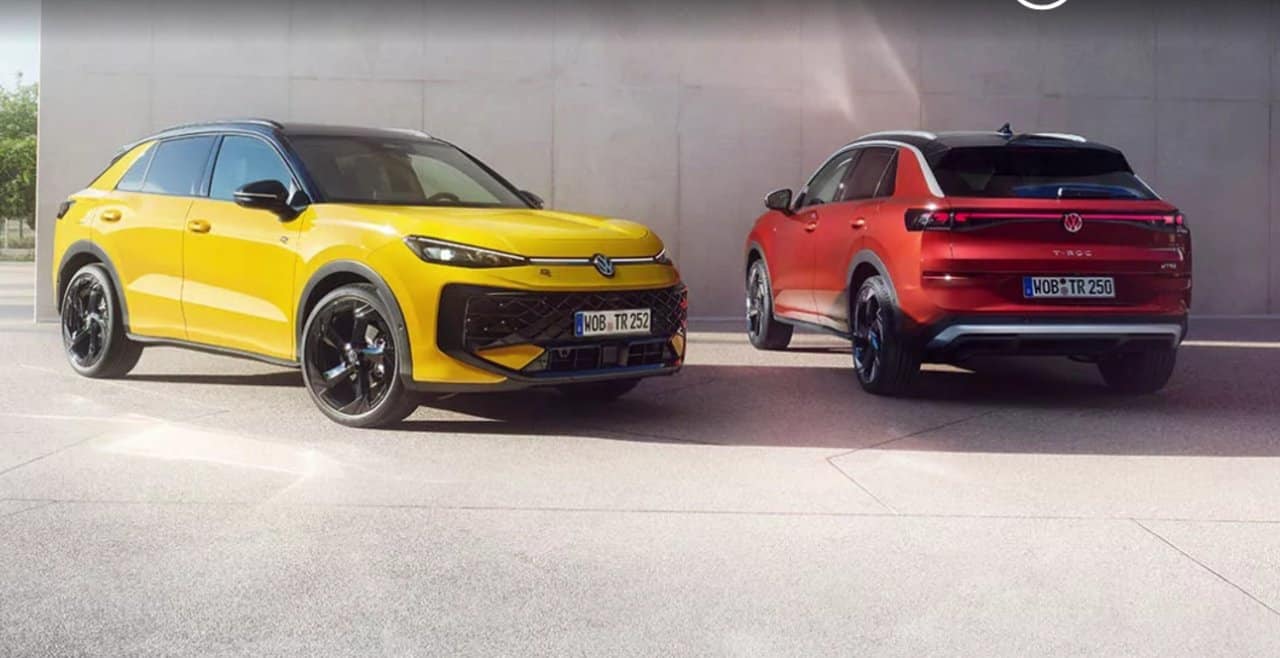
Volkswagen began selling the second generation of the T-Roc on the British market at the beginning of January 2026. The model starts at 31,620 pounds, a value that is equivalent to approximately R$230,000 in direct conversion. Esse launch represents an important step in the renewal of the German brand’s SUV line.
The new T-Roc arrives with expanded dimensions and updated technology, positioning itself as one of the pillars of the transition to electrified engines. No Brasil, the model is seen as a direct evolution of the Nivus, expected to arrive in the coming years to strengthen the Volkswagen hybrid offer in the country.
Renewed exterior design
The Volkswagen T-Roc 2026 features more fluid and sporty lines compared to the previous generation. The front grille has been redesigned with optional illuminated elements, while LED matrix headlights have become standard on higher versions. Essas changes give the SUV a more modern presence on European streets.
The total length increased to 4.37 meters, a gain of 122 millimeters compared to the old model. The wheelbase has also grown, improving internal space and stability when cornering. The more pronounced fenders reinforce the robust look, without compromising aerodynamics.
Technology-focused interior
The cabin of the new T-Roc features higher quality materials, with soft-touch surfaces and contrasting stitching. The central infotainment screen reaches 13 inches in top-of-the-line configurations, integrating voice commands and over-the-air updates. The digital instrument panel is configurable and varies in size depending on the version chosen.
- Multifunctional steering wheel with haptic buttons;
- Optional premium sound system;
- Customizable ambient lighting;
- Wireless charger for smartphones.
The trunk expanded to 475 liters in standard configuration, offering 30 liters more than its predecessor. The folding rear seats allow expanding the compartment for larger loads, serving families and urban users.
Engines available at launch
In the Reino Unido, the T-Roc 2026 is initially offered with the 1.5 TSI Evo2 engine associated with a 48-volt mild-hybrid system. Essa combination delivers power of 116 hp or 150 hp, always coupled to the seven-speed DSG transmission. The system assists with acceleration and recovers energy during deceleration, reducing consumption.
The drive is front-wheel drive in all initial variants, with balanced performance between city and highway. The Volkswagen confirms that full hybrid versions, without the need for external recharging, will be introduced in the Europa from mid-2026. Esses sets promise efficiency up to 15% higher than current mild-hybrids.

Prices and versions on the British market
Sales in the Reino Unido feature four main trim levels. The entry price is £31,620 for the basic configuration with a 116 hp engine. Intermediate Versões add items such as larger wheels and advanced driving assistants.
The most equipped options cost more than 40 thousand pounds, including a panoramic sunroof and autonomous parking systems. The brand offers customization packages that allow you to combine exterior colors with contrasting interiors. The first customers receive special financing and maintenance conditions included.
Perspective of arrival at Brasil
The new T-Roc is considered an important basis for the renewal of the Volkswagen line in the Brazilian market. The brand plans to introduce hybrid engines in compact SUVs in the coming years, using technology similar to that developed for the European model. Essa strategy aims to meet demands for more efficient vehicles.
The updated MQB platform allows integration of batteries and auxiliary electric motors without major structural changes. In the country, the model can assume a premium position in relation to the current Nivus, offering more space and refinement. Local production or import is still under evaluation by Volkswagen of Brasil.
Detailed technical specifications
The T-Roc 2026 measures 4,373 mm long, 1,841 mm wide and 1,584 mm tall in most versions. The fuel tank capacity remains around 50 liters, sufficient for ranges of over 800 km in mixed use with mild-hybrid engines.
- Curb weight: from 1,350 kg;
- Towing capacity: up to 1,500 kg with brake;
- Maximum speed: electronically limited to 210 km/h in the most powerful version;
- Acceleration from 0 to 100 km/h: around 8.5 seconds at the top of the range.
Assistance systems include automatic emergency braking, lane keeping and adaptive cruise control as standard in several markets.
Direct competitors in the segment
The new T-Roc competes with models such as the Toyota Corolla Cross hybrid, Peugeot 3008 and Ford Puma in the Europa. Sua combination of German design and competitive price positions the SUV as a versatile option in the compact crossover segment. The initial mild-hybrid offer already offers advantages in consumption compared to purely combustion rivals.
In the Brazilian context, the model anticipates future disputes with Jeep Compass and Chevrolet Tracker in electrified versions. Volkswagen is betting on the familiarity of the brand and the dealership network to gain space in the growing market for hybrid SUVs.
Production and supply chain
The second generation of the T-Roc is manufactured at the Autoeuropa unit, in Portugal, which concentrates much of the model’s European production. The factory received recent investments to accommodate new assembly lines and testing of hybrid systems. Componentes electronics are provided by Volkswagen’s global partners.
The logistics chain was adjusted to meet initial demand in Reino Unido and other European markets. The brand maintains strategic stock to avoid delays in deliveries of the first batches.
The new T-Roc 2026 consolidates Volkswagen’s position in the compact SUV segment with an electrified offering since launch. Initial sales on the Reino Unido demonstrate the brand’s confidence in the acceptance of the renewed model. The expansion to full hybrid versions reinforces the commitment to reducing emissions in several markets.



