
Latest news from Iran: Iranian president blames ‘terrorists’ linked abroad for protests – and promises to listen to people’s economic grievances against Trump

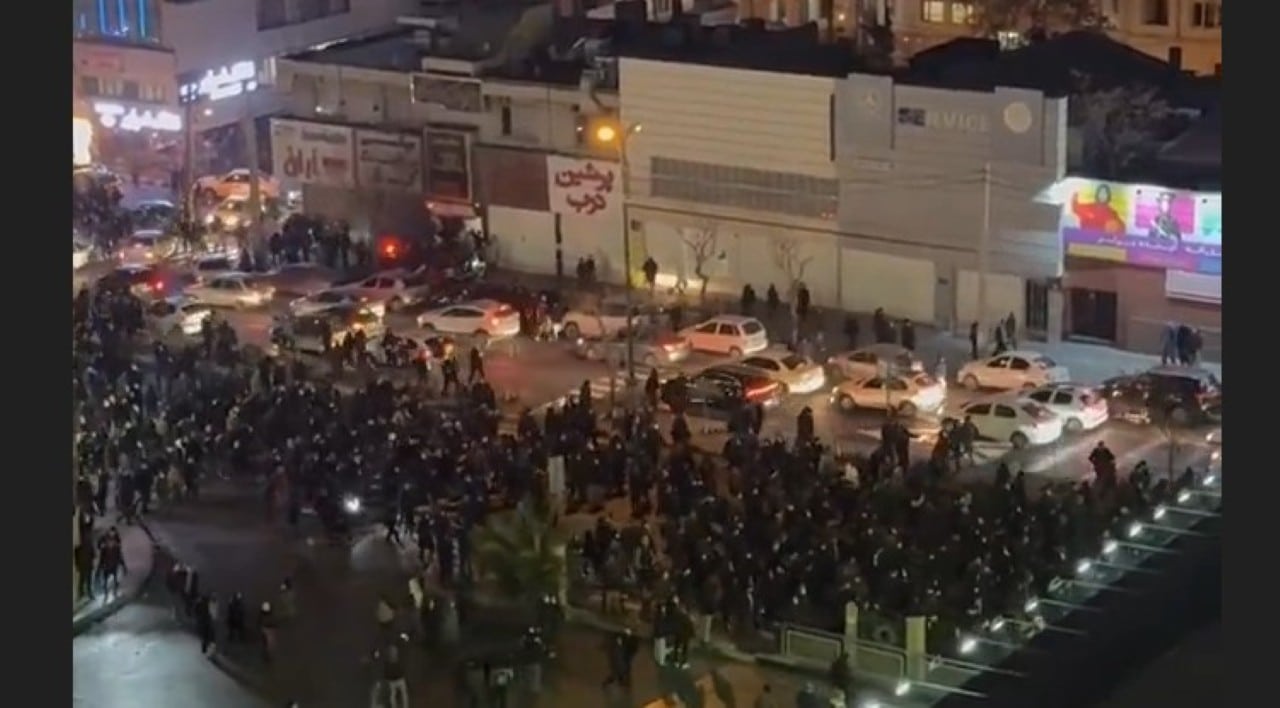
The Irã is engulfed in an intense wave of anti-government protests that has spread across several provinces, marking one of the greatest periods of internal instability since the Revolução Islâmica of 1979. Amid the escalation of violence and the growing death toll, Iranian President highlighting the complexity of the political and social scenario that the country is going through. The situation is aggravated by a delicate web of international relations, with powers such as the Estados Unidos and Israel discussing possible interventions, which further raises the alert in the region and generates apprehension about the developments.
The protests, initially driven by runaway inflation and deteriorating economic conditions, quickly transcended financial demands, turning into a full-scale anti-government movement. The response by security forces has been rigorous, resulting in at least 116 deaths, according to reports, and growing concern from the international community. Reino Unido, for example, expressed great concern about violence and called for a peaceful transition in the country.
In the external scenario, tension intensifies. Estado’s American secretary, Marco Rubio, and Israeli prime minister, Benjamin Netanyahu, reportedly discussed intervention scenarios, while former president Teerã, in turn, has already issued severe warnings, promising retaliation against Israeli and American bases in the event of any military attack on its territory, projecting the specter of an even greater regional conflict.
The official statement and the roots of the crisis
President Ele reiterated the narrative that external enemies are trying to “sow chaos and disorder” through the “riot order”, a rhetoric often used by the regime to delegitimize internal demonstrations and divert focus from domestic causes.
Despite the strong condemnation, Pezeshkian adopted a more conciliatory tone by stating that the government is “ready to listen” to its people. Ele highlighted his administration’s determination to resolve the deep economic problems afflicting the nation, which were the initial catalyst for the protests. The Iranian leader also urged citizens to distance themselves from “violent protesters and terrorists”, classifying them as elements that seek to “destroy the entire society”, in a clear attempt to divide public opinion and isolate the most radical elements of the movement.
The economic crisis is the driving force behind popular dissatisfaction. The Iranian currency has reached historically low values in relation to the US dollar, generating uncontrolled inflation that erodes the population’s purchasing power and fuels frustration. Lojistas and bazaar traders in Teerã were the first to openly demonstrate their discontent, triggering a strike that marked the beginning of the current wave of protests on December 28, before the demonstrations took on a broader political character.
Teerã intervention dialogs and alerts
Behind the scenes of international diplomacy, American media reports indicate that Donald Trump was briefed on possible options for military strikes on Irã. The former president, who had already warned of possible intervention if Irã intensified the lethal repression of protesters, would have received a range of options, including attacks on non-military targets in Teerã, as reported by New York Times, citing American officials. Essas discussions, although presented as part of normal military planning, underline the seriousness with which the situation is observed abroad.
Wall Street Journal, also citing American officials, mentioned the possibility of “a large-scale air strike against multiple Iranian military targets.” Contudo, the newspaper’s sources emphasized that such discussions are part of routine contingency planning and that there are no immediate signs of an imminent attack on Irã, seeking to mitigate the perception of an inevitable escalation. Ainda thus, the mere existence of these deliberations serves as a constant reminder of the fragility of peace in the region and of international surveillance over internal Iranian events.
The initial chronology of the revolt
The current wave of protests is considered the largest in Irã since Revolução Islâmica in 1979, evolving rapidly from purely economic issues to a broad anti-government movement. The main milestones in its evolution include:
- December 28th:Lojistas and bazaar traders in Teerã go on strike in protest against the record devaluation of the Iranian currency against the US dollar, marking the beginning of the demonstrations.
- Following days:The protests quickly spread to other cities and provinces, taking on a more political and anti-government character, with protesters demanding deeper changes than just economic improvements.
- Wave of repression:Authorities intensify the response, with security forces confronting protesters, resulting in arrests and deaths, as the internet suffers blockages and restrictions to make it difficult for protesters to communicate and organize.
The role of the president
Masoud Pezeshkian, although he holds the position of president, holds significantly less power than Líder Supremo, Ayatollah Pezeshkian is seen as a moderate politician within the complex Iranian political spectrum, but his rise to office was enabled by sufficient alignment with conservative and religious leaders, which demonstrates the intricate power dynamics that permeate the country’s leadership. Suas decisions can ultimately be overridden by Khamenei, which limits your ability to implement radical changes.
Pezeshkian’s recent statements echo comments made the previous week at a meeting with business leaders, where he also attributed the protests to foreign intervention and called for national unity. Ele expressed that “external pressures are being exerted by the country’s enemies and, unfortunately, also within the country itself”, reinforcing the thesis of an external conspiracy and, at the same time, recognizing the existence of internal problems that fuel discontent. Essa duality in his speech tries to reconcile the need to recognize popular grievances with maintaining the official narrative of defense against external influences.
Analysis of the resilience of the Iranian regime
Despite intense internal and external pressure, the Iranian regime demonstrates remarkable resilience, without showing clear signs of backing down in the face of the current wave of protests. International analysis points out that the Iranian people already faced protest movements in 2009, due to alleged electoral fraud; in 2019, driven by fuel prices; and in 2022, in reaction to abuses by the morality police. Essas Historical experiences have shaped the strategy of the authorities, who have improved their methods of repression over the years to contain dissent and maintain control over the population.
Government tactics include the use of violence by the Guarda Revolucionária and Basij militias, the summary execution of protesters, mass arrests of dissidents, and the strategic blocking of the internet, a crucial tool for organizing and disseminating information by protesters. Control over the flow of information prevents people from knowing the true scale of popular participation and makes it difficult to connect different groups and provinces, fragmenting the momentum of the movement. The lack of an apparent leader within the Irã itself also contributes to the difficulty of maintaining cohesion and direction of the uprising across the country’s 31 provinces, which has historically been a significant challenge for opposition movements in the Irã.
Deepening into international climbing
The possibility of external intervention in Irã, discussed by high-ranking figures in Estados Unidos and Israel, adds a layer of complexity and volatility to the internal crisis. The conversations between Marco Rubio and Benjamin Netanyahu, as well as the warnings from Donald Trump, are not just rhetoric, but reflect a genuine concern for regional stability and geopolitical interests. Instability in Irã, a key player in Oriente Médio, has the potential to reverberate across the region, affecting energy markets and the security of neighboring nations.
American military contingency planning, which would include options for attacks on non-military targets in Teerã or large-scale actions against Iranian military targets, even if classified as “normal planning”, sends an unmistakable signal of readiness to act. Este scenario raises the level of caution, both for the Iranian regime and Western powers, who need to balance pressure on Teerã with the risk of a disastrous military escalation. The retaliation promised by the Irã in the event of an attack, targeting Israeli and American bases, sets a dangerous limit, transforming the internal crisis into a potential confrontation of wide proportions.
The international community, including Reino Unido, is following the events with great concern. The pursuit of a “peaceful transition” in the Irã, as expressed by the British, is a goal shared by many nations who fear the consequences of further destabilization. However, the complexity of the situation, with a regime showing little inclination to concede and the persistence of protests, makes the prospect of a diplomatic solution or smooth transition a monumental challenge. The escalation of conflict, whether internal or external, threatens to worsen an already dire humanitarian and political situation in the region.
Efforts to resolve the economic crisis
With the protests initially motivated by economic problems, the Masoud Pezeshkian administration finds itself under immense pressure to present tangible solutions that can alleviate the population’s suffering. High inflation, unemployment and currency devaluation are chronic issues that the government promises to address, although the effectiveness of its policies is constantly questioned amid widespread dissatisfaction. The proposed economic reforms, however, face significant challenges, including international sanctions and a complex bureaucracy, which limit the government’s scope for action.
The president’s appeal to the population to move away from “violent and terrorist” protesters is a strategy to isolate the most radical elements of the movement and thus create an environment more conducive to dialogue and the implementation of reforms. The message underlines the regime’s intention to differentiate between the population’s “legitimate grievances” and actions it considers destabilizing, thus seeking to fragment support for the protests. Este speech aims to protect the government’s image and attribute the violence to external groups, avoiding full responsibility for the causes of the popular uprising.
The promise to “listen to your people” and “solve economic problems” can be interpreted as an attempt to buy time and demobilize the protests through concessions, however limited. Contudo, the credibility of these promises is low, given the persistence of the problems and the repeated repression of previous movements. The Iranian population, already hardened by past crises, awaits with skepticism the realization of any significant improvement, while pressure from both the streets and the international arena continues to intensify, shaping the country’s uncertain future.



