
Annular solar eclipse on February 17, 2026 forms a ring of fire and begins the year’s phenomena; how to observe


The next solar eclipse will be annular and will occur on February 17, 2026, with main visibility restricted to remote regions of Antártida. Nesse phenomenon, the Lua will be positioned between the Terra and the Sol, creating the effect known as ring of fire, which will last up to 2 minutes and 20 seconds at its maximum point. Poucas people will be able to observe the event directly due to the isolated location.
Another relevant solar eclipse of the year will be the total one, scheduled for August 12, 2026. No Brasil, this event will only be visible as a partial event in some regions.
These phenomena highlight the precise alignment between Sol, Lua and Terra, which occurs only in specific phases of the new Lua. Observadores in different parts of the world will need planning to safely follow events.
Annular eclipse at Antártida
The eclipse on February 17, 2026 will be classified as annular because Lua will be at its apogee, appearing smaller in the sky and not completely covering the solar disk. Isso results in the formation of a luminous ring around the lunar silhouette, visible for up to 2 minutes and 20 seconds at specific points on Antártida.
The phenomenon’s trajectory will pass through the Antarctic continent and parts of the Austral ocean, making it inaccessible to most observers. Expedições scientific or specialized trips will be necessary to attend the event in person.
February event details
The magnitude of the eclipse will reach 0.9815, with the greatest eclipse occurring at around 12:13 pm universal time. Regiões close to the pole Sul will record the ring of fire, while adjacent areas will only see a partial eclipse.
Observers on other continents, including Brasil, will not have significant visibility of this annular eclipse. The phenomenon reinforces the rarity of perfect alignments in inhabited places.
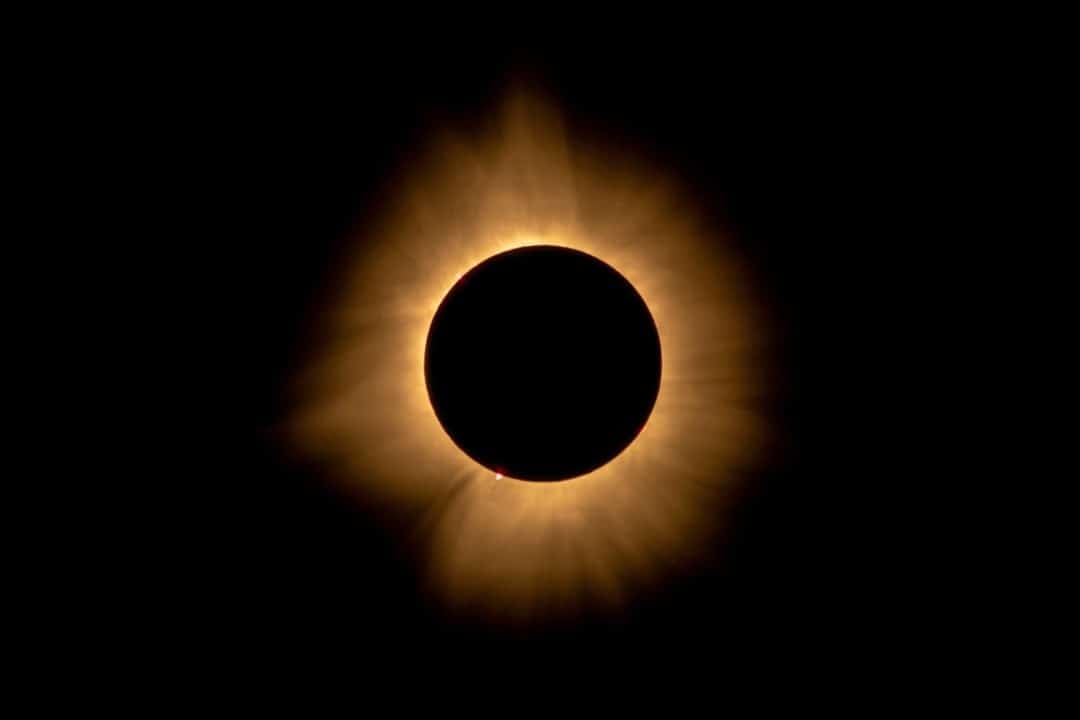
Total eclipse in August
The total eclipse on August 12, 2026 will cross a band that includes parts of Rússia, Groenlândia, Islândia and Espanha. Maximum totality will last 2 minutes and 18 seconds near Islândia, completely darkening the sky during this interval.
Millions of people in affected regions will be able to observe the event, which will coincide with favorable summer conditions in the northern hemisphere. Cidades in the north of Espanha have already prepared structures to receive tourists interested in the phenomenon.
At Brasil, the eclipse will be visible as partial, with varying coverage depending on geographic location. Regiões north and northeast will have better visibility of the partially hidden solar disk.
Partial visibility on Brasil
The August 2026 eclipse will appear as partial in several areas of Brazilian territory. Observadores in states of Norte and Nordeste will record a greater percentage of solar occultation.
- Local times vary by region, starting in the late afternoon.
- Cities such as Belém and Fortaleza will offer suitable conditions for observation.
- The south of the country will have less coverage, but still noticeable.
- Weather conditions will influence viewing quality.
These points make planning easier for those who want to follow the phenomenon without traveling internationally.
Types of solar eclipses
There are four main types of solar eclipses, determined by the alignment between Sol, Lua and Terra. Total occurs when Lua completely covers the solar disk, generating temporary darkness in the band of totality.
The annulus occurs when Lua is further away, leaving a visible luminous ring. The partial Já appears in regions outside the central band, with only part of the Sol hidden.
The rarer hybrid combines total and annular characteristics along the trajectory. Estatísticas indicate that around 28% of eclipses are total and 32% are annular.
Essential security measures
Observing solar eclipses requires adequate protection to avoid permanent damage to your vision. Óculos special features with ISO 12312-2 certification filter intense radiation and allow safe direct viewing.
Indirect methods, such as projection through a hole in a card or the use of telescopes with solar filters, offer safe alternatives. Durante totality in total eclipses, protection is removed only in the period of complete darkness.
- Never observe Sol directly without a suitable filter.
- Binoculars and telescopes require specific filters on the front lens.
- Homemade projectors with a simple box and hole project the image safely.
- Children need constant supervision during observation.
These precautions ensure a safe experience for all audiences.
Preparation for observation
Planning the observation involves choosing a location with a clear horizon and checking weather conditions. Basic Equipamentos include certified glasses or improvised projectors.
Specialized apps and websites provide visibility maps and accurate local times. Grupos of amateur astronomy organize collective events in several cities.
Related phenomena in 2026
The year 2026 will also include lunar eclipses, with a total one in March and a partial one in August. Esses events complement the astronomical season, offering varied observation opportunities.
Supermoons and meteor showers complete the calendar, expanding options for enthusiasts. The combination reinforces interest in celestial events throughout the months.
Scientific importance of eclipses
Solar eclipses allow for detailed studies of the solar corona and tests of physical theories. Expedições to Antártida for the February event will collect valuable data in extreme environment.
Mass observations during the August eclipse will contribute to research on the atmosphere and solar behavior. Projetos citizens involve the public in collecting information.
These phenomena continue to advance astronomical knowledge in several areas.



