
How do astronomers find exoplanets?

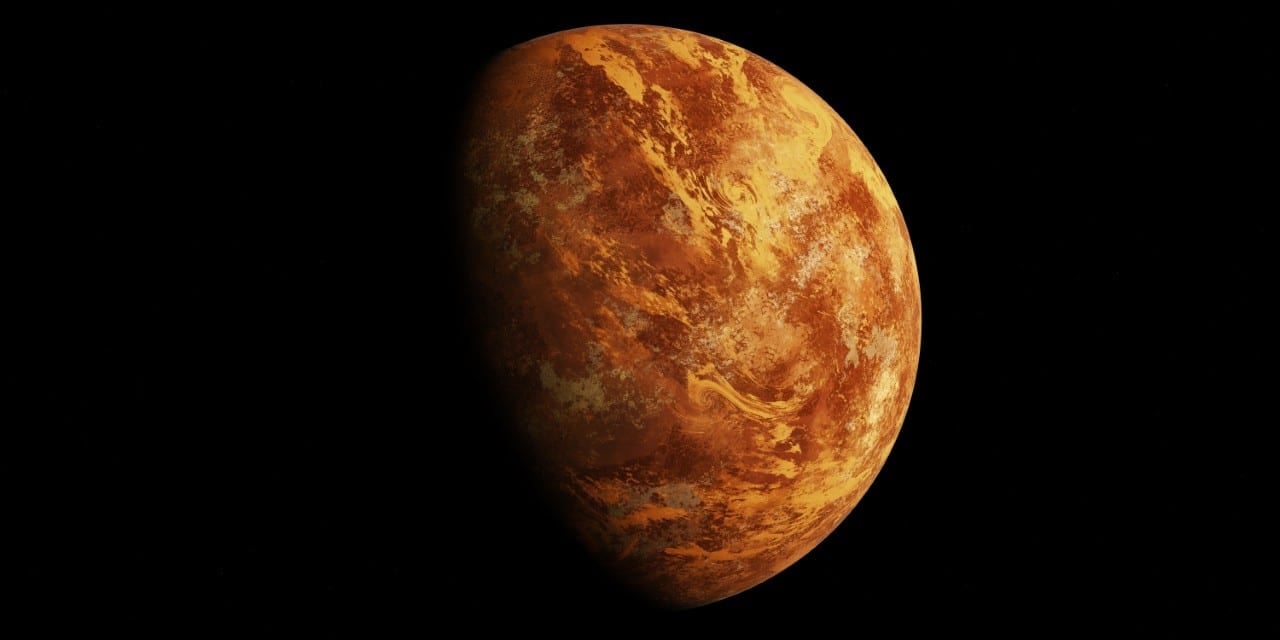
Astronomers reveal innovative methods for detecting exoplanets in their never-ending search for alien life
Humanity, almost a century ago, expanded its knowledge about the solar system with the discovery of Plutão by Clyde W. Tombaugh. However, the real revolution in astronomy came in 1992, with the identification of the first planet outside our solar system, orbiting a neutron star. Este milestone opened the doors to a new field of study, boosting the search and documentation of so-called exoplanets.
Since that time, the scientific community has cataloged more than 6,000 exoplanets, each with its own unique characteristics, some with complex names such as HD 189733b, known for supposedly having showers of molten glass and very strong winds. The vast number and diversity of these distant worlds surpasses the memorability of the planets in our own solar system.
Even though they are light years away and have little chance of being visited by humans, the exploration of these celestial bodies is essential to try to solve one of the greatest mysteries of existence: are we alone in the universe? The search is now focused on finding planets with environmental conditions similar to those of Terra, where life, as we know it, could thrive.
Innovative methods for discovering exoplanets
The task of locating exoplanets presents significant complexity. Olhar to the sky with the most advanced telescopes is not enough, as the resolving capacity of these instruments, even high-powered ones like Telescópio Espacial Hubble, which can detect a giant planet trillions of kilometers away, is limited in the face of vast interstellar distances. Hubble, for example, reaches just 0.06 light years, while the closest star outside our solar system, Proxima Centauri, is more than 4 light years away.
Additionally, planets are intrinsically dimmer than their host stars. Embora Júpiter is visible to the naked eye in Terra, this is due to the reflection of sunlight, which, although weak, makes it noticeable. With exoplanets, the reflected light is so faint compared to the star’s brightness that it makes them virtually indistinguishable for direct observation.
Fortunately, physics and astronomical engineering have developed indirect strategies to circumvent these barriers. Dois key methods stand out and have been crucial to most exoplanet discoveries to date, allowing astronomers to peer into the presence of these hidden worlds. Esses methods involve analyzing how planets affect their stars, revealing valuable clues about their existence.
Radial velocity detection: the doppler effect in space
When a planet orbits a star, it’s not just the planet that is affected by gravity. The star also experiences a gravitational pull from the planet, although to a lesser extent due to its much greater mass. Essa mutual interaction causes the star not to remain completely static, but rather to wobble slightly in a circular motion, known as “stellar wobble” or “wobble”. The gravitational force between the star and the planet is proportional to their masses and inversely proportional to the square of the distance between them, according to Lei of Gravitação Universal of Newton.
This oscillation, although invisible to the naked eye, can be detected thanks to the Doppler effect. Este phenomenon is more familiar in sound, like the change in pitch of an ambulance siren that approaches and then recedes. In the case of light, the Doppler effect causes a change in the frequency of light emitted by a moving object. If the star moves toward Terra, its light shifts to the blue side of the spectrum (blueshift); if it moves away, its light shifts to the red (redshift).
Astronomers use spectroscopes to analyze starlight and identify these tiny color changes. Over several years of observation, they look for regular variations in a star’s luminous spectrum. Essas variations allow us to determine the speed at which the star moves toward or away from Terra, revealing the signature of the orbital motion of one or more planets. The magnitude of the color change is directly linked to the speed of the star and, consequently, the mass and orbital distance of the exoplanet.
Based on the detected velocity and period of oscillation, scientists can estimate the mass of the star and, by inference, calculate the mass and orbital distance of the exoplanet. Esta technique is particularly promising for the search for extraterrestrial life, as it allows us to identify planets with orbits in habitable zones, where liquid water may exist, which is an essential criterion for life.
The phenomenon of planetary transit: a light that goes out
Another effective method for identifying exoplanets is the transit phenomenon. Este occurs when a planet passes directly between its host star and the observation point at Terra, blocking a small portion of the starlight. A familiar example of this concept is the solar eclipse, where Lua passes in front of Sol, or the transits of Vênus and Mercúrio, which cause a slight reduction in solar luminosity.
By detecting this subtle decrease in a star’s brightness with highly sensitive equipment, astronomers can infer the presence of an orbiting exoplanet. Kepler-10b, one of the first rocky exoplanets, was discovered by this method and subsequently confirmed using the radial velocity technique. Continuity of observation and the periodicity of these drops in brightness are crucial for confirmation.
Data collected during a transit is represented in a “light curve,” a graph that shows the star’s luminosity as a function of time. The depth of the dip in the light curve indicates the size of the planet: the larger the exoplanet, the more light it blocks, resulting in a steeper dip. The duration of the fall, in turn, allows us to calculate the planet’s orbital period, that is, the time it takes to complete one revolution around its star. Além Furthermore, the shape of the curve may even suggest the presence of multiple planets.
The complexities and the vast unexplored universe
Both exoplanet detection methods, although revolutionary, have their inherent limitations. The radial velocity technique becomes progressively more challenging as the distance from the object increases, and requires a favorable alignment of the planetary system for the star’s motion toward or away from Terra to be detectable. Sistemas that are perpendicular to our line of sight, for example, would not allow the observation of the Doppler deviation.
Similarly, the transit method requires precise alignment: the exoplanet’s orbital plane must be directly in the line of sight between the star and Terra. If the planet and star are not perfectly aligned, the transit cannot be observed, which restricts the number of planetary systems that can be studied this way. Além Furthermore, both methods have a propensity to detect larger planets, the so-called “hot Jupiters”, which orbit very close to their stars, generating more evident and frequent signals. Isso generates a bias in the detection of planets, making it more difficult to find smaller worlds, such as terrestrial ones. For example, for a planet with characteristics similar to those of Terra, at least three transits would be necessary, requiring an observation period of at least three years for confirmation. Planetas with long orbital periods, such as Plutão (250 years), remain virtually undetectable by this means outside our solar system.
The more than 6,000 exoplanet discoveries to date are mainly concentrated in Via Láctea, and observations have not yet extended to other of the billions, or even trillions, of existing galaxies. Contradizendo some initial expectations, most of the confirmed exoplanets are larger than Terra, and all of them were identified because they were in positions that facilitated their observation from our planet. Current estimates suggest there may be around 100 sextillion planets in the universe, an incomprehensibly vast number. The question of whether or not we are alone in this immense cosmos continues to drive curiosity and scientific efforts in search of answers.
The ongoing search for extraterrestrial life
Despite technological complexities and challenges, exoplanet exploration remains one of the most exciting frontiers in modern astronomy. Cada new discovery adds a piece to the cosmic puzzle, bringing humanity closer to understanding the formation of planetary systems and the possibility of life beyond Terra. The incessant search for worlds with characteristics similar to those of Terra continues to be a fundamental driver for science, inspiring new technologies and observation methods that, who knows, will one day reveal the answer to the great question of existence.



