
Hubble Telescope reveals Cloud-9 as starless cosmic relic dominated by dark matter

Astronomers announced the confirmation of a new astronomical object through Telescópio Espacial Hubble. Cloud-9 is a cloud rich in neutral hydrogen and dark matter, without any star formation, located approximately 14 million light years from Terra. Essa discovery represents the first observed example of a theoretical class known as RELHIC, which has never been detected to date. The observation occurred using Advanced Camera for Surveys do Hubble, which made it possible to exclude the presence of faint stars.
The cloud is positioned close to the spiral galaxy Messier 94, also called M94. Pesquisadores initially identified the object using radio telescopes and confirmed its unique characteristics with high-resolution optical images. Essa detection opens new perspectives for understanding the formation of galaxies in the early universe.
- Mass of neutral hydrogen equivalent to about 1 million solar masses.
- Dark matter halo estimated at 5 billion solar masses.
- Complete absence of stars, differentiating it from faint dwarf galaxies.
Cloud-9 Key Features
Cloud-9 stands out for its composition dominated by dark matter and neutral gas. Essa structure contains a significant amount of hydrogen that has not collapsed to form stars due to insufficient mass. The relationship between visible gas and invisible dark matter reveals a rare balance in today’s cosmos.
Researchers estimate that the dark matter halo has held the cloud together for billions of years. Observações indicate that the object survived the era of reionization without undergoing complete gravitational collapse.
Detection and confirmation process
The initial identification of Cloud-9 occurred during radio surveys carried out by the Five-hundred-meter Aperture Spherical Telescope, on China. Telescópios as well as Green Bank and Very Large Array contributed to mapping neutral hydrogen emission. Essas observations suggested the presence of an isolated cloud, but did not exclude faint stars.
Telescópio Hubble took action to resolve this issue. Sua advanced camera took deep images in the central region of the cloud. The results showed only background galaxies, without any sign of internal stellar populations. Essa absence confirmed the object’s unique status as RELHIC.
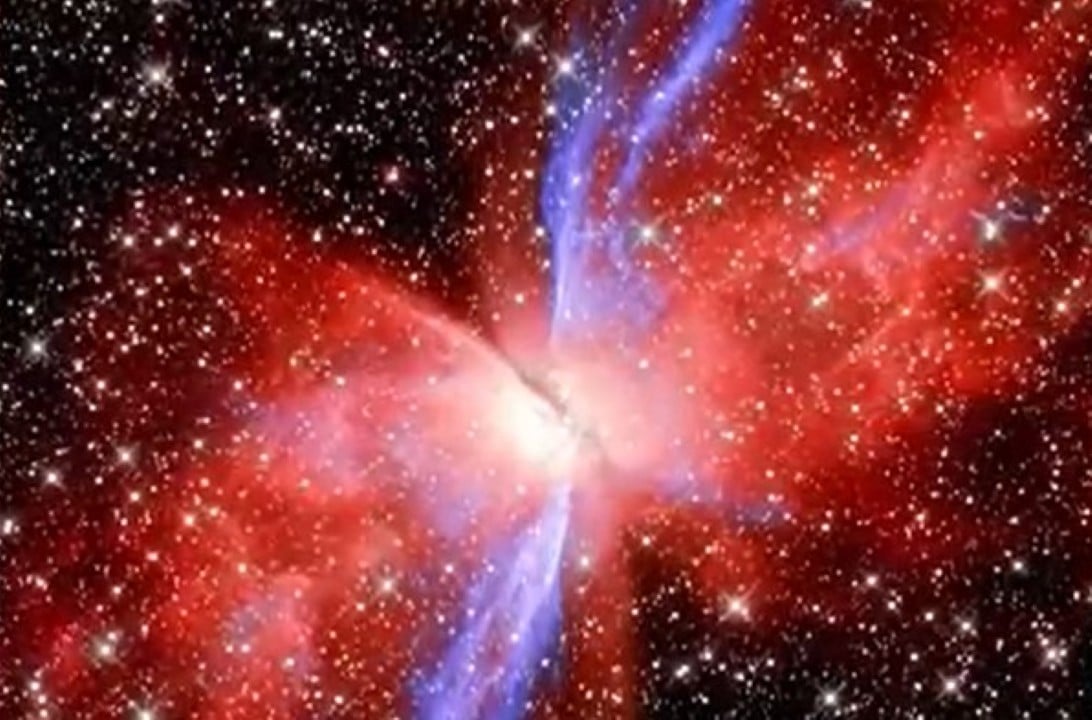
The concept of RELHIC explained
RELHICs represent hydrogen clouds bound by cosmic reionization. During the first billion years of the universe, ultraviolet radiation ionized much of the neutral hydrogen. Nuvens with mass below a critical threshold were unable to retain enough gas to form stars.
Cloud-9 exemplifies this theoretical threshold predicted by cosmological models. Sua mass of gas remains below that required for spontaneous stellar collapse. The dominant presence of dark matter compensates for gravity without triggering star formation. Esse balance makes the object a time capsule of the young universe.
Models simulate that many RELHICs existed in the remote past. Most were incorporated into larger galaxies or dispersed by gravitational interactions.
Importance for the study of dark matter
Dark matter makes up about 85% of the total mass of the universe, but remains undetectable directly. Objetos like Cloud-9 offer natural laboratories to investigate its properties. The mass distribution in the cloud halo allows testing models of candidate particles for dark matter.
Studies of Cloud-9 help refine large-scale structure simulations. The absence of stars eliminates visible light contamination in gravitational measurements. Pesquisadores plan additional observations to map the halo more accurately.
This finding reinforces the need for surveys at multiple wavelengths. Telescópios future ones may detect more similar objects in distant regions.
Context of the galaxy Messier 94
The galaxy Messier 94 features a prominent star ring and intense star formation activity at its center. Sua relative proximity facilitates detailed observations of peripheral structures. Cloud-9 is located outside the main disk, in a region of low density.
Gravitational interactions with M94 may have influenced the cloud’s evolution over time. The current distance suggests that the object remains gravitationally independent. Pesquisadores analyze whether past disturbances removed additional gas from the cloud.
The presence of similar clouds around nearby spiral galaxies indicates a larger population of RELHICs. Surveys systematics in neighboring galactic groups increase the chances of new detections.
Methodology for Hubble observations
The Hubble used broad optical filters to maximize sensitivity to faint starlight. Long Exposições captured regions equivalent to known ultra-faint dwarf galaxies. Spatial resolution allowed distinguishing individual background objects.



Comparisons with control fields confirmed the absence of stars in the position of Cloud-9. Radio Dados superimposed on the optical images highlighted the contrast between detected gas and stellar void.
Implications for galaxy formation
The formation of galaxies involves the collapse of primordial clouds dominated by dark matter. Most reach critical mass and form stars quickly. Cloud-9 demonstrates what happens when this process partially fails.
This object preserves conditions similar to those in the universe a few billion years ago. Análises future spectroscopic measurements measure primitive chemical composition of the gas. The expected low metallicity reinforces primordial origin.
Researchers estimate that surviving RELHICs are rare in the local universe. Sua detection validates predictions from hierarchical structural formation models.
Perspectives with future telescopes
The Telescópio James Webb performs complementary infrared observations on distant objects. Sua sensitivity detects weak emissions of ionized gas or dust. Aplicações to Cloud-9 reveal thermal details invisible to Hubble.
New generation radio surveys map neutral hydrogen in larger volumes. Combinações with optics identify candidates for cosmological-scale RELHICs. Esses efforts increase the known sample and test predicted distributions.
Large ground-based observatories contribute high-resolution spectroscopy. Medições internal velocities in the Cloud-9 constraining dynamics of the dark matter halo.
Technical details of the composition
The total mass of Cloud-9 is dominated by the dark matter halo, five times larger than the baryonic component. Neutral hydrogen is distributed in a diffuse structure with a diameter of thousands of light years. Central Densidade remains low by galactic standards.
Absence of heavy metals suggests minimal contamination from previous stellar generations. Essa chemical purity makes the object valuable for studies of primordial nucleosynthesis.
Comparison with other dark objects
Ultra-diffuse dwarf galaxies have low rates of star formation but contain ancient populations. Cloud-9 is distinguished by the total absence of stars at any stage. High-speed Nuvens occasionally detected lack massive dark matter halos.
This uniqueness positions Cloud-9 as a prototype of a new class. Previous Descobertas candidates have not achieved similar confirmation.
International contributions to research
Teams from NASA, ESA and academic institutions collaborated on the observations. Pesquisadores of Space Telescope Science Institute led the analysis of Hubble’s images. Contribuições Chinese and American radio stations provided an essential basis.
Publications in specialized journals detail methodology and results. Archived Dados remain available for independent study.
Cloud-9 continues to attract attention from the global astronomical community. Propostas of additional observational time indicates sustained interest.
Veja Tambem em News (EN)

Research reveals that parents are unaware of how their children use artificial intelligence

Samsung releases new system update with new features for Galaxy Watch 4 users

Digital retail reduces the value of the Galaxy S25 5G smartphone with bank bonuses and device exchange

Amazon’s wireless CarPlay adapter has a 50% discount and high approval ratings from drivers

Zach Cregger’s new Resident Evil ignores games and focuses on an unprecedented story with new characters

Rumor suggests that Nintendo is preparing a special edition of the Switch 2 with a remake of Ocarina of Time

Apple accelerates production of the iPhone 17e and develops new Air model with dual camera system

Epic Games platform releases twelve high-budget games at no permanent cost for PC users

PlayStation 5 Pro price drop accelerates digital retail sales and eliminates global stocks

New Galaxy Watch 9 firmware appears on server and confirms progress in software development

Apple’s commemorative project tests cell phone with 1.1 millimeter edge and curved screen for 2027
