

The Fundo of Garantia of Tempo of Serviço (FGTS) represents one of the main guarantees for workers with a formal employment contract in the country. Criado with the aim of protecting professionals dismissed without just cause, the fund functions as a compulsory savings account, the balance of which can be redeemed in specific situations provided for by law.
Despite being a consolidated right, many workers still have doubts about how it works, from the amount of the monthly deposit to the rules for earning the amounts and the conditions for making the withdrawal. The standards are managed by Caixa Econômica Federal, which acts as the FGTS operating agent.
Understanding the details about deposits, the ways to check the balance and the withdrawal methods available is essential for workers to plan their financial future and ensure access to this resource when necessary, whether for the purchase of a property, in the event of retirement or in times of difficulty.
How the deposit amount is calculated
Responsibility for depositing the worker’s FGTS account is the sole responsibility of the employer. The amount corresponds to 8% of the gross salary paid monthly, including additional payments such as overtime, 13th salary and advance notice. It is crucial to highlight that this amount cannot be deducted from the employee’s pay, as it is an obligation of the company. Para apprenticeship contracts, the percentage is reduced to 2%, while for domestic workers, the rate is 11.2%, with 8% being a monthly deposit and 3.2% being an advance termination payment. With the implementation of the FGTS system
Monitoring and inspection of deposits
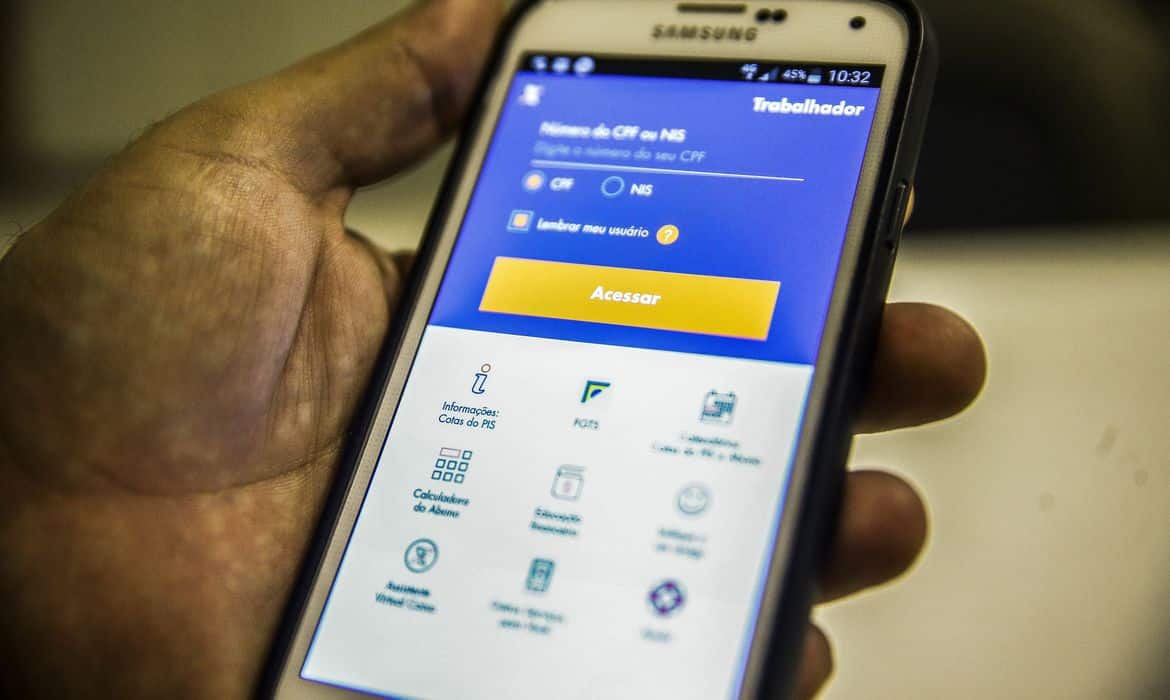
To ensure that the employer is fulfilling its obligations, the worker has several tools to monitor deposits into their linked account. The most practical and recommended way is through the FGTS application, available for smartphones, where you can consult the detailed statement, check monthly deposits and even request a withdrawal in some ways.
Other options include receiving alerts via SMS, a service that can be registered on the app itself or at an Caixa branch, and the printed statement sent to the worker’s home address. Caso the absence of deposits is identified, the first step is to contact the company’s Recursos Humanos sector for clarification. If the problem persists, the worker must seek a Superintendência Regional from Trabalho to formalize a complaint, thus guaranteeing their rights.
Income and profit distribution
FGTS accounts have a return guaranteed by law, which corresponds to 3% per year plus the variation of Taxa Referencial (TR). Essa correction is applied monthly to the existing balance, always on the 10th.
In addition to this fixed income, workers also participate in the financial results obtained by the fund. Anualmente, Conselho Curador of the FGTS defines a percentage of the net profit from the previous year to be distributed among all active and inactive accounts, proportionally to the balance existing on December 31st of the base year. Esse additional credit increases the fund’s profitability, making it more advantageous for the worker.
Main FGTS withdrawal methods
The best-known situation that allows the full redemption of the FGTS balance is unfair dismissal. Nessa circumstance, the worker has the right to withdraw the entire amount deposited by the company during the employment contract, plus a 40% termination fine paid by the employer.
The end of a fixed-term contract, such as trial or temporary contracts, also gives the worker the right to withdraw the total amount deposited in their escrow account during the term of the contract.
Retirement, whether due to contribution time, age or disability, is another condition that authorizes the full withdrawal of the FGTS balance. Mesmo as long as the retiree continues working, he will be able to withdraw the new deposits monthly.
Acquiring your own home is one of the fund’s most important social purposes. The worker can use the FGTS balance to start a mortgage, pay off the outstanding balance or pay part of the installments, following the rules of Sistema Financeiro of Habitação (SFH).
Other situations that authorize redemption
Workers or their dependents diagnosed with serious illnesses, such as cancer or HIV, have the right to withdraw the full amount of their FGTS balance. The list of diseases provided for by law is specific and requires the presentation of medical reports for proof.
In cases of natural disasters, such as floods or landslides, which lead the municipal authority to declare a state of public calamity, residents of the affected areas may be authorized to carry out the Saque-Calamity, with a value limit defined by the government.
Workers who remain outside the FGTS regime for three uninterrupted years, that is, without a formal employment contract, can request the withdrawal of the balance from their accounts from the month of their birthday. The same goes for accounts that have no deposits for three consecutive years.
Birthday withdrawal as an alternative
The Saque-Birthday is an optional modality that allows workers to withdraw part of the balance from their FGTS account annually, in the month of their birthday. Membership is voluntary and must be done through the FGTS application. However, when opting for this modality, the worker gives up the right to withdraw the total balance of the account in the event of unfair dismissal, retaining only the right to a 40% fine.
Documentation required for withdrawal
The documents required to request the FGTS withdrawal vary depending on the modality. In general, an identification document with a photo (RG or CNH), the PIS/PASEP number and the Carteira of Trabalho and Previdência Social (CTPS), whether physical or digital, are always required.
Para specific cases, such as dismissal, it is necessary to present Termo of Rescisão of Contrato of Trabalho (TRCT). For the purchase of property or in situations of illness, other supporting documents will be requested. Atualmente, many withdrawal processes can be initiated directly through the FGTS application, simplifying the sending of documentation and receiving the amounts into a preferred bank account.