
Avi Loeb predicts the trajectory of the interstellar object 3I/ATLAS to pass close to Jupiter in March 2026

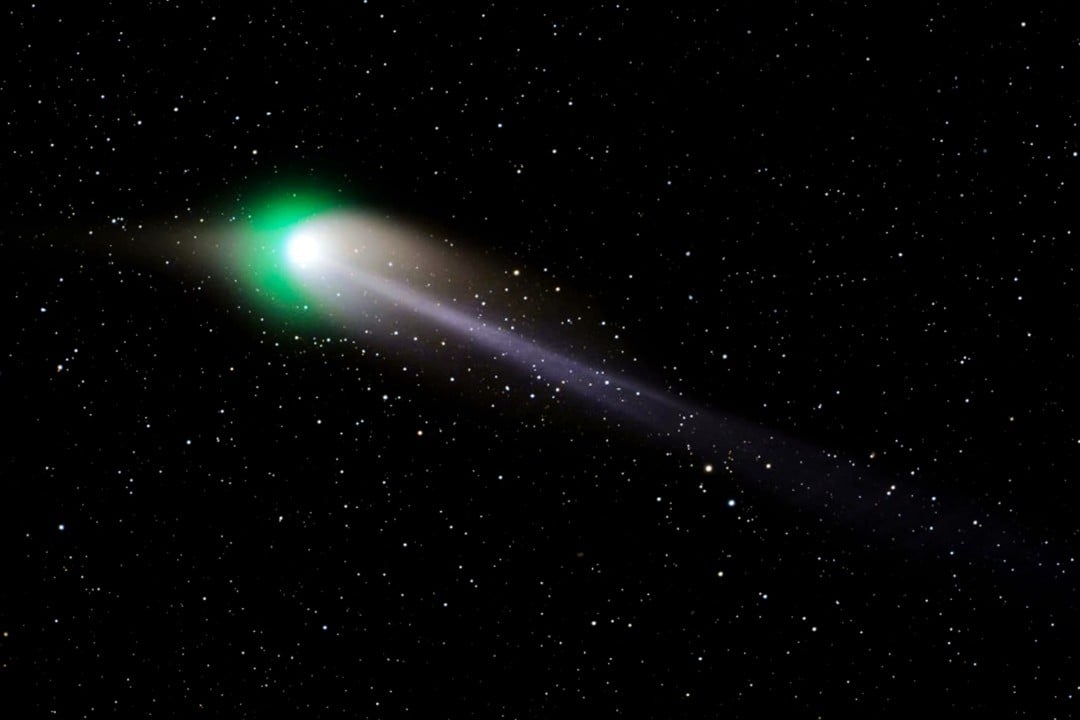
The Universidade Harvard Avi Loeb astrophysicist has released detailed calculations about the future trajectory of the interstellar object 3I/ATLAS. According to projections, the celestial body will pass close to Júpiter in March 2026, with specific distances in relation to the planet and one of its irregular moons.
The object, identified as the third confirmed visitor from outside Sistema Solar, was discovered in July 2025 by the ATLAS telescope system. Sua high speed and hyperbolic trajectory confirm the interstellar origin.
Calculations indicate that 3I/ATLAS will reach the shortest distance of Júpiter on March 16, 2026, at approximately 53.61 million kilometers. The following day, March 17, the object will pass 30.46 million kilometers from the moon Eufeme.
These approaches represent valuable opportunities for additional astronomical observations.
Discovery and confirmation of 3I/ATLAS
The ATLAS system, funded by NASA and operated on Chile, detected the object on July 1, 2025. Initial Observações revealed a speed of 57.7 kilometers per second in relation to Sol, a value higher than those recorded for other known interstellar objects.
Astronomers classified 3I/ATLAS as a comet due to the presence of a coma and tail observed in subsequent images. The 3I designation reflects its position as the third confirmed interstellar object, following 1I/’Oumuamua in 2017 and 2I/Borisov in 2019.
- High interstellar speed
- Sharp hyperbolic trajectory
- Composition with hints of ice and dust
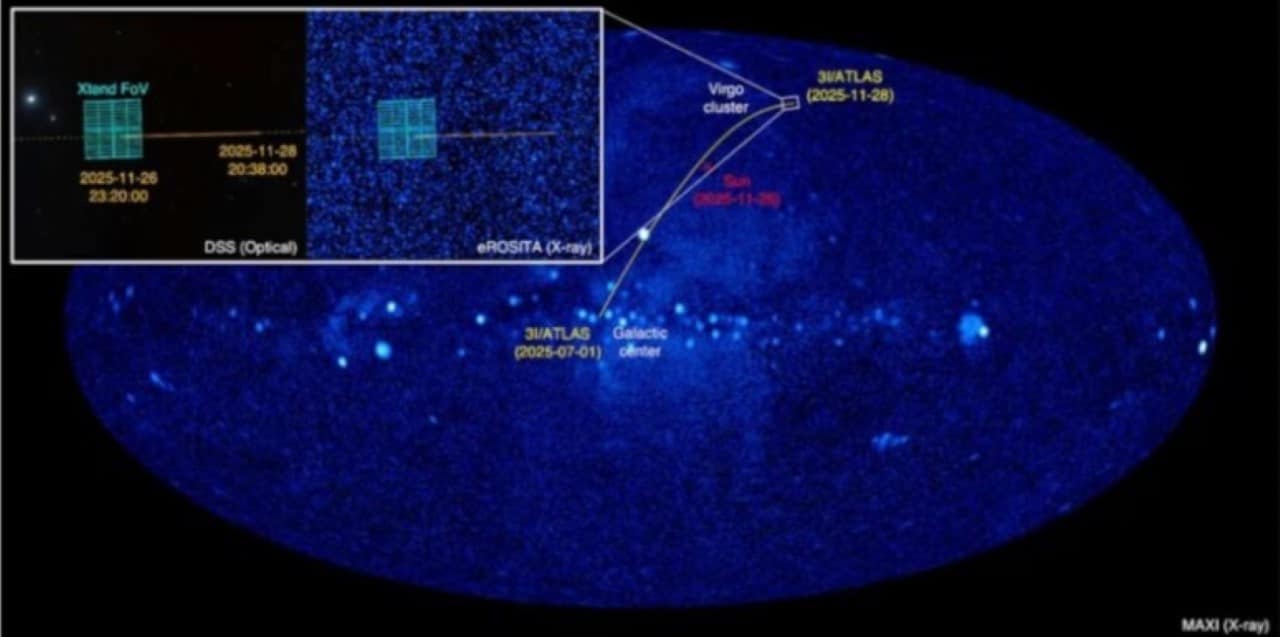
Telescopes like Subaru and NASA instruments have carried out continuous monitoring since the discovery. The object approached Terra in December 2025, allowing detailed data to be collected on its composition.
Observed characteristics of the object
3I/ATLAS has larger-than-usual particles in its tail, according to recent image analyses. Essas particles exceed the typical size of dust that scatters sunlight, which has prompted additional studies into their nature.
Ultraviolet observations carried out by instruments such as the Europa Clipper mission recorded unique data during the passage. Pesquisas detected no radio signals or other emissions that suggested artificial origin.
Scientists confirm that the object’s behavior is explained by natural processes common in comets. The absence of significant surprises reinforces the classification as a celestial body of natural interstellar origin.
Controversies about possible artificial origin
Avi
Other astronomers have refuted anomaly interpretations, offering explanations based on standard cometary models. Estudos independent studies demonstrated that the observed characteristics fit within known natural variations.
Projects such as Breakthrough Listen carried out searches for technosignals during the closest approach to Terra. The results did not identify artificial emissions, in line with the majority view of natural origin.
Current trajectory and future projections
3I/ATLAS follows a hyperbolic trajectory that will take it outside Sistema Solar after interacting gravitationally with larger bodies. The passage through Júpiter in March 2026 represents the next significant point of approach.
Cálculos de Loeb consideram efeitos gravitacionais de longo prazo, incluindo influência da nuvem de Oort em escalas de milhares de anos. In the short term, the predicted distances allow safe observations without the risk of collision.
The approach to the moon Eufeme offers a rare chance to study interactions with irregular satellites of Júpiter. Telescópios terrestrial and space agencies plan coordinated campaigns for the period.
Observations planned for 2026
Space agencies prepare intensive monitoring during the passage through Júpiter. Instrumentos like James Webb and Hubble are expected to capture high-resolution images of the object interacting with the Jovian environment.
The minimum distance to the giant planet facilitates detailed spectroscopic analyses. Pesquisadores expect additional data on chemical composition and release of materials.
- NASA campaigns with multiple telescopes
- Participation of international observatories
- Analysis of possible changes in the tail
These observations contribute to the understanding of interstellar objects in general. The data collected will help refine dynamics models in the external Sistema Solar.
Scientific importance of interstellar objects
The arrival of visitors like 3I/ATLAS expands knowledge about the formation of distant planetary systems. Cada object provides direct samples of materials from other stars, without the need for long missions.
Comparisons between the three known objects reveal diversities in composition and behavior. The 3I/ATLAS stands out for its prolonged visibility and relative proximity.
Studies of these bodies drive advances in observational astronomy and computational modeling. The increasing frequency of detections suggests that more objects will be identified in the coming decades.
The continuous monitoring of 3I/ATLAS until its definitive departure from Sistema Solar closes an important cycle of observations. The results consolidate protocols for future interstellar visitors.
Context of Avi Loeb’s research
Avi Loeb maintains regular production of analyzes on interstellar objects on academic platforms. Suas projections for 3I/ATLAS are based on public orbital data and gravity simulations.
The astrophysicist emphasizes the need for open approaches in frontier science. Specific predictions for March 2026 are derived from precise ephemeris calculations.
Recent publications address rare alignments and long-term interactions. Esses works complement collective efforts of the international astronomical community.



