
Kia presents K4 Sportswagon with larger trunk and hybrid options in Europe

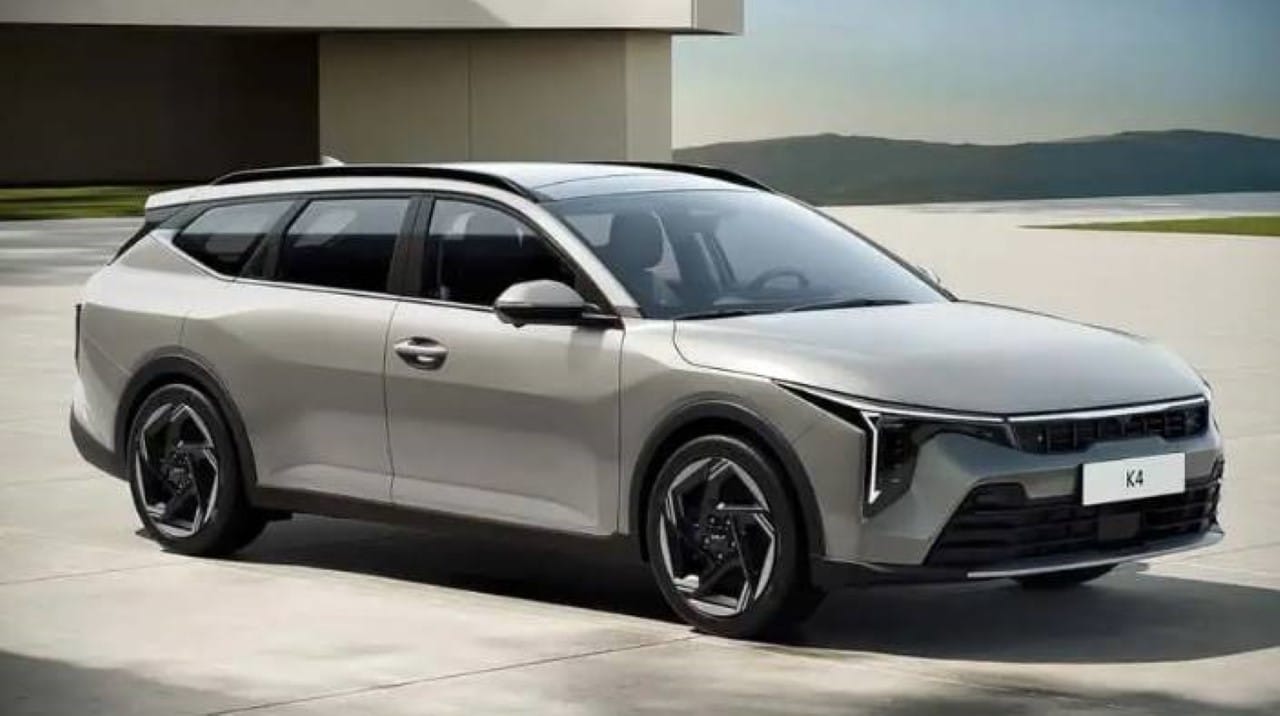
Kia revealed the station wagon version of the K4 model, called Sportswagon, aimed exclusively at the European market. The vehicle offers an increased cargo capacity of 604 liters in the trunk and adopts the Opposites United design philosophy, with horizontal lines that emphasize width and stability.
The model succeeds the Cee’d SW line and will be produced at the brand’s factory in Pesquería, in México, the same unit responsible for the hatch and sedan versions. The station wagon maintains a wheelbase of 2.72 meters and measures 4.695 meters in length, providing generous internal space for passengers and luggage.
In the Brasil, the hatch and sedan bodies of the K4 are confirmed to arrive in 2026, but the station wagon variant is not part of the brand’s plans, which prioritizes SUVs in the local market.
External design highlights minimalist lines
The front of the K4 Sportswagon reproduces the look of the hatch and sedan versions, with vertical headlights and a wide grille that reinforce its presence in the medium segment. The sides receive rear handles integrated into the columns, a solution that improves the visual flow of the elongated body.
At the rear, connected horizontal taillights extend the feeling of width, while functional roof rails appear as standard. The GT-Line version includes exclusive bumpers and black finishes on the wheel arches, giving the package a sportier look.
Interior shares advanced technologies
The station wagon’s dashboard maintains the layout of the other K4 bodies, with a panoramic display made up of two 12.3-inch screens for instruments and multimedia. A third 5.3-inch touch screen controls the air conditioning, facilitating daily use.
Interior materials vary depending on the version, with premium finishing options in the GT-Line configuration. Rear seat legroom benefits from the generous wheelbase, while the expandable trunk offers practicality for families and long trips.
Engine options meet different demands
Kia has prepared a diverse range of propellants for the K4 Sportswagon. Top alternatives include:
- 115 hp 1.0 T-GDI engine, available with or without 48 volt Mild-Hybrid system
- Six-speed manual or seven-speed dual-clutch automated transmission
- 1.6 T-GDI version with power of 150 hp or 180 hp, always with double clutch transmission
- Conventional hybrid option based on 1.6, scheduled for late 2026
All configurations prioritize energy efficiency and meet strict European environmental standards. Traction remains front-facing across the board.
Trunk increases family practicality
The cargo compartment reaches 604 liters in standard configuration, higher than the 512 liters of the old Cee’d SW. With the rear seats folded down, the volume increases significantly and accommodates larger objects.
The rear lid has an automatic opening option, speeding up loading. The flat floor and tie-down hooks make it easy to organize luggage on long trips. Esses features position the Sportswagon as a rational alternative to SUVs in the segment.
GT-Line version adds sporty elements
The top-of-the-line configuration receives exclusive visual details on the exterior and interior. Redesigned bumpers and larger alloy wheels reinforce the dynamic appearance.
In the cabin, the sports seats and different finishes create a more refined atmosphere. The GT-Line maintains the same mechanical options as the other versions, balancing performance and daily comfort.
Mexican production supplies the European market
The Pesquería factory, in the state of Nuevo León, is responsible for assembling the entire K4 family, including the station wagon variant. The Mexican unit already produces hatch and sedan models that are exported to several countries.
The choice for the plant reflects Kia’s global strategy to optimize costs and logistics. The Sportswagon arrives at European dealerships throughout 2026, with a specific calendar to be detailed by the brand.
Competition in the European station wagon segment
The model faces consolidated rivals such as Volkswagen Golf Variant and Opel Astra Sports Tourer. The Kia proposal combines contemporary design with competitive internal space and efficient hybrid options.
Other competitors include the Peugeot 308 SW and Toyota Corolla Touring Sports, which also rely on electrified engines. The K4 Sportswagon stands out for its load capacity and the cost-benefit ratio characteristic of the Korean brand.
The station wagon reinforces the presence of the Kia in the family vehicle segment in the Europa, where the format still resists the dominance of SUVs. The combination of practicality, onboard technology and varied mechanical options serves different consumer profiles on the continent.
The launch demonstrates the brand’s commitment to alternative bodies in markets that value versatility. The absence of the variant in the Brasil reflects the local preference for SUVs and crossovers.



