
BYD campaign in Italy offers up to 10 thousand euros to replace engines with chronic failures


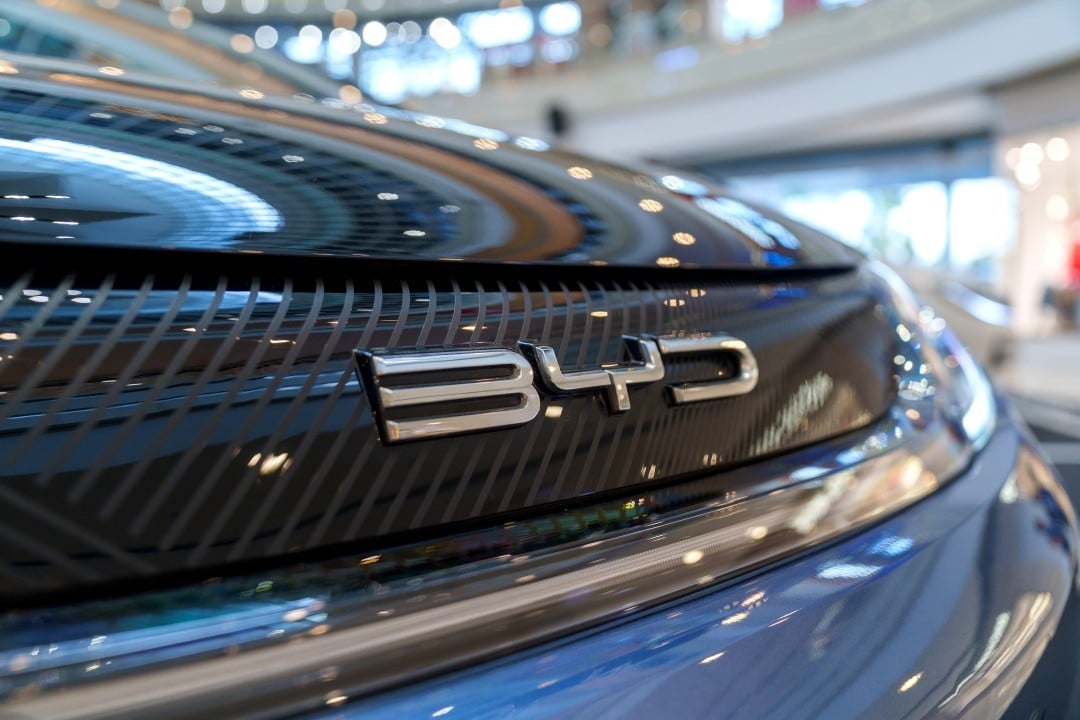
Chinese manufacturer BYD has launched an aggressive campaign in the Italian market, targeting owners of vehicles equipped with engines that use an oil-bathed timing belt, a technology known to present chronic problems. The initiative, called ‘Operation Purefication’, offers significant discounts to encourage the exchange for an electrified model of the brand, be it a plug-in hybrid or fully electric.
The promotion is valid for contracts signed until January 31, 2026 and covers both individuals and individual companies. BYD’s strategy seeks not only to expand its market share in the Europa, but also to capitalize on the dissatisfaction of consumers affected by recurring mechanical failures in engines from other automakers, such as those from the former PSA (currently Stellantis), Ford and Volkswagen.
To be eligible for the benefit, the customer must deliver as part of the payment a vehicle whose technical documentation proves the use of the oil-bathed belt system. The offer is not cumulative with other government or regional incentives, the discount is applied directly to the purchase price of the new BYD vehicle, simplifying the process for the consumer.
‘Operation Purefication’ campaign details
The ‘Operation Purefication’ discount structure was designed to cover the entire range of BYD electrified vehicles available at Itália, with values varying depending on the model chosen. The biggest discount, of 10,000 euros, is granted on the purchase of the top-of-the-line SUV Seal U DM-i, a plug-in hybrid model with great autonomy. Para or SUV Sealion 7, the discount offered is 7,700 euros, a very competitive value for the segment. Já for entry-level and intermediate models, such as the compact electric Dolphin, the SUV Atto 2 and the sedan Seal, the price reduction is 6,200 euros. The campaign uses the slogan “La tua cinghia dà i numeri?” (Is your belt giving you problems?, in free translation), a direct provocation that highlights the opportunity to migrate to technologies considered more reliable and sustainable. Checking the type of engine of the vehicle used is carried out by the dealership at the time of negotiation, using the car’s official documentation to confirm the presence of the oil-bathed belt.
The technical problem of oil-bathed belt engines
Wet belt technology has been adopted by several automakers as a solution to reduce internal engine friction, reduce noise and, consequently, improve fuel efficiency and reduce CO2 emissions. As it is quieter and more economical to produce compared to metal chains, it has become especially popular in small displacement engines, such as three-cylinder engines.
However, the constant contact of the rubber belt with engine oil and the heat generated during operation can lead to premature degradation. Over time, small particles of rubber break off the belt and contaminate the oil. Esses residue can clog the oil pump fisherman, compromising the lubrication of vital engine components, such as the crankshaft, connecting rods and valvetrain, resulting in serious failures and extremely expensive repairs.
Main affected engines and models
Several engines widely used in the European automotive industry in recent years are equipped with oil-bathed belt technology, making a large number of vehicles eligible for BYD’s promotion. The most notorious cases involve powertrains from high-volume manufacturers, which equip popular models across the continent.
One of the best-known examples is the 1.2 PureTech engine, developed by the former PSA group and used in a wide range of vehicles from the brands Peugeot (such as the 208 and 2008), Citroën (C3 and C4 Cactus) and Opel (Corsa and Outro engine affected is the 1.0 EcoBoost from Ford, present in models such as Fiesta, Focus and EcoSport, especially in versions manufactured from 2012 onwards.
The Grupo Volkswagen also used the technology in its 1.0 TSI and 1.4 TSI engines, which power cars such as the Golf, Polo, T-Cross and Tiguan, as well as models from brands such as the Audi, SEAT and The Honda has also applied a similar system to its 1.0 VTEC Turbo engine, found in the tenth generation Civic, which further expands the scope of owners who can benefit from BYD’s campaign.
Advantages of BYD hybrid and electric technology
By encouraging the replacement of vehicles with problematic combustion engines, BYD highlights the benefits of its own technology. The brand’s models, whether plug-in hybrids with the Super DM-i system or 100% electric, completely eliminate the worry about components such as the timing belt. The Super DM-i technology prioritizes the use of the electric motor most of the time, with the combustion engine acting mainly as a power generator, which results in high efficiency and low fuel consumption. Essa approach not only provides a smoother, quieter ride, but also significantly reduces long-term maintenance costs as there are fewer wear parts associated with the traditional combustion engine.
BYD models eligible for the discount
The range of BYD vehicles offered in the campaign is diverse, catering to different consumer profiles. Para urban use, the Dolphin stands out as an agile and efficient compact electric hatch, ideal for traffic in Italian cities. The Atto 2, a compact SUV, offers versatility in both the electric and plug-in hybrid versions, combining good internal space with contained dimensions, making parking and daily driving easier.
For those looking for more performance and sophistication, the Seal electric sedan features a sporty design and high-level performance. The Sealion 7, a coupe-style SUV, is positioned in the premium segment, offering high power and onboard technology. Finally, the Seal U DM-i is the ideal option for families, being a spacious SUV with hybrid technology that provides a combined range of over 1,000 kilometers, eliminating range anxiety and offering great practicality for long trips.
Conditions for participating in the promotion
To ensure the transparency of the process, BYD established clear criteria for participation in the campaign. The main condition is proof that the vehicle delivered for exchange has a gasoline engine with an oil-bathed primary timing belt. Essa validation is carried out by the dealership team when evaluating the used vehicle.
The offer is designed to be a direct appeal to owners who have faced or fear facing the high repair costs associated with this engine technology. The initiative aims to accelerate the renewal of the circulating fleet in Itália, which is one of the oldest in Europa, contributing to reducing the average age of vehicles on the streets.
One of the campaign’s biggest differences is the immediate application of the discount at the time of purchase, without the need to wait for bureaucratic public incentive processes. Isso makes the transition to an electrified vehicle faster and more hassle-free for the consumer.
With this strategic action, BYD reinforces its commitment to electric mobility and positions itself as a viable and reliable alternative, offering a solution to a concrete problem faced by thousands of drivers, while boosting its sales in the competitive European market.



