
Nissan bets on the seven-seater Gravite minivan to expand its presence in the Indian market


Nissan has made its expansion plans in the Indian automotive market official with the confirmation of its new seven-seater minivan, named Gravite. The model, which shares its platform with the Renault Triber, represents a strategic step for the Japanese automaker, which seeks to diversify its portfolio and strengthen its presence in one of the most competitive markets in the world. Production will be concentrated at the Renault-Nissan alliance factory in Chennai, with sales expected to begin in the first half of 2026.
The launch of the Gravite is part of an ambitious growth strategy that sees the introduction of three new vehicles by early 2027. The vehicle was designed to attract families who need space, practicality and an affordable purchase cost, positioning itself as a robust and modern alternative in the compact minivan segment.
Differentiation in relation to its “brother” platform, the Renault Triber, will be one of the pillars for the success of the Gravite. Nissan bets on an exclusive design and a clear market positioning to conquer its own space. The company’s expectation is that the combination of design, functionality and a competitive pricing strategy will be crucial to challenge established competitors and solidify the brand as a relevant option for Indian consumers.
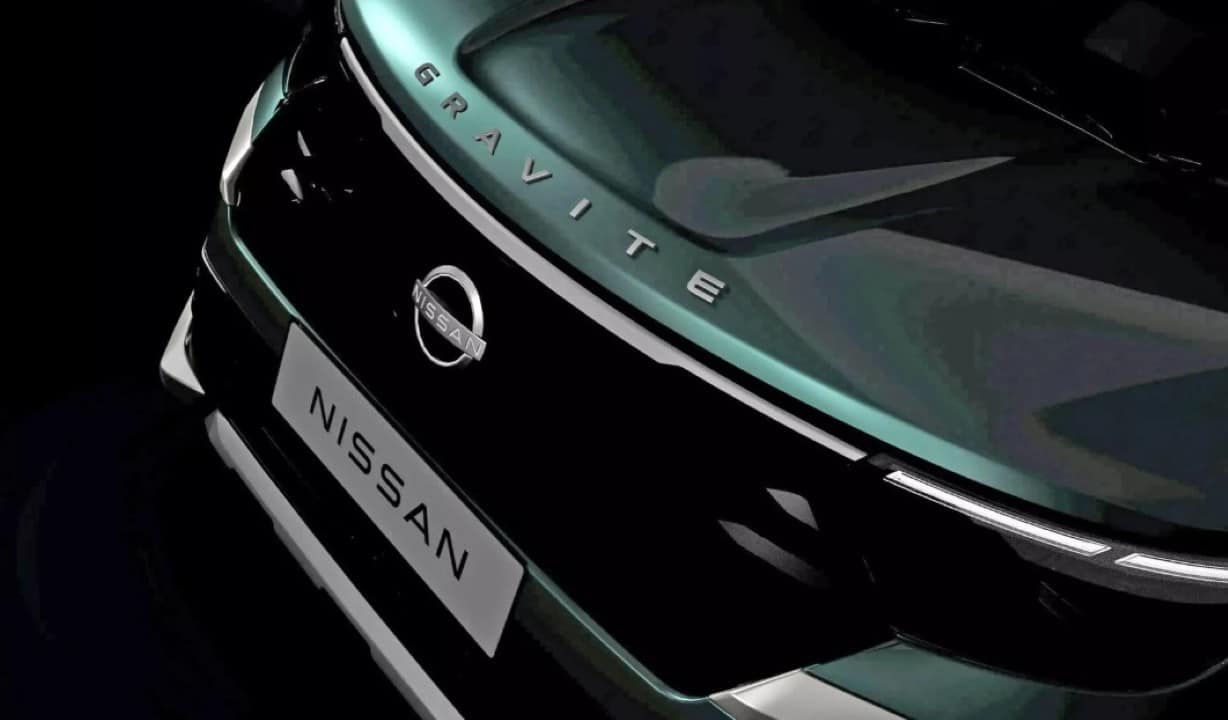
Design with its own identity and robustness
To distance Gravite from Renault Triber, Nissan invested heavily in a strong and exclusive visual identity. The front of the vehicle is marked by a prominent grille finished in glossy black, which houses the brand’s new logo in a central position. The headlights have been redesigned with LED technology and are complemented by “C”-shaped daytime running lights (DRLs) integrated into the bumper, giving an aggressive and contemporary appearance. Essa visual approach follows the global design language of the Nissan, already seen in successful models such as the Magnite, seeking to attract consumers who value aesthetics and differentiation.
On the sides, the Gravite maintains the proportions that guarantee tax benefits in the Índia for vehicles less than four meters in length, but adds unique elements to reinforce its adventurous character. Isso includes uniquely designed alloy wheels, wheel arch moldings and a functional roof rack. The rear received special attention, with “J”-shaped LED taillights that are connected by a chrome bar, where the name “Gravite” is prominently displayed. The objective is to create a striking visual signature that consolidates the model’s identity and strengthens the perception of value of the Nissan brand.
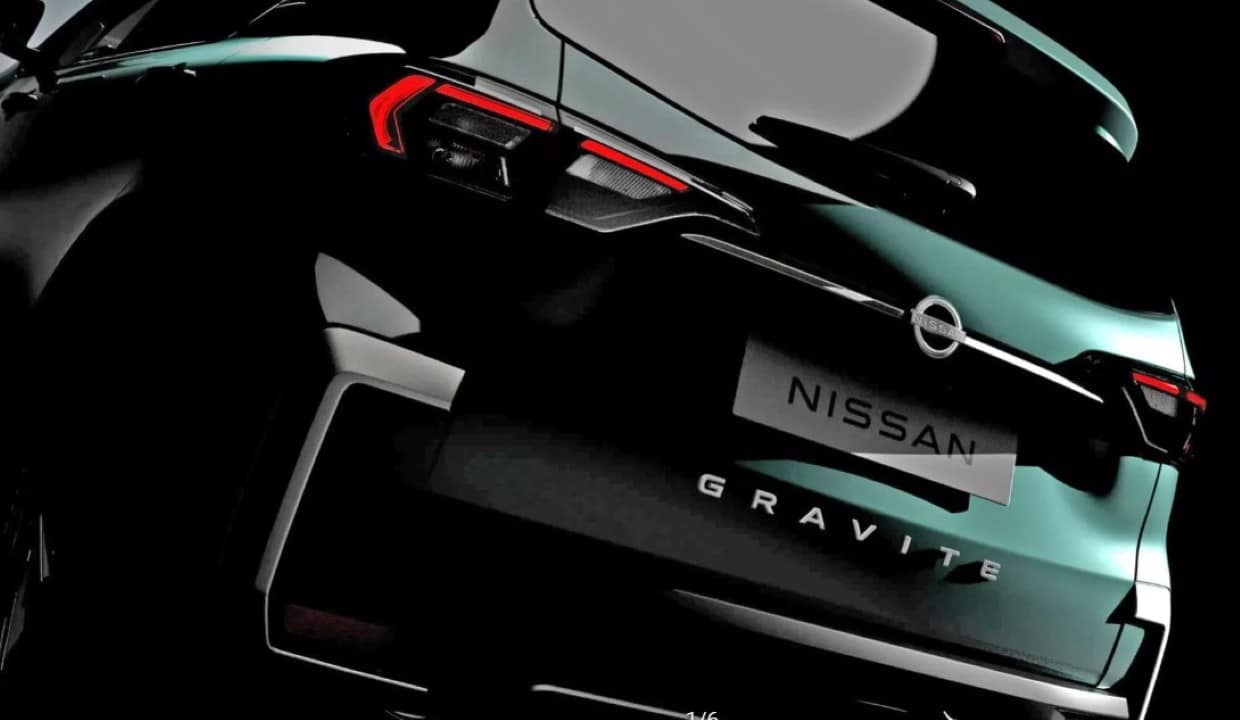
Interior focused on versatility and space
The main attraction of the Nissan Gravite lies in its interior, designed with maximum focus on modularity and space utilization. The three-row seating configuration allows up to seven passengers to be comfortably accommodated, an important differentiator for Indian families. Nissan confirmed the implementation of the “Ultramodular” seating system, which allows the third row to be completely removed.
This flexibility transforms the minivan into a five-seater vehicle with a trunk of exceptional volume, surpassing many direct and indirect competitors. The solution is ideal for those who alternate between transporting passengers and the need to carry large volumes, such as luggage for long trips or everyday equipment.
The comfort of occupants in all rows was prioritized, with the inclusion of dedicated air conditioning outlets for rear passengers, ensuring efficient air conditioning throughout the cabin. Espera The panel follows the basic structure of the Triber, but with finishes, textures and color combinations exclusive to the Nissan, creating a distinct and pleasant environment.
Motorization and performance for urban use
Under the hood, the Nissan Gravite will be equipped with a 1.0-liter three-cylinder, naturally aspirated gasoline engine. Esta power unit is capable of generating 72 horsepower and 96 Nm of torque, figures that have been carefully calibrated to offer a balance between satisfactory performance for urban traffic and high fuel efficiency. The Nissan’s priority with this powertrain is to ensure low maintenance costs and reduced fuel consumption, decisive factors for buyers in this segment of the Indian market. The engine has been tuned to deliver agility at low speeds and adequate responses in intense traffic situations, making the Gravite a practical vehicle for daily use in large cities. The CMF-A+ platform, on which the vehicle is built, has been reinforced to withstand the challenging conditions of Indian roads, providing robustness and reliability. Para cater to different consumer profiles, the Gravite will be available with two transmission options: a five-speed manual transmission, for those who prefer greater control over the vehicle, and an automated manual transmission (AMT), which offers the convenience of an automatic transmission at a more affordable price.
The strategy behind the new launch
The launch of the Gravite is the first stage of a carefully planned product offensive by Nissan to revitalize its presence in the Índia. Atualmente, the brand depends almost exclusively on the success of the Magnite compact SUV, and the introduction of new models is vital to diversify revenue sources and expand the customer base.
The strategic plan of the Renault-Nissan alliance foresees a significant investment in the development and production of new vehicles in the region. The arrival of the minivan will be followed by a mid-size SUV, based on the new generation of the Renault Duster, scheduled for launch in mid-2026.
Later, in 2027, a larger and more sophisticated SUV will complete the trio of launches, positioning the Nissan in segments with higher added value. Essa expansion of the portfolio aims to compete more effectively in multiple market categories.
The strategy also includes strengthening the network of dealerships and service centers across the country. The objective is to improve the customer experience, from purchase to after-sales, ensuring that sales growth is supported by a robust and reliable support infrastructure, increasing the perception of quality and trust in the brand.
Renault-Nissan alliance synergy in action
The use of the CMF-A+ platform is a clear example of the strategic synergy of the Renault-Nissan alliance. The sharing of mechanical and structural components allows a significant reduction in development and production costs, enabling the Nissan Gravite to be offered at a highly competitive final price, a crucial factor for success in the Indian market. Essa shared platform approach optimizes the supply chain and accelerates time to market for new products.
Although the basis is common, Nissan has strived to ensure that Gravite has a unique identity. The differentiation is not limited to the exterior and interior design, but also extends to the calibration of the suspension and steering, seeking to offer a driving experience slightly different from that of the Renault Triber. Essa strategy allows both brands to operate in the same segment without cannibalizing each other’s sales, attracting different customer profiles with products that, despite technical similarities, have their own personalities.
Details about market launch
The official presentation of the Nissan Gravite, with the full disclosure of all its versions, list of equipment and prices, is scheduled for the beginning of 2026. The launch event will generate great expectations in the market, detailing how the model will differentiate itself from its competitors and what its main selling points will be. Arrival at dealerships should occur soon after, with sales starting in the first half of the same year, taking advantage of the boom in the Indian automotive sector.



