
Passage of giant stars millions of years ago left detectable traces in the vicinity of the current Sun

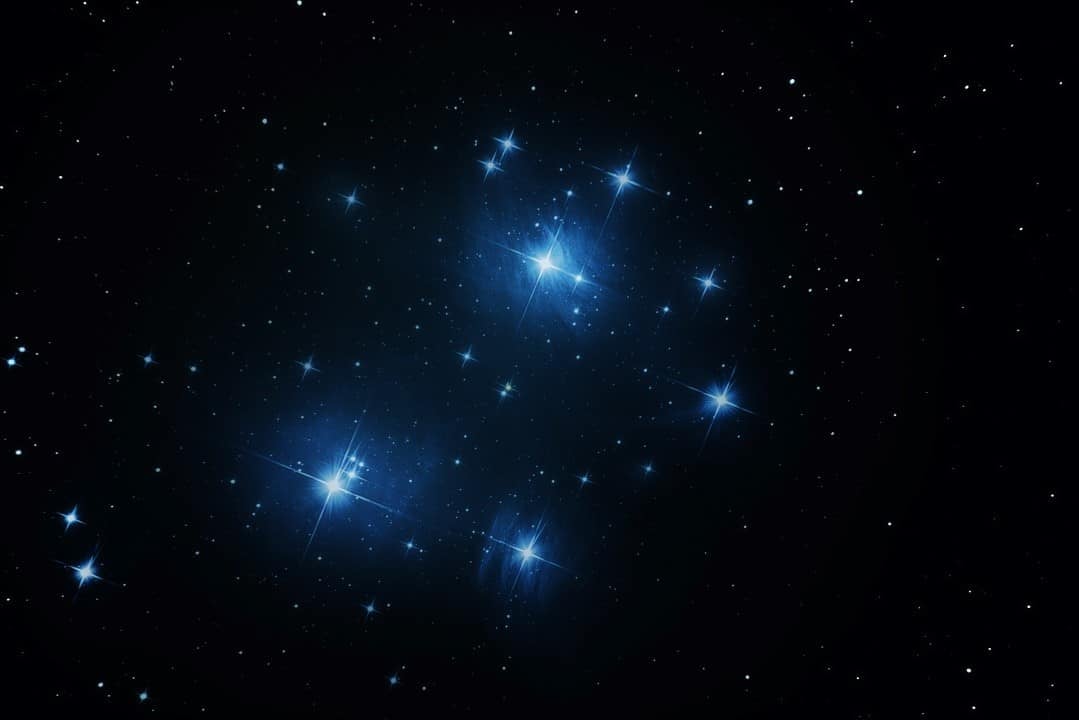
A recent study identified that two massive stars passed within a relatively short distance of Sistema Solar approximately 4.4 million years ago. Essas stars, known as Epsilon Canis Majoris and Beta Canis Majoris, approached to within about 30 to 35 light years of Sol. The passage generated intense ultraviolet radiation that affected the composition of the local interstellar cloud.
The researchers analyzed data from stellar trajectories and ionization models to reach this conclusion. Radiation emitted by stars removed electrons from hydrogen and helium atoms present in the nearby interstellar medium. Esse process left chemical marks that remain observable to this day.
The local interstellar cloud, or LIC, is a region of rarefied gas that surrounds Sistema Solar. Ela has a low density, which allows changes like this ionization to persist for millions of years without rapid dissipation.
Stellar pass details
Epsilon Canis Majoris, also called Adhara, is a star of spectral type B2 II, with high brightness and high surface temperature. Beta Canis Majoris, or Mirzam, is classified as an A0 Ia supergiant, emitting large amounts of ultraviolet radiation. Ambas belong to the constellation of Cão Maior and are currently about 400 light years away.

The minimum distance of 30 to 35 light years represents a close encounter on galactic scales. Although Embora did not pose a direct risk to the inner planets, the proximity allowed radiation to influence the environment around the heliosphere. Modelos computational reconstructed the trajectories based on modern observations.
- Calculated trajectory indicated high relative speed of the stars.
- Extreme ultraviolet radiation ionized a large volume of neutral gas.
- Event occurred during period Plioceno on Terra.
Composition of the local interstellar cloud
The local interstellar cloud consists mainly of partially neutral hydrogen and helium. Ela measures about 30 light years in length and Sistema Solar has been traversing this structure for thousands of years. The low density explains the prolonged preservation of chemical changes.
The ionization caused by stars transformed part of the neutral hydrogen into ionized hydrogen. Esse state persists because electron recombination occurs slowly in low-density environments. Current Observações detect these differences compared to unaffected regions.
Research uses spectroscopy to map the distribution of ionized gases. Dados of space missions confirm variations at the edge of the heliosphere compatible with the ancient event. The LIC is part of a larger complex of clouds in the local bubble.
Evidence from the published study
The work was based on catalogs of precise stellar positions and movements. Simulações numerical images reproduced the propagation of radiation through the interstellar medium. The results indicate that the observed ionization corresponds exactly to the period of the passage.
The stars moved in the opposite direction to the Sol in the galaxy. Essa configuration increased the relative effect of radiation on local gas. The study highlights the rarity of such close encounters with massive ultraviolet-emitting stars.
- Models considered the mass and luminosity of the stars involved.
- Comparisons with other clouds showed clear differences in ionization.
- Estimated period varies between 4.3 and 4.5 million years.
- Publication took place in a specialized astrophysics magazine.
Characteristics of the stars involved
Adhara has a mass several times greater than that of Sol and a luminosity thousands of times greater. Sua surface reaches temperatures that favor intense emission of ultraviolet radiation. Mirzam follows a similar pattern, with an advanced evolutionary stage as a supergiant.
These stars evolve quickly due to their high mass. Elas consume nuclear fuel at an accelerated rate and end their lives in supernova explosions. At the time of the passage, both were already emitting radiation capable of ionizing large volumes of gas.
Currently visible to the naked eye in the southern hemisphere, they form part of the constellation Cão Maior. Sua current distance prevents significant influence on Sistema Solar. The past encounter represents an example of common galactic dynamics on long scales.
Implications for the cosmic environment
The heliosphere protects the planets from galactic cosmic particles. Eventos how this passage can temporarily modulate the penetration of cosmic rays. In this specific case, the effect was concentrated on ionization external to the heliospause bubble.
The local bubble, created by ancient supernovae, contains several clouds including the LIC. Sistema Solar has been moving through this structure for millions of years. Encontros stellar elements contribute to variations in the density and composition of the medium passed through.
Future studies may identify other similar events in the galactic record. Dados missions like Gaia continue to refine past stellar trajectories. Essas discoveries help understand the evolution of the cosmic neighborhood of Sol.
Galactic context of stellar movement
Stars in Via Láctea orbit the galactic center at different speeds. Essas differences generate relative encounters over time. The stellar density in the galactic disk makes close passes expected events on scales of millions of years.
Sol completes a galactic orbit approximately every 230 million years. Durante this period passes through regions with variations in star density. Encontros with massive stars occurs sporadically, but leaves detectable marks.
- Differential motion causes periodic approaches.
- Massive stars represent a small fraction of the total population.
- Similar events must have occurred in previous times.
- Future catalogs may reveal more historical cases.
Current observations of ionization
Instruments on satellites detect ultraviolet signature at the edge of the heliosphere. Essas measurements confirm the presence of ionized hydrogen beyond what was expected. The spatial distribution coincides with the direction of the stars’ passage.
Comparisons with neighboring clouds show clear contrast in the ionized fraction. Unaffected Regiões maintain a higher proportion of neutral gas. Essa difference serves as direct evidence of historical impact.
Researchers continue to monitor variations in LIC as Sistema Solar progresses. Future Mudanças may occur when entering new clouds. The 4.4-million-year-old event remains an important reference for models.



