
Rivalry between Ford and Cadillac in Formula 1 grows with exchange of accusations about technical partnerships

The preparation for the new era of Fórmula 1 gained a chapter of strong rivalry off the track. Ford publicly responded to recent statements by Cadillac executives, increasing tension between the two automotive giants of the Estados Unidos, who are preparing to enter the main category of world motorsport. The verbal clash was triggered by criticism that questioned the technical depth of the partnership signed between Ford and Red Bull Powertrains.
The allegations suggested that the agreement would be predominantly a marketing move, with little engineering input from the manufacturer of Detroit. In response, Ford not only vehemently denied such statements, but also took the opportunity to point out the inconsistencies in the operating model that will be adopted by its competitor, General Motors, in the initial seasons of its journey in the category.
This conflict highlights the intense dispute for hegemony in the North American market, which has become a fundamental pillar for the growth of Fórmula 1 under the management of Liberty Media. Ambas brands seek to consolidate their image as the true technological representative of Estados Unidos on the tracks, using completely different entry strategies and generating great expectations among fans.
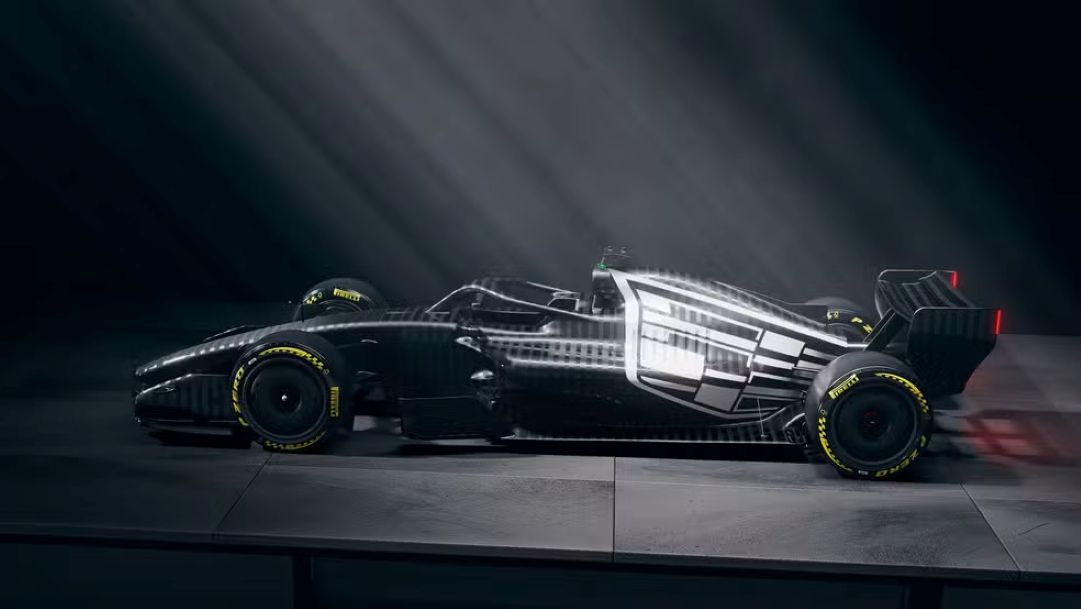
This is our Barcelona Shakedown livery. Here’s what that means:pic.twitter.com/pkXBFvd0hy
—Cadillac Formula 1 Team (@Cadillac_F1)January 13, 2026
The origin of criticism and the vision of General Motors
The controversy began when executives linked to the Cadillac project in F1, in recent interviews, stated that the participation of the General Motors would be “profoundly different” and superior in terms of engineering when compared to that of the Ford. The main allegation was that the involvement of Ford would not have a real and significant impact on the development of the mechanical components and power unit that will equip the Red Bull and then RB cars from 2026 onwards.
According to this narrative, Cadillac would be positioning itself for a more authentic and complete participation, with the aim of developing its own power unit in the future. The veiled criticism was that Ford was merely licensing its name for a project already underway, a practice known as “badge engineering”, devaluing the technical effort that the brand claims to be investing in the project together with the Austrian team.
Ford’s blunt response
Ford’s reaction was direct and full of irony, led by its executive president, Bill Ford. Ele expressed surprise at the allegations, classifying them as disconnected from the operational reality of the project developed in Milton Keynes, in Inglaterra. The executive highlighted that the collaboration with Red Bull Powertrains is a genuine partnership, which involves an intense exchange of intellectual property and the allocation of engineers from Ford dedicated entirely to the development of the engine for the new regulation. Longe despite being a superficial agreement, Ford argues that its technical contribution is fundamental to the success of the new power unit, covering crucial areas such as battery technology, electric motors and control software, elements that will be vital for competitiveness from 2026. The company was keen to emphasize that the choice to join an already champion team was a strategic decision to accelerate the development of sustainable and high-performance technologies, and not an attempt to free ride on success alien.
Distinct entry models in the category
The strategies adopted by the two American automakers to join Fórmula 1 could not be more different, which further fuels the rivalry.
The Ford opted for an alliance with an established and dominant force, the Red Bull Racing. Essa approach allows the company to focus specifically on power unit development, leveraging the championship team’s infrastructure and chassis and aerodynamics expertise.
On the other hand, Cadillac, in partnership with Andretti Global, seeks to enter the grid as a completely new team. Contudo, Ford made a point of highlighting that, in its first years, the team will use engines supplied by
The 2026 regulation as a catalyst
The big draw for the return of the Ford and the debut of the
Future power units will have an almost equal division, with 50% of the energy coming from an internal combustion engine and the other 50% from an electrical system much more powerful than the current one.
Furthermore, cars will start using 100% synthetic and sustainable fuels, a field of research and development of enormous strategic interest for large global automakers.
This regulatory change aligns the technological challenges of Fórmula 1 with the electrification and sustainability goals of the commercial vehicle divisions of Ford and General Motors.
Marketing and communications battle
The dispute also manifests itself in marketing strategies and launch events. Ford chose its headquarters in Detroit for the unveiling of its partner teams’ cars, a symbolic gesture to reinforce its roots in the American automobile industry.
Cadillac, in turn, targeted a massive audience by scheduling the presentation of its project during the Super Bowl break, one of the most coveted advertising spaces in the world, demonstrating its ambition to make an immediate media impact.
The North American scenario in Fórmula 1
The exponential growth of Fórmula 1 in the Estados Unidos, with three Grandes Prêmios consolidated in Miami, Austin and Las Vegas, created the perfect environment for this dispute. The presence of two such iconic American brands serves to nationalize the sport and attract a new audience, creating a local “derby” narrative within a championship historically dominated by European brands.
Developments and expectations for the future
While the Ford faces immediate pressure to deliver a power unit capable of keeping the Red Bull at the top, the Cadillac has a longer way to go. The confirmation that its own engine should only be homologated for the 2028 season is a point explored by Ford to question the narrative of “total involvement from the beginning”.
The complexity of designing, building and testing a competitive Fórmula 1 engine is a monumental challenge. The dispute between these two American giants promises not only to redefine the balance of power between engine suppliers, but also to offer a spectacle of corporate and technological rivalry in the coming years.





